First kilim I got was from my Grandma and it was made by a lady from Fowarki Tylwickie next to where my Grandma is from in Podlasie, Poland. Then a guy in Podlasie sold me another one when I bought wood from him. Next was the one my mum got with a… house as it is often the case: people buy a wooden hut in Podlasie and there is a loom with some old blankets at the attic. I was hooked and soon after opened All Slavic shop.
So similar to each other, yet each was very different.
Ancient, yet so modern in extravagant colours and psychodelic patterns.
In our rich, colorful, knightly past, patterned native fabrics played a significant role, with the kilim at the forefront, serving as an essential backdrop for life in the camp, in the palace, in the noble manor, in the inn at the Kiev contracts, and for ceremonies on the steps of altars. – writes the catalogue of kilim exhibition in Lviv, 1913.
The first item I’ve put in my All Slavic Store was a handmade vintage bedcover from Poland. I chose this one purely because I’ve found it spectacular and I didn’t know if anyone else feels the same way. It sold! Now I realise there is a lot of questions out there.
Even myself after such a long time I still learn something new all the time, so here are answers to these common questions about vintage Polish, Romanian, Lithuanian and Ukrainian Kilims, Rugs, Carpets and Bedcovers.
PASIAK
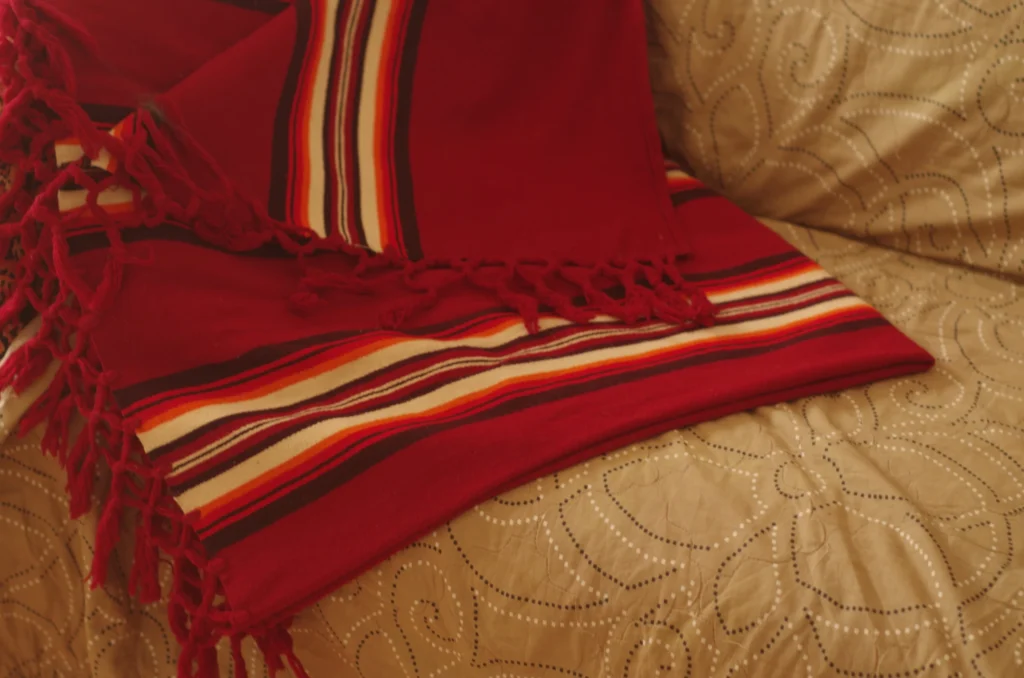
“Pasiak Łowicki” is first thing that comes to mind, but actually, different form of pasiaki (striped woolen cloth made by hand on a loom) were very popular in most of the area of Poland.
It is a staple in many folk costumes where skirts and aprons are made of the same pasiak’s as bedcovers and kilims are.
PEREBORY
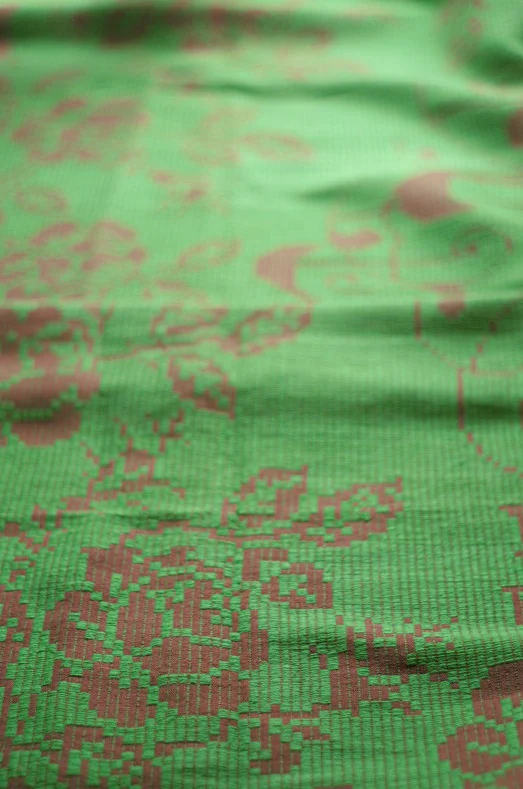
A distinctive and less-known form of kilim is Podlassian perebory, made often with woolen decor over simple, one colour cotton or linen frame. Special symbols would be used as well as purely decorative floral motives like in this example from my collection:
KILIM
With roots deep in the steppes of the East, kilim has rooted itself surprisingly well in the Slavic tradition from West to the East and from South to the North. For many the first thing coming to mind when thinking of an immigrant home, or a home visited in the Slavic country in the 1980s or 1990s is often a rich tapestry on the wall used not only for decorative purposes, but also for warmth – the same way as in the tents of the past.
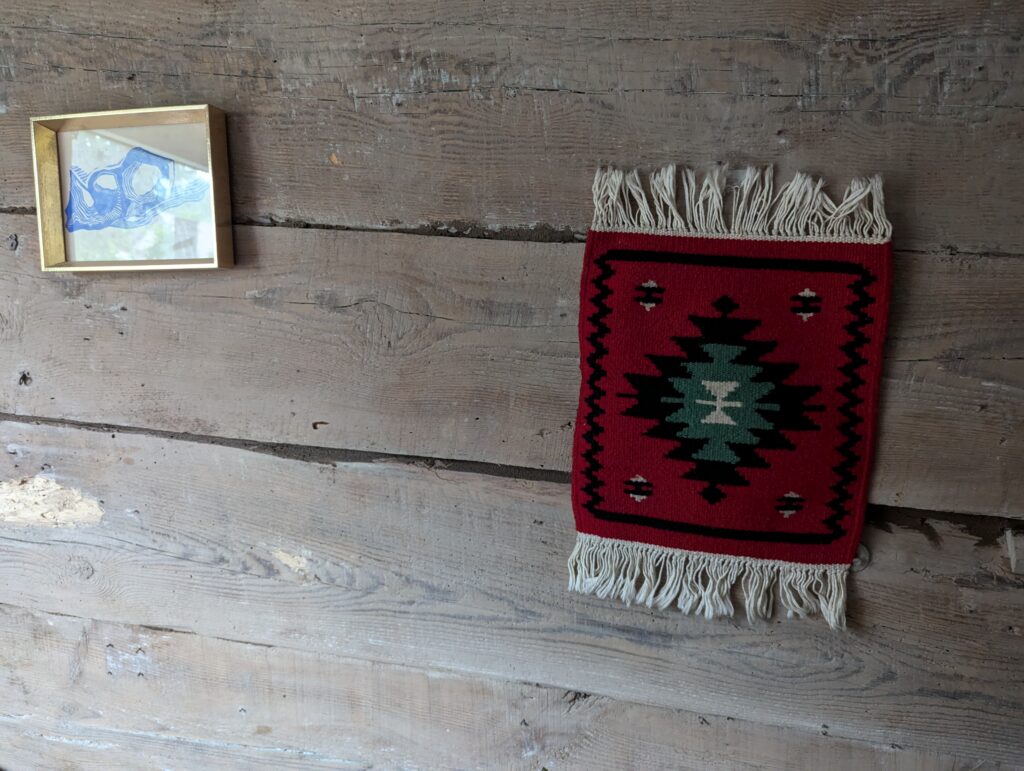
Up until 20th Century it was all done by hand at homes, then, gradually, it migrated to small and then bigger factories. Nowadays what is left of handmade kilims in Poland are a dozens of enthusiasts and oldschool masters of Janów Podlaski or other villages in Podlasie.
IT’S ALL IN THE KROSNO
The hardest part to wrap head around is a difference between a single and a double-warp loom, a factory-made and a handmade item, a unique design and the one that was often reproduced. Up until the 1960s the wool was often gathered, dyed and weaved locally and a double-warp loom was in many village houses. – Two ply fabrics have a plain weave structure.
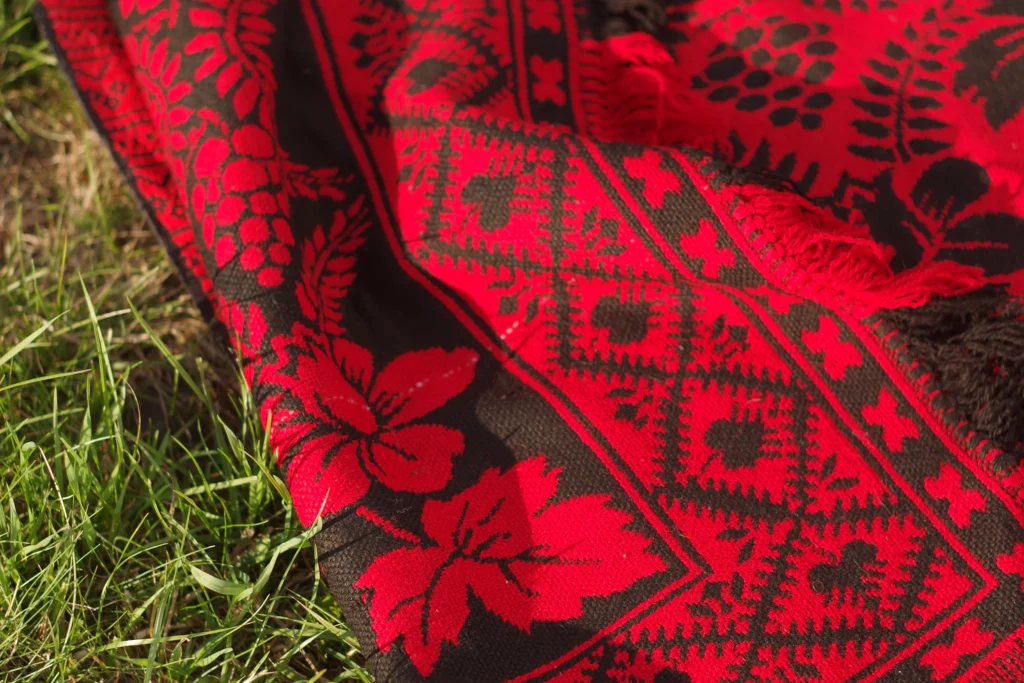
They feature a dual-layer design with different, contrasting colors that blend at the edges of the patterns, so that one side of the fabric is the color reverse of the other. – writes a catalogue of Etnographic Museum in Krakow. As Ethno Museum in Kraków claims, in Ruś double-warp looms were known as early as in 11th Century. Many artist freestyled, but most of them used variations of already known patterns. The hardest to do are unique, irregular patterns as in the case of many of Janów Podlaski’s kilims.
-If You wanted a woolen rug, there were stages that every woman knew: a thread, a yarn, a loom. This was for the winter; in the summer the same but with flax. It was 100 percent self-sufficient life – except for matches. – My Grandpa.
ON SYMBOLS
There are some symbols that are meaningful, especially in Eastern Slavic tradition – like two birds facing each other meaning love or “a tree of life”.
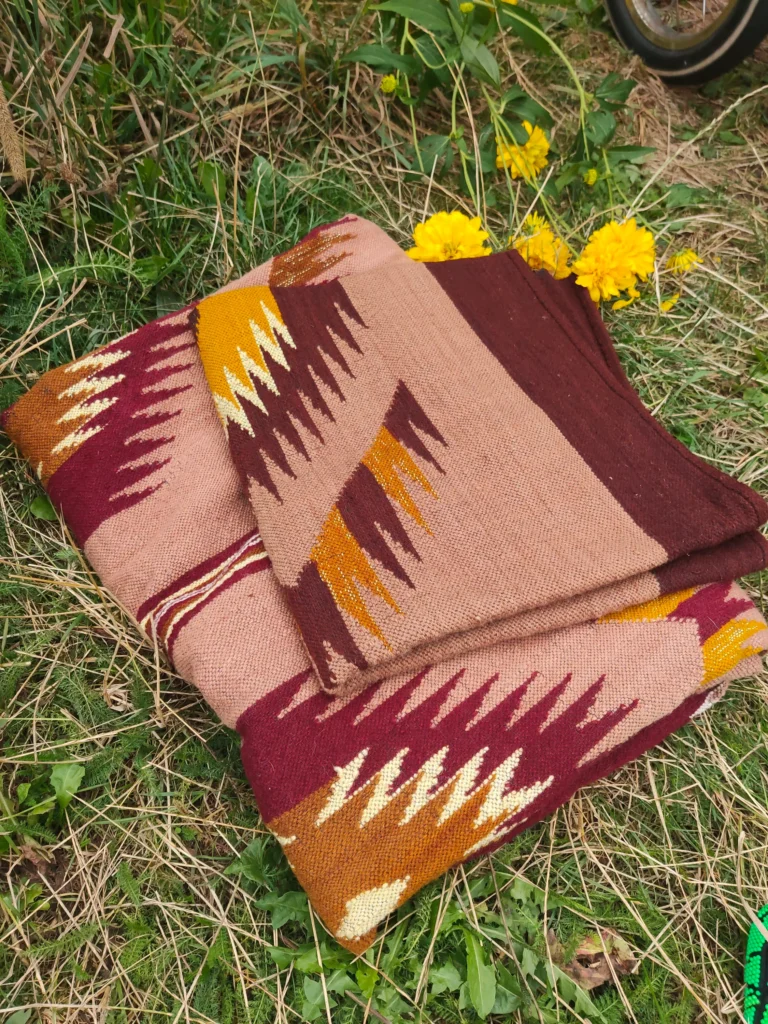
Some suggest that the most profound are the “psychodelic”, geometrical patterns of Belarus, Podlassian and Lithuanian traditions, that look similarly to frequency patterns observed nowadays due to quantum physics. But most of modern kilims are purely decorative, with geometrical patterns and flowers.
History
From the beginning of times up until the second part of 1900s „home-made textiles” were something natural in every Slavic country. In books or old magazines You’ll often read about „tkanina samodziałowa” or „samodział”, meaning a cloth made at home. Firstly as a simple gray linen (flaxen), hemp, or later cotton textile used for anything from tablecloths to undergarments. But people needed also something special: decorative bedcovers to put in a dowry chest, carpets and so on. When my mum bought a house n Podlasie, she found one such traditional bedcover in the attic lying there with the loom:
At my Podlassian home remains of such a loom were also present at the attic. It was a big machinery so not every house had space for it. When it broke or the lady who used it passed away, they were usually taken up to the attic. Most of the women from any given area could do some simple striped patterns or most popular design of carpet. Few knew more complicated designs and only some could weave unique patterns from their imagination.