We never regarded Polish old-school books that much; nowadays, when paper is awful, illustrations are crap and design is lacking any creative thought, I see it in a different light. After carefully inspecting hundreds of vintage Polish books for kids as an antique bookstore owner, here are the prettiest and the most well-made.
An Amber Tree
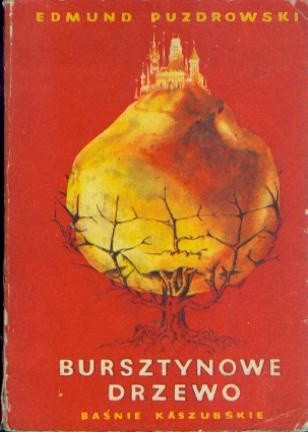
An Amber Tree is an old collection of Kashubian fairytales – like about 7 crows and their sister, or a princess who married a bear. With fantastic illustrations by Wawrzyniec Samp. Interestingly, this was his one and only book; he mostly dealt with church art and… sculpture. The book and its design go deep into Kashubian folklore, full of amber, ghosts and seaside demons.
Illustrator: Wawrzyniec Samp
Year: 1984
The Poppy Seeds
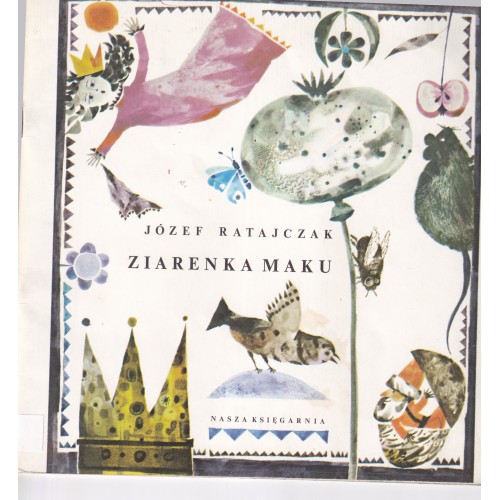
This small and unknown book has such a lovely pastel aesthetic. Not very loud, but certainly unique and unlike modern books that are screaming at you from the bookshelf. The illustrator behind it is Bożena Truchanowska, famous for many other artworks such as Kopciuszek. Interestingly, she was a friend of Jan Marcin Szancer, and in one interview she claimed that “we painted what we liked, not thinking of children but our own taste.” Luckily, the taste was good.
Illustrator: Bożena Truchanowska
In mushroom kingdom
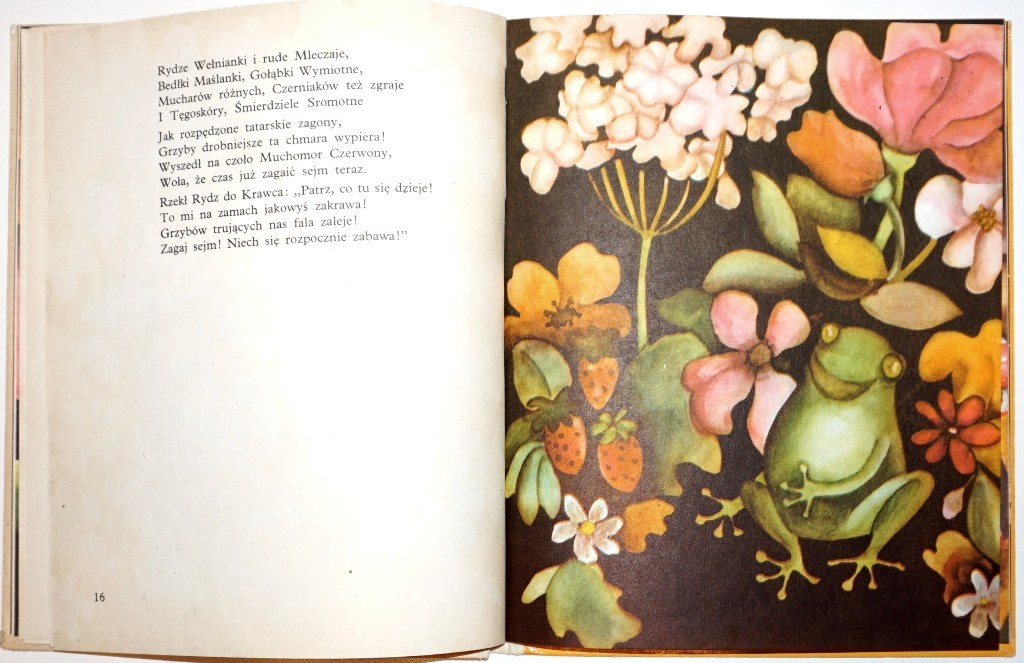
Did you know that famous writer Małgorzata Musierowicz could also paint? I was shocked to learn that this spectacular edition of a relatively unknown book by Tadeusz Krasicki was illustrated by one of the most well-known Polish writers. It also speaks to the fans of autumn and shows how cool earth tones could be.
Illustrator: Małgorzata Musierowicz
Year: 1971
Baśnie Polskie
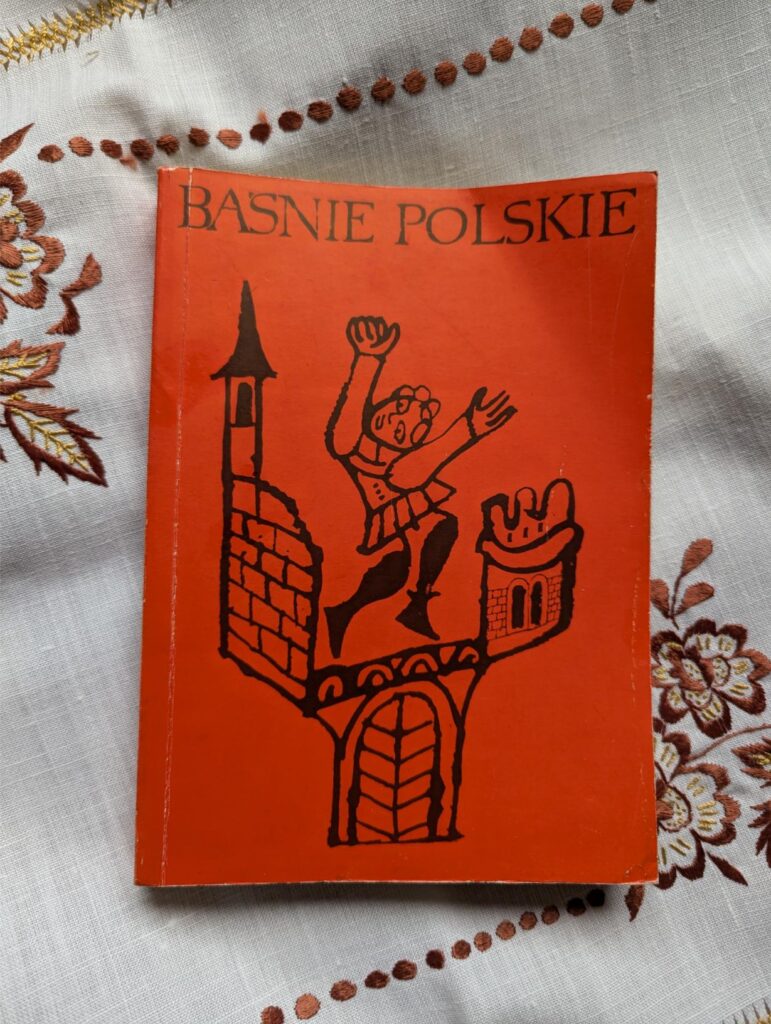
A cult classic with tales such as the Warsaw Mermaid or Rokita Devil. There are numerous different editions and some are really hard to see because of the complete lack of quality (or no illustrations whatsoever). This is the most classic one – not flashy, but certainly leaving an impression with its black-and-white devils tucked throughout the book by Teresa Wilbik and Janusz Stanny.
Illustrators: Teresa Wilbik, Janusz Stanny
Did you know… In Poland often there were two or sometimes even more artists responsible for illustrations of a single book; sometimes they just worked together, and sometimes it was one for the cover and the other for the rest, or one for the illustrations and the other for the intricate lettering, opening page, etc.
Kopciuszek
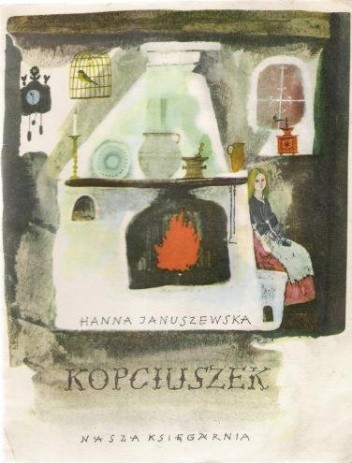
I understand that Cinderella is not Polish, but this version of it with Bożena Truchanowska’s illustrations is just much more artistically fresh than Disney and other variants. The misery of Kopciuszek’s fate is so stark here, compared to the bourgeois dresses of the sisters! BTW we also have a very beautiful Polish e-book that you can hear here:
Illustrator: Bożena Truchanowska (see more of her work)
Year: 1990 (but the illustrations themselves are older)
Kalimura’s Earrings
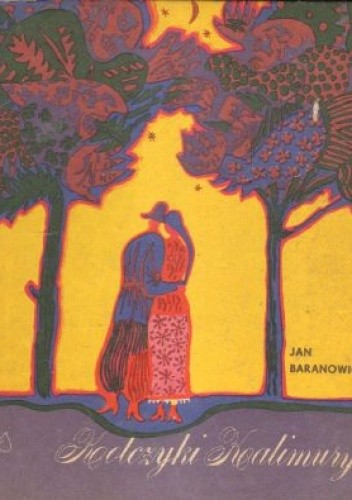
In Poland we have a couple of very famous books on Romani culture by Jerzy Ficowski and others, but somehow this is not one of them. Yet Kalimura’s Earrings caught my eye with its popping colours that remind me of the ancient Motherland of Romani culture, which is India. Very interesting design concept by Andrzej Czeczot, a satire author who was quite famous in the 1990s and now is forgotten completely.
Illustrator: Andrzej Czeczot
Year: 1974
Behind the Seventh Oak Tree
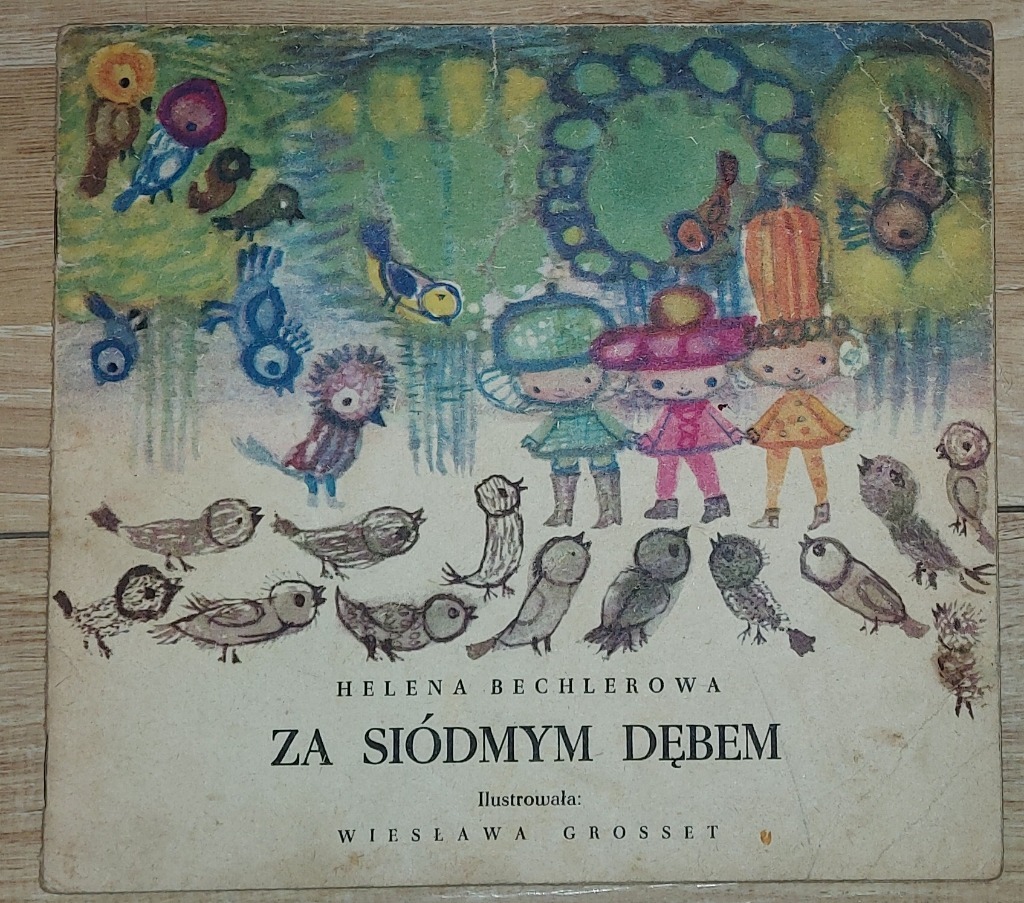
Another book that I’d never heard about until finding it in some thrift store, where I was amazed by the imaginative watercolor artwork by Wiesława Grosset. Reminds me a little bit of child scribbles, but of course it is much better thought through, with its dwarf heroes and romantic botanical depictions that would make a great fabric.
Illustrator: Wiesława Grosset
Year: 1965
Kajtkowe Przygody
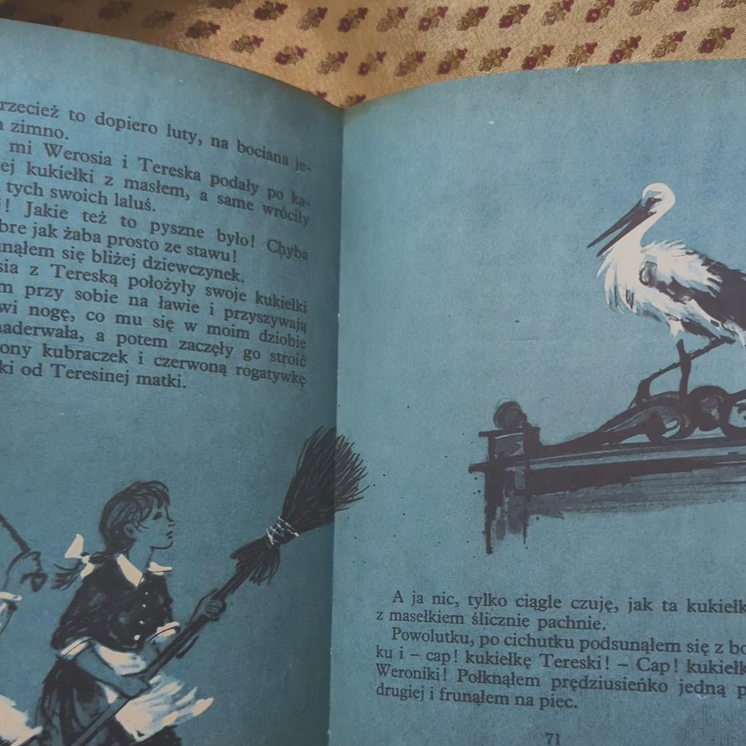
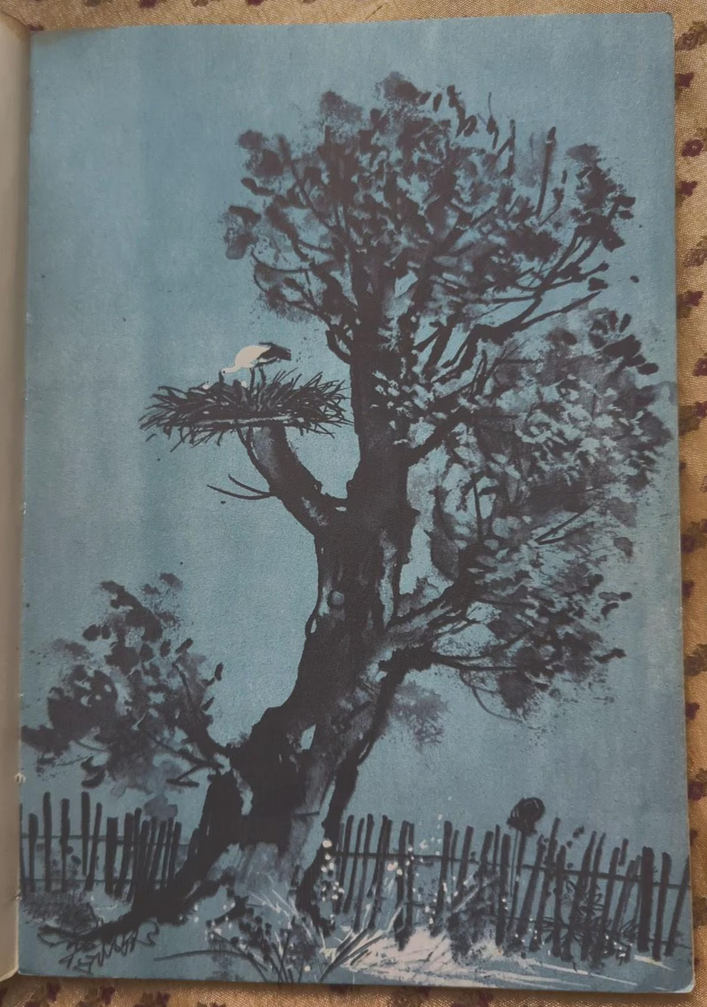
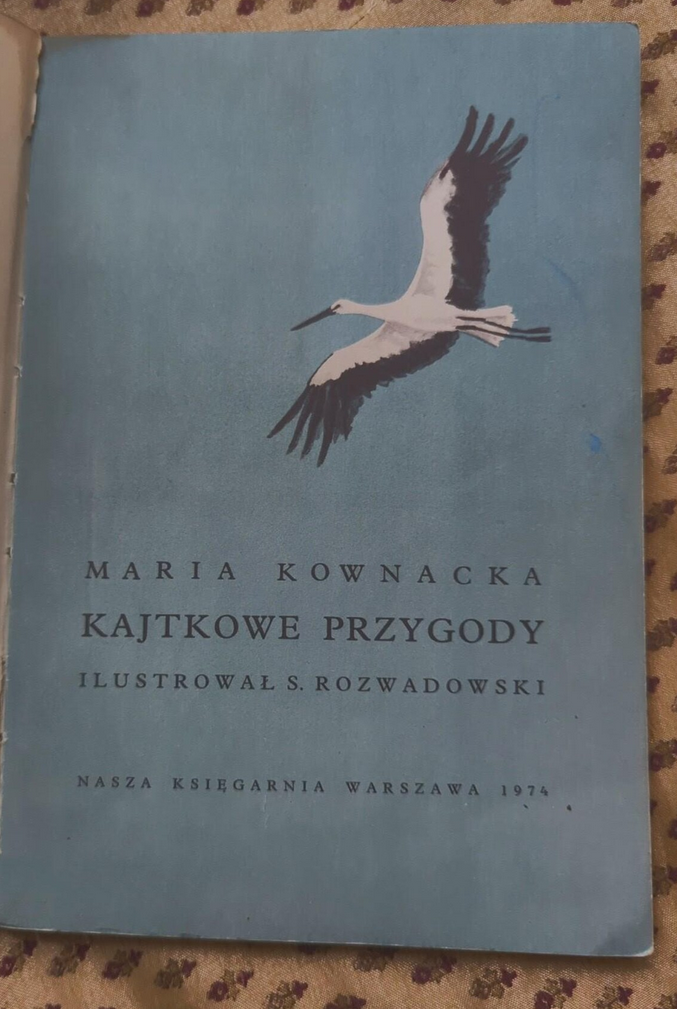
A stork named Kajtek is famous in Poland due to Maria Kownacka’s book, but what I adore the most are these blue-white-black watercolor illustrations by S. Rozwadowski. A very romantic and accurate portrayal of the Polish countryside of the 1970s that is ready to frame or marvel at for hours.
Illustrator: S. Rozwadowski
Year: 1974
Pantofelek Pięknej Rodopis

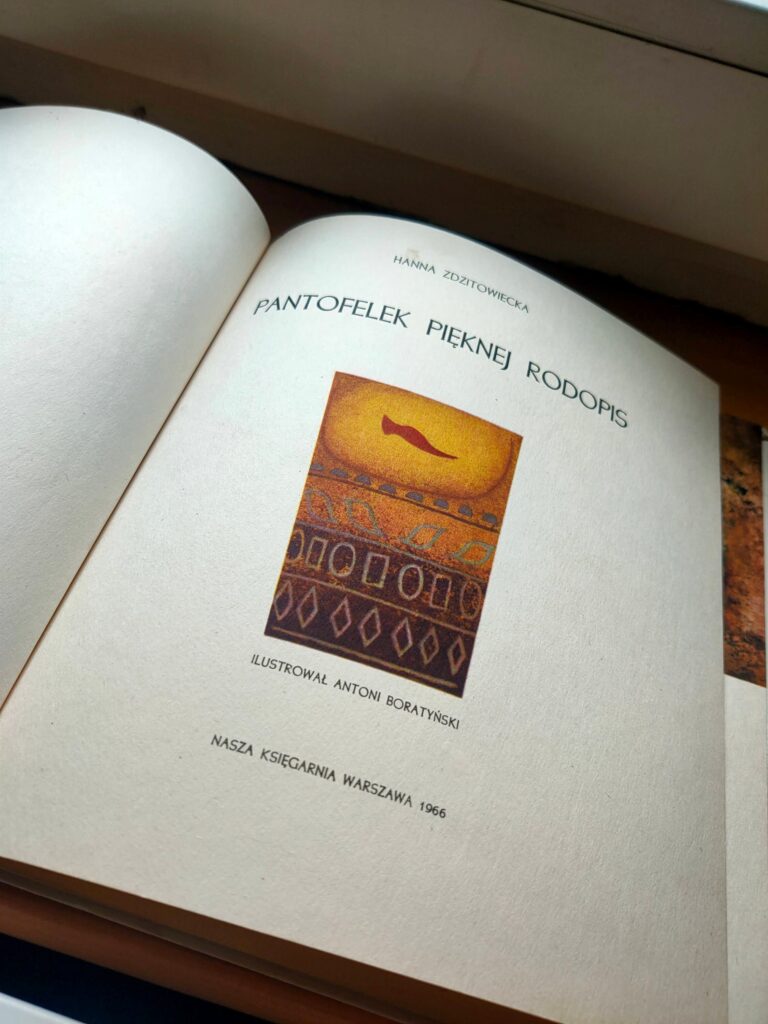
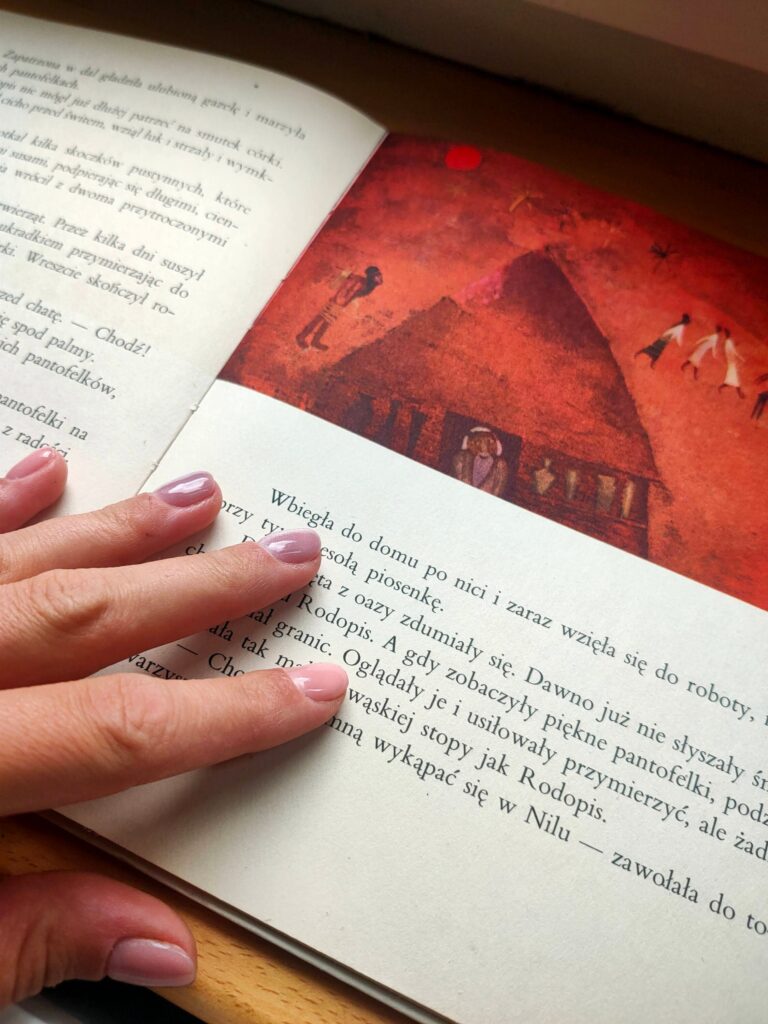
While we’re at Cinderella, let’s discuss Pantofelek Pięknej Rodopis, an Egyptian version of this myth. I have it in my shop for years now and it still shocks me: the fact that I paid for it like $0.50 in some odd place where nobody appreciated it, and the fact that nobody wants it to this day. What’s wrong with the world??? 😀 The illustrations by Antoni Boratyński, inspired by Egyptian culture, are so dark and satisfying – with dusty bazaars under a scorching sun and a sad Princess Rodopis in her golden attire. Or is it really just me???
Illustrations: Antoni Boratyński (see more of his work here)
Year: 1966
Fun fact: Antoni Boratyński had a thing for these types of works, as I have many other world myths illustrated by him; I think from Turkey and Tibet even.