
Having a Slavic shop here and on Etsy I stumble upon a lot of interesting angles on Slavic Paganism on the internet. The further away someone lives from Poland, or Europe even, the more sure he often is about things that he never saw or experienced firsthand 🙂 But myths spread easily even in Poland. So here is a short clarification to sum up what we know about ancient and modern Slavic native faith.
1. It wasn’t 1000 years ago
The biggest misconception I hear in Polish media is:
„Ok, maybe there was some belief system, but it was 1000 or more years ago so we know nothing for sure. It was too far back.”
You know, Oscar Kolberg found a Slavic creation myth still remembered by elders in a village in Sieradzkie county in 1898. People have put sacrifices on Joście stone near Otwock, Poland, in the 1940s. We were drowning Marzanna on a first Spring day when I was a teen in like, 2004 😀 I can go on, and on, and on.
By the way there is another lie hidden in this myth as well:
We hear about Slavic Native Faith that „it is all modern”, „nothing is known for sure”, at the same time hearing that „It was all 1000 years ago”. Oh so it does date back 1000 years ago?

2. It wasn’t “just a phase”
A second myth popular especially in Poland is that only a handful of researchers were into this stuff in, like, 1800s, so it was only a phase. We hear they were not credible and a bunch of loons, like Kraszewski, Lelewel, Narbutt or Potocki.
Let me just give You a couple of examples of what we know from the credible sources about Slavic Native Faith:
Procopius from Cesarea writes in 500s:
„The Slavs believe that there is only one god, the creator of lightning, who is the lord of the entire world, and they offer him sacrifices of oxen and all other sacrificial animals. (…) They also worship rivers, nymphs, and other spirits. They offer sacrifices to all of them and perform divinations during these rituals.”
Thietmar of Marseburg wrote in 1000s:
„As much as there are provinces, as many temples and gods there are revered”
Saxo Grammaticus writes in the 1100s about Arkona:
„In the temple stood a huge statue, exceeding the size of a human body, with four heads and as many necks, arousing astonishment. (…)

This deity had 300 horses dedicated to its service, along with an equal number of riders who carried out their duties. (…) There was also a vast collection of public and private offerings, accumulated through the fervent vows of those who sought divine favor.”
Then Helmond in 1100s:
„Slavs have various forms of idolatry; not all have the same primitive customs”
In 1366 a Christian Congregation in Prague (Czechia) warned against the „death idol revered during Spring”.
A Bishop from Poznań province Andrzej Łaskarz writes in 1420s:
„Do not allow the superstitious custom to take place on the Sunday called White, Laetare, in which some figure, called Death, is carried out and drowned in a puddle…”
Św. Sawa Starożewski writes examples of questions asked during confession in Rus in the 1400s:
Have you offered with the old women abominable sacrifices to God, or have you prayed to the Vilas, or have you eaten and drank in honor of Rod and the Rodzans, and Perun, and Chors, and Mokosha? Then You get three years of fasting with bows.
Marcin Bielski writes in 1500s in „The Polish Chronicle”:
„this custom still existed in our villages as far as my memory goes: on White Sunday during Lent, they would drown an effigy. Someone would dress a bundle of hemp or straw in human clothing, and the entire village would lead it to the nearest pond or puddle. Once there, they would strip it of its clothing and throw it into the water while singing playfully: “Death writhes by the fence, looking for trouble,” etc..Then, everyone would run home as fast as they could. Whoever stumbled and fell was believed to be destined to die that year. They called this effigy Marzanna.”

In the 1700s, while building a new church on Łysiec mountain the „pagan idol was found buried here” according to chronicles.
Then In the 1800s and up to middle-1900s we have so called renaissance of Slavic native faith with scholars such as Kazimierz Muszyński, Aleksander Bruckner, Jan Potocki, Leonard Pełka, Zygmunt Gloger, Oskar Koldberg and many others, who together found hundreds of different traces, beliefs, songs, folk magic rituals and customs from around the Slavic lands.
Stone and wooden idols were found through history, the most recently in 2012 in Poganowo village (interestingly Pogan meaning… a Pagan). There was also an old Kontrewers stone found in 1988.
We had many excavations and reconstructions such as a Shamanic Woman from Bad Dürrenberg that was dated back 9000 years or Germanic runes from 6th century found in Czechia in 2021.
And so on, and so forth.
This are just a few out of hundreds of stanzas and examples.
Do You see a pattern now?
No, it was not „only in the 1800s”.
And what about these loony researchers from the 1800s?
Let’s meet a few of the most prominent ones:
- Jan Potocki, a famous nobleman who later wrote Saragossa diaries (movie based on this got Oscar)
- Teodor Narbutt, a famous nobleman, historian and combat engineer
- Jan Lelewel – author of 200+ historical books and name patron of the famous High School in Poland where many famous politicians and artists were students
- Józef Ignacy Kraszewski – one of the most famous Polish authors, whose stories are on a list of mandatory reading for schools (his books here)
- Adam Mickiewicz – the most famous and credible Polish writer, who wrote about Dziady ritual as he saw it in rural Belarus (book here)
Did these men made no mistake in the span of the whole 1800s? No, for sure there were some mistakes, like anywhere there are. But can You see now that they are very credible when it comes to anything else, just somehow „completely not credible” when it comes to this one topic?
Why is that?
3. Internet and books covers only fraction of the spectrum
So whenever I read on Polish Paganism or Native Faith on the internet, I see a handful of same old resources mentioned. The conclusion is always the same: there is not much to talk about.
Yet when You delve deep into local resources, You see stuff like the old church chronicles mentioning the “silver idol Lelyak that peasants near Hajnówka prayed to” or a “Siuda baba” custom from around Krakow that dates back to Łada temple standing a millennium ago on a nearby hill.
More: How to find a pagan sacred place from the past in Eastern Europe? Easy!
And this is the problem: there are hundreds of stuff like this locally that nobody knows about. They are not even mentioned in the books. Most of researchers have no idea and if they do, these resources don’t name Perun, so researchers don’t know how to categorise it.
Now imagine how many stuff like that is in Russian, Ukrainian and Belarussian sources (not to mention all other Slavic countries) and You get the idea.
4. It is not on the internet
Recently I got a 2-star review on my Book of Slavic Goddesses, Female Creatures & Mythical Figures. The girl wrote that I dismiss Slavic paganism and call it all folk magic. This sounds to me like calling these beliefs local or folk offended her.
Here is a deal:
People imagine there is some noble and one and only Slavic Paganism with liturgies and statues.
I get it – we have practical minds so we would love to erect a shrine, do a certain prayer and tick it off.
But it doesn’t work like that, it just mimics a Christian altar, only with gods found on the internet.
Important: don’t pray to gods from the internet. It can be as well demons or something completely made up altogether.
I hate to break it to you, but how do you think the traces of the native Slavic religion survived? In children’s songs, in folk art motifs, in farming rituals. Traces are everywhere, but critical thinking and research are required. NOT praying to the gods that someone mentioned once on Wikipedia or on Instagram. Nowadays these are often AI anyway.
I know, I know. You might clutch Your pearls here and say:
Sonia, You are wrong! What about Perun temples in Slavic countries! They know the way!
Listen, these temples are like, 3 in the whole Europe+Russia. Each has a different system and they are all 10-20 year old tops. Some doesn’t really function on a day to day basis. Some are run by a handful of enthusiasts.
Some of them are based on exactly what I wrote here and You can actually learn a lot by going there, participating, asking questions. They now their stuff.
But You would have to come and actually judge for Yourself who are You dealing with.
Slavic Pagan rituals are to be lived through. Experienced.
An example: My friend do fasten each Spring and he says he sees light around electric cords at the end of it and have other visions.
An example: I went once to Kupala Night ritual with some Belarussian lady and a day later my life entered a new trajectory and changed completely (for the better:).
If You experience something like that, You know if it works. It is not about mimicking something from the Internet and thinking hard at the altar.
So, let’s get pracitical. If You would like to have an authentic experience rooted in Slavic Native faith, You could for example:
- ask Your ancestors or people from the area. Contemplate on customs and beliefs and try it out for Yourself. Live it through.
- Read ethnographical sources, like Oscar Kolberg or Kazimierz Muszyński. They mention certain rituals, clothing, customs etc. that You can adapt to Your needs.
- Read any other old Slavic book – You can learn a lot even from Juliusz Słowacki or Adam Mickiewicz because they wrote from what they saw.
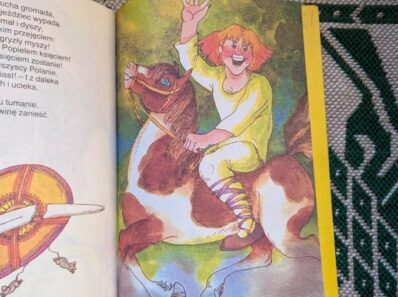
- Look at old paintings – Zofia Stryjeńska, Józef Chełmoński among many others. Some depict weddings, rites, ghosts, water spirits etc.
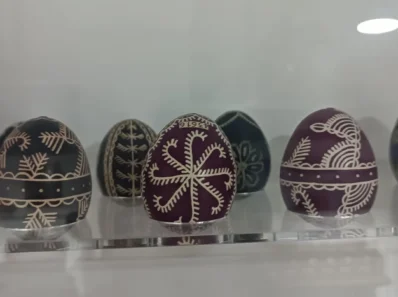
- Look at folk art – cut-outs, textiles, pisankis. Read on the meaning or just try to make some and see what happens.
- If You are in a Christian household, see closely if You don’t already do specific Spring, Autumn etc. rites with meaning that Your were not aware of. You can emphasize and expand on what You already got, without offending Grandma 🙂
- get inspired by the nature. Why certain rituals are done on a certain dates? How is it connected to the moon? The sun? The farming calendar? What can You do personally to get closer to nature and it’s rythms? When I started to have a garden and do certain things at certain times, a lot about our ancestors’ experience got clearer to me.
Yes, it is not always as cool as quarreling about Perun on the internet, but it is real.
And hey, Good Luck.

[…] More: 4 uneasy truths about slavic native faith and paganism […]