
Just as the reference for those of You who are not from Poland – Śmigus Dygus is much alive and well, last time someone spontaniously blessed me with water on Spring was 2022 actually:)
Śmingus Dyngus and other rain-related rituals
Known as śmigus-dygus or śmingus-dyngus in Poland, where water is poured especially, though not exclusively, on young girls and children.
But this practice is not exclusive to Poland.
In Romania, Bulgaria, or Macedonia, there is a custom in one form or another to combat drought: Paparuda, Perperuna, or Dodola (BTW Perperuna is supposedly also a whife of god Perun?)
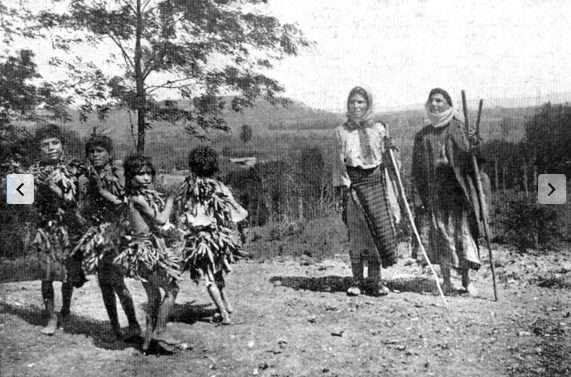
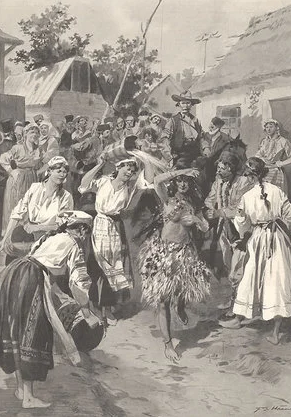
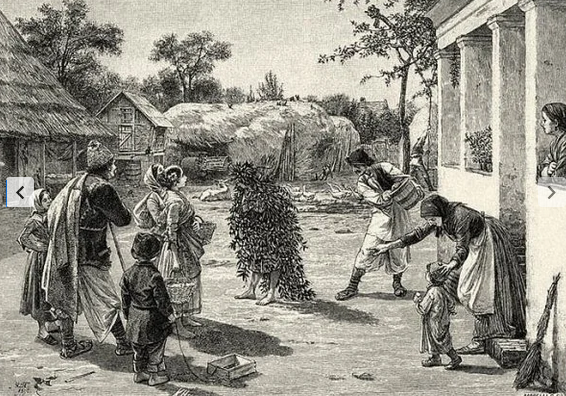
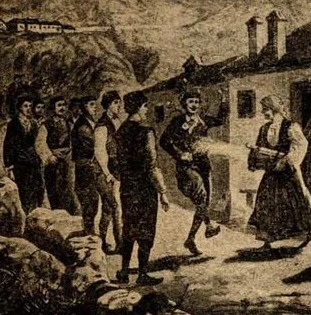
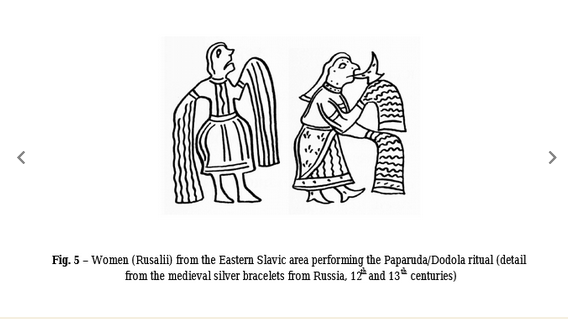
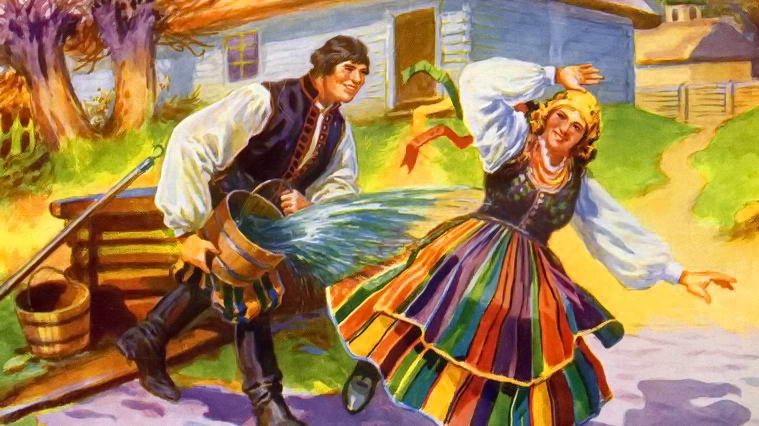
During spring, in times of drought, often for several weeks after Easter, an orphan, girls, or children dress up in grass and leaf skirts, go from house to house, and the hosts sprinkle them with water.
Why?
If we want rain in spring, we surely expect a spring storm, and therefore thunder and lightning. On the other hand, lightning can burn down a house, so it is frightening and powerful. I think this could be a simple explanation for the origin of the “god Perun” and his wife Perperuna, as well as all other lightning-wielding deities in the world. Today, we don’t care if it rains or not. In the past, the first spring storm and rain governed life, food acquisition, and the calendar.
[Question: Can these rituals also be associated with fertility?
Answer: Yes, of course. The symbolism of fertility in the land and in humans is similar. Without fertile land, there is no food and water, and without that, it is difficult to reproduce and raise offspring. This also explains why young girls are often sprinkled with water.]
But for now, let’s focus on rain, not treating it lightly, as invoking rain is not trivial matter at all…

So first let’s add a few more facts from around the world to this mix:
The author of the paper “Creating Thunder: The Western Rain-Making Process” (Journal of California and Great Basin Anthropology, 1993) writes about rain invocation in the USA: “The simplest way is to throw water into the air – that’s how the Pomo, Miwok, and Yakut Indians did it.” This method is also used in many other places, for example, the Kurds have a tradition called Ziwa, which is very similar to śmigus-dygus. In Ziwa, children carry a doll believed to be the rain lady from house to house, and the hosts spray water on it and give them small gifts and grain. In India, similar to the Perperuna ritual, there was recently a traditional procession of naked girls in a village during a drought, which was reported with horror by Wysokie Obcasy. From the linked article about the Ziwa ritual, it can be deduced that the ritual worked. The same is true for the following two cases from Africa. In the first video, a bewildered BBC reporter eventually accepted that the ritual worked, although he remarked, “It only sprinkles, and we expected a downpour” 😀
“The residents of the village of Staubun believe that Burying the Arrow will keep lightning away from their homes and families. One of the elderly residents of the village tells the legend of the origin of the song: ‘They saw the world and invented a song. They started to walk in a procession to ask God. God came down from the heavens, grabbed the grain by the stalks. So that there would be abundance, plenty of bread and salt on the table, everything in abundance.’” – we read about the ritual on the Biełsat TV website.
Swiatłana Paraszczanka, the head of the Staubunskija Wiaczorki ensemble, says, “We sing songs from our village. These are ritual songs, Christmas songs, spring-invoking songs, wedding songs, harvest songs. There are also ‘arrow songs’ (sung during the Burying the Arrow ritual). We don’t sing other songs.”
By the way, I also recommend this video about the Belarusian stone that rotates, causing rain when nine widows from the village turn it, and after three days, rain falls. It is said that it was last used during a drought in 1985, and after three days, rain fell.
And since we’re on the topic of magic stones:
In the village of Spiczki in Podlasie, the locals believed that a particular stone was responsible for changing the weather. In this village, there was a stone that was likely taken for road construction. The people had the belief that when someone in anger overturned the stone, it brought rain. So when there was too much rain, the locals would run to the stone, put it back in place, and the weather would return to normal.
Rev. Zbigniew Szczepańczuk – “Historical stones with engravings in the Siedlce or Podlasie Diocese” – Bractwo Krzyżowców PTTK Świdnica, 1990.
Leonard J. Pełka, in his book “Polish Folk Demonology,” notes that the belief in cloud masters, cloud sorcerers, cloud dispersers, or planet rulers who govern clouds and rain still existed in practically the entire Poland in the 20th century. In his book, numerous examples, methods for dealing with clouds, and stories can be found. Let’s just mention a few statements recorded by ethnographers and described in the book:
There were people, called cloud masters, who had power over clouds and could disperse them through secret prayers or ringing bells.
When asked why there are so many chapels here, a Highlander told us that when thick and dark clouds gather over the mountains, threatening disaster, they immediately ring the bells in these chapels, and the clouds disperse, the thunder ceases, and the rain stops falling.
My neighbor rang a bell his whole life, and that’s why there was never hail in Kobylanka.
Storm clouds were driven away from the village by vigorously ringing the church bells; the cloud would retreat from the village upon hearing the sound. However, in its anger, it would seek revenge on the surrounding area. It happened that neighboring villages without churches suffered greatly from this, so the priests prohibited this method of dispersing clouds. I don’t know exactly when this practice was discontinued, but it was certainly before World War I.
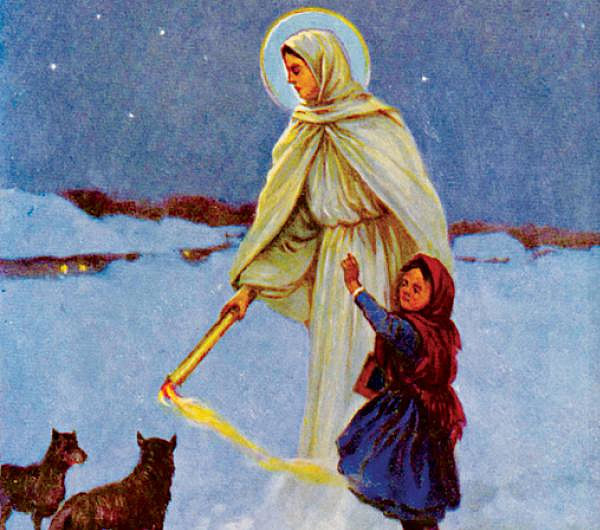
To ward off storm clouds from the village, church bells were rung with all their might in the past. However, this method was later forbidden because the villages without bells suffered as a result, as enraged clouds would unleash hail in the area. To protect themselves from lightning, people would burn blessed candles during storms and scatter wreaths made of sedum around their homes, blessed on Corpus Christi.
Even I have a blessed candle like this somewhere in my house.
It just accured to me that mass weather anomalies have been occurring since the moment when people stopped widely practicing “weather rituals” and instead governments became interested in weather control. Hmm.


[…] And here is more on other Spring rites of Slavic countries. […]
[…] identical to rain-invoking rituals in India, among Kurds, in Central Africa, North America, etc.—which I’ve written about; or universal knowledge about death rituals and agricultural […]