If You’ll take any of the majorly important Polish art or book of the past ,more often then not it was made in Kresy. “Lithuania, my motherland” – starts the national poem “Pan Tadeusz”, and one of the most popular Polish songs “Hej Sokoły” marvels on the beauty of green Ukraine… Kościuszko and Moniuszko were born in what is modern Belarus, yet they are national heroes of Poland. Wait, what? Lithuania? Ukraine? Belarus? Are we talking about Poland still? Well, we talk about what was once known as “Kresy”. Here is just a short intro to the vast, vast topic.
Was Kresy Polish or…?
My (Polish) boyfriend told me once that his family came from an “all
Polish” village in a nowaday Belarus. I checked on Wikipedia and it
turned out that a majority of the villagers were Belarussians. How could he not know that? This is
often the case when speaking in Poland on lands that were once
Polish – Kresy. Seems like they were Poles and… some others.

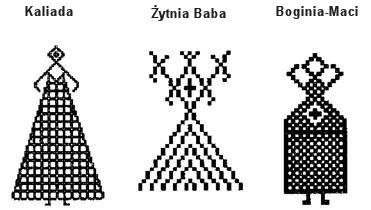
Traditional slavic embroidery of Mokosh
This is how traditionally these “borderlands” (Kresy literal meaning)
were percieved in Poland. If we would speak in terms of caste, the
“common people”: Rus, Belarussians, Locals or Ukrainians – were
perceived as lower class. To advance in life they usually had to start
to speak Polish and wear “normal” clothes – I am not making this up, my 97-year old Grandpa had told me. To be fair, a Kashub or Podlaszuk in Poland had to wear “city” clothes and “speak normally”, too.
Before You feel offended: the line between Polish and “other” could be very blurry and sometimes pass through… a family. Like in the case of famous Józef Piłsudski, who called himself… Lithuanian. Tadeusz Kosciuszko is a famous Pole? Sure, but Belorussians call him “the great son of Belarus”.

On different regions of Kresy
From Polesie to Wolhynia to Hutsuli – these were
totally different regions and cultures, but with many similarities
in terms of embroidery, songs, customs. But it is important to note here, that
depending on the historical period, Kresy’s reach would differ; at the peak
reaching as far as Russia or Latvia.
On traditional embroidery of Kresy
Did You know that... for a long time cross-
stitch was perceived in Poland as
“Rus stitch”, because it came from
Rus-land.
This is a completely separate topic,
but there are many scholar works
on magic purposes of each
Belarussian and
Ukrainian ornament in ancient
times. Much is lost but we can still
decipher some ornaments.
For example I read once that the women would cross-stitch while
fasting and singing at a specific time of the year and use specific
colours and numbers of threads (3-9-3-3 and so on). Protective
ornaments would guard a waist, a rim and a neck of a blouse, which
could be easy ways for evil to “come in”. An embroided towel or shirt
was practical, as well as protective item with ornaments specific for
family, region, and sometimes for certain gods or spirits.
Anyway; here we just touch on that but I will surely write more one day in
a separate publication.