
Mount Babia (in Poland)
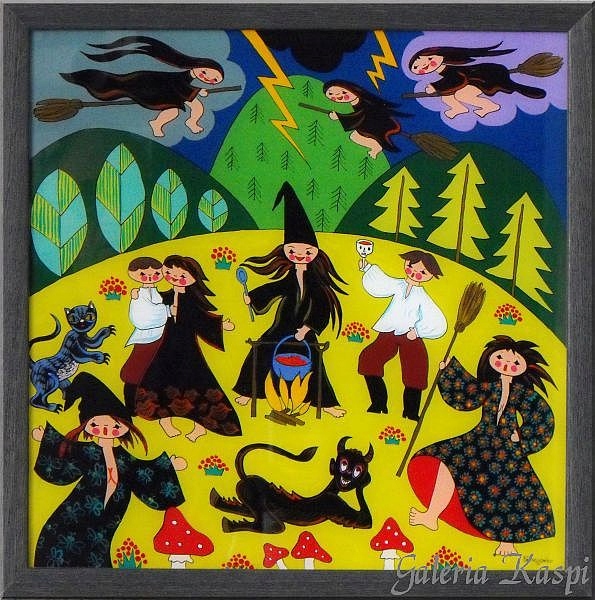
All the peaks of "bald" mountains worldwide (Montecalvo, Chaumont, Kahlenberg, Łysa Góra in the Sandomierz Voivodeship), where women gathered for rituals and feasts during pagan times, are now declared as meeting places for witches and devils, where they engage in blasphemy. Hence, every "babia" mountain means the same as "bald" or a mountain of witches.
Zygmunt Gloger, Encyklopedja Staropolska, 1900
Women’s Gatherings
Fat Thursday (…) This day is also called "Comb Thursday" because of the so-called women's gatherings, where women arrange a lavish feast, often accompanied by vodka or liqueur. Men are rarely and unwillingly admitted to this event. Such gatherings are still organized in some regions of Poland.
Ogrodowska, B. Zwyczaje, obrzędy i tradycje w Polsce. Mały słownik, Warsaw 2001
Białogłowa, Woman
Białogłowa, biała-głowa, białka, was a common name for a woman in the past, derived from the white headscarf she wore, which was a national custom since ancient Lechitic times. The term "kobieta" (woman), although equally old, and perhaps older than "białogłowa," used to be offensive because it meant "female," not a virgin.
Zygmunt Gloger, Encyklopedja Staropolska, 1900,
Goddesses from Žítková
In 2014, a book was published about the last goddesses from Žítková in the Czech Republic. Apparently, they were women with magical powers, similar to our “szeptuchy” (folk healers). I don’t have much information about them, but they are worth mentioning here.
Dupa (Ass)
I heard from neighbors in Podlasie that a certain neighbor, in a moment of anger, showed someone her ass. My friends and I were impressed by her power and the courage it takes to genuinely show someone your ass, instead of just talking.
As the Slavic gymnastics instructor, Małgosia, writes on her Facebook:
In the past, in villages, women, in critical situations, arguments, disputes, when strong emotions were aroused, would turn their backs to the person, stick out their buttocks, and pat their behinds. Sometimes they didn't spare words either. By doing so, consciously or unconsciously, they put everything that was "negative" (…) to dissolve and transform it into power. It's an ancient wisdom that is repeated, but not always fully understood in its original meaning and intention.
Dziewka
Maiden, an ancient Polish word, already found in one of our oldest documents (from the year 1136). In the 18th century, it became customary to call any unmarried servant a “dziewka” (maiden).
Stone Girls
In several villages in Polesie, well, I am not saying that the goddess is worshipped,but crosses are dressed in dresses and necklaces and revered as “stone girls“…
Women’s Circles
Anyone who has participated can confirm that it is a very enjoyable experience. What’s it all about?
In the past, women spent a lot of time together during proverbial “feather plucking,” field work, and so on.
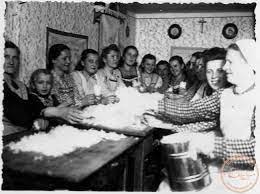
Just imagine how it was when everyone had several children, and in each village, there were at least a dozen houses and nothing more… Nowadays women don’t have the opportunity to spend time with other women, especially in an atmosphere where there is no judgment, and they can share their experiences. Many women find women’s circles to be very necessary. For me, as an only child and a self-proclaimed introvert, it was interesting to discover that the most frightening secrets and biggest worries become universal when shared with other ladies.
“Women’s Shapes”
At a symbolic, historical, and practical level, the “center” of a woman is considered to be around the hips, while the center of a man is associated with the shoulders. Therefore, stereotypically, a woman’s shape is thought to be more expanded downwards, while a man’s shape is more expanded upwards.
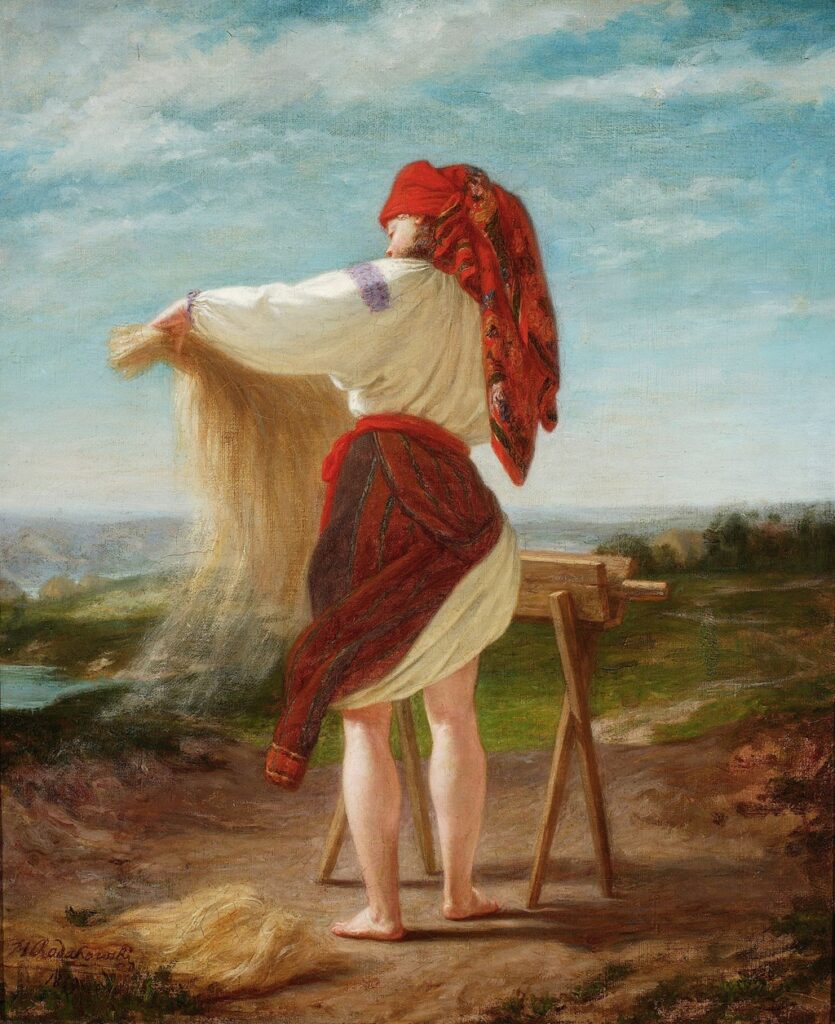


In any case, one of the Slavic theories suggests that women gain energy when they walk in skirts that are expanded towards the ground (preferably barefoot), as they can freely draw energy from Mother Earth. (I’m writing this, of course, wearing pants and I am very content.)
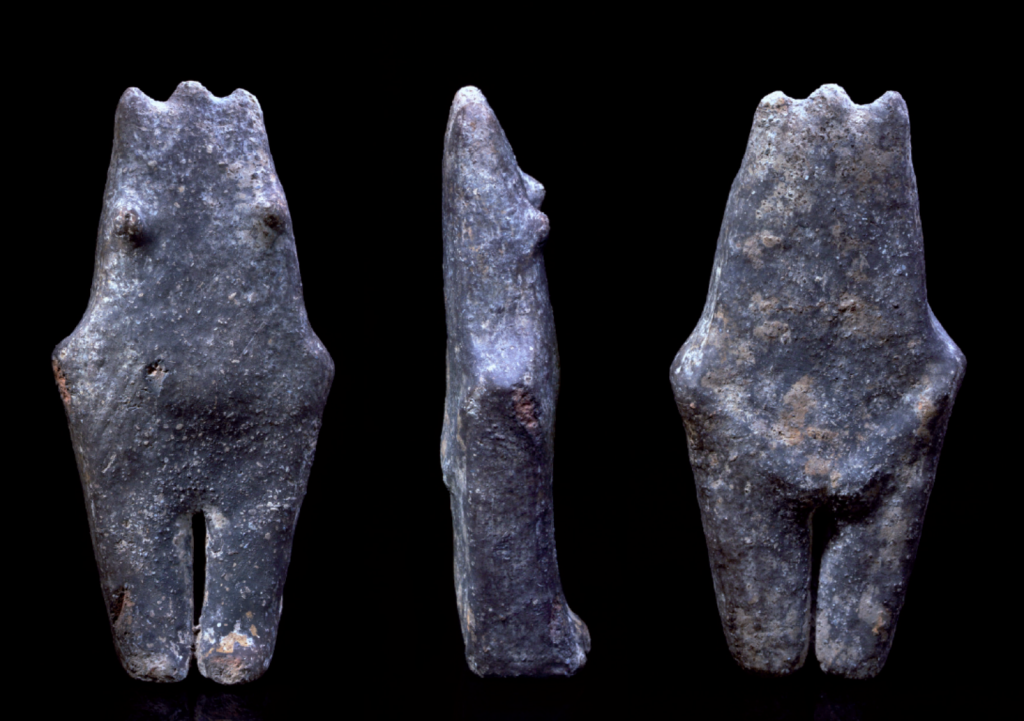
Women’s Tattoos in Bosnia
I can already imagine what my grandmother would say about this, but indeed they existed!
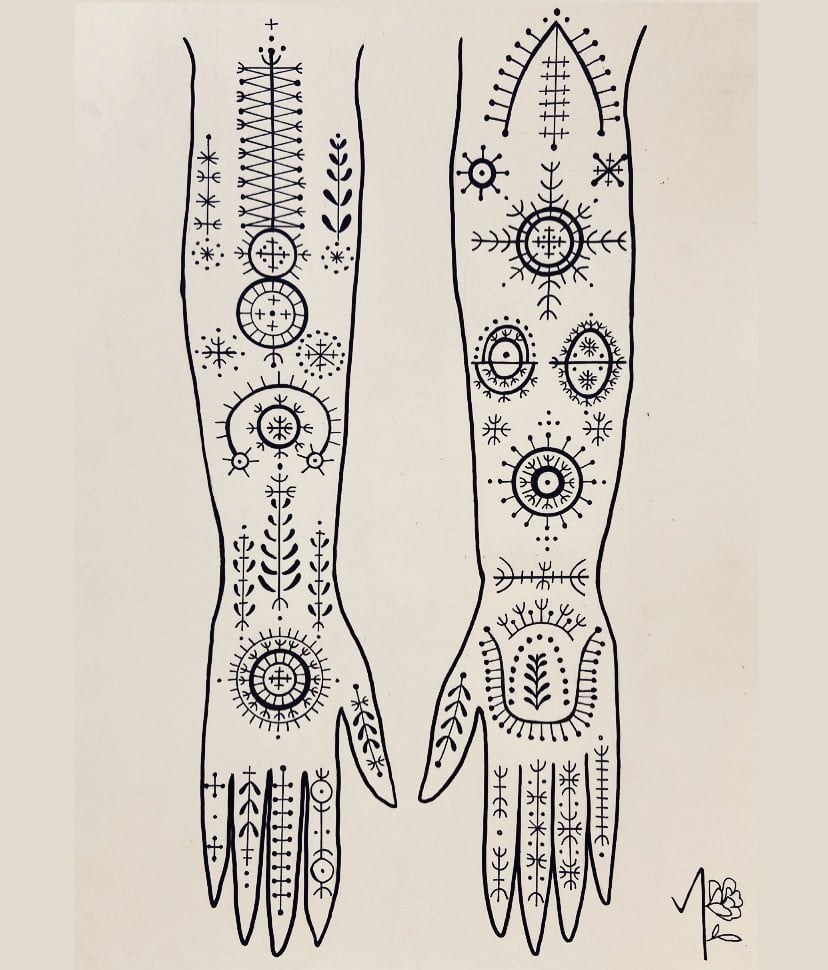
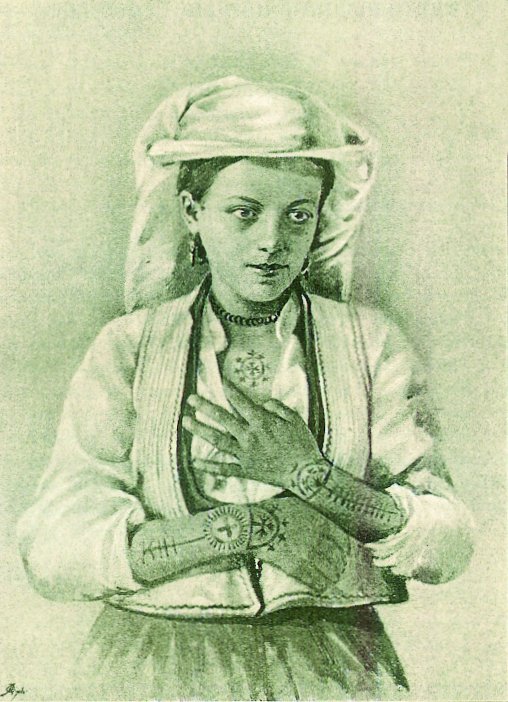
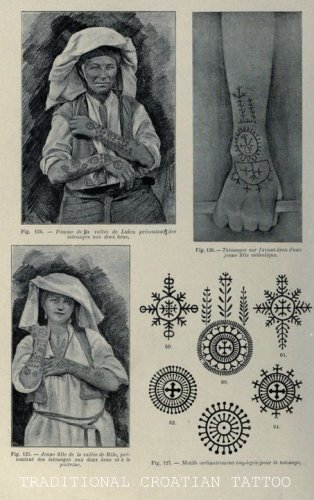
From 1463 to 1878, Catholics in the regions of present-day Croatia, Bosnia, and Herzegovina tattooed women to prevent them from being taken captive by the Turks. However, as mentioned in Wikipedia, the Greek historian Strabo already mentioned tattoos in these regions in the first century BCE, and indeed, the patterns look familiar in the context of various Slavic artifacts (such as the ash container from Biała and Easter eggs).
Womb
The word “łono” (womb) is a Slavic noun with the main meaning of “human lower abdomen, especially female; the place where the fetus lies.” From this word derives the verb “wyłonić (się)” meaning “to emerge (from the womb)” (a newborn emerges from the mother’s womb). The word “łono,” documented until the 14th century, had many meanings in the past (in order from “internal” to “external” meanings): “genitals,” “lower abdomen,” “the place on the knees of a sitting person,” “groin,” “armpit,” “lap.” Many of these meanings have survived to this day, while some have undergone transformation.
Narodowe Centrum Kultury, Ojczysty – add to favorites
Niewiasta
The Proto-Slavic word “*nevěsta” originally meant “the one whom no one knows; the one whom no one is acquainted with” – this term initially referred to a young woman entering the family: a fiancée, a bride, a young maiden, a daughter-in-law, a sister-in-law. She was an outsider to the family, an unknown person – the one about whom little or nothing is known until she becomes one of their own, a member of the family. Since this word had very positive connotations (we usually treat young, beautiful women who will belong to our family favorably), over time its meaning expanded while also retaining the earlier meanings of “future daughter-in-law; daughter-in-law; sister-in-law,” but only in dialects.
Narodowe Centrum Kultury, Ojczysty – add to favorites
Prophetess
At that time, prophetesses stood here – maidens skilled in prophecy; bards and the faithful.
— Wiara Słowian z obrzędów, klechd, pieśni ludu, guseł, kronik i mowy słowiańskiéj, Romuald Świeżbieński, 1880
Przywianek
“Przywianek.” In Poland, what a wife brought into her husband’s home was called “posag” or “wiano.” What a husband bequeathed to his wife was called “przywianek.” When a woman, as a maiden, got married without a dowry or reform of her posag, the law stipulated a certain sum from the husband’s estate for her or a life interest in a portion of the estate, and this was called “zawieniec” or “pro crinili” in Latin. If a widow remarried, she would lose the right to the przywianek bequeathed to her by her first husband in favor of his descendants.
—-Zygmunt Gloger, Encyklopedja Staropolska, 1900
Zdrawica
Quoting from an article on fashion and beauty in Elle Poland:
“We often admire Indian Ayurveda or cosmetics from the other side of the world. We eagerly reach for exotic herbs and forget about what is local. As if nature in Eastern Europe doesn’t give us reasons to be proud. Meanwhile, our ancestors developed a beauty and health ritual that can rival Asian skincare. It is the ancient Slavic zdrawica, based on the relationship between humans and Mother Earth. According to this belief, the foundation of health and beauty lies in the timeless connection with nature. The basis of every treatment was once honey wine, which has been used in folk medicine for centuries. The zdrawica ritual consisted of several stages. The first was a relaxing foot bath, which induced relaxation throughout the entire body. Then, one would enter the sauna, where the skin was exposed to warm steam and herbal essences. The next step involved a massage (…)
Death and What Comes After?
“In the district of Święciany and parts of Wilejka, the people place small objects, namely gravestones, on the graves of men. They do not place them on the graves of women, but instead, as a remembrance, they place wooden footbridges with crosses, letters, or radiant sun symbols on streams or ditches, often shaped like human feet.”
Zygmunt Gloger, Encyklopedja Staropolska, 1900
Beauty of Slavic Women
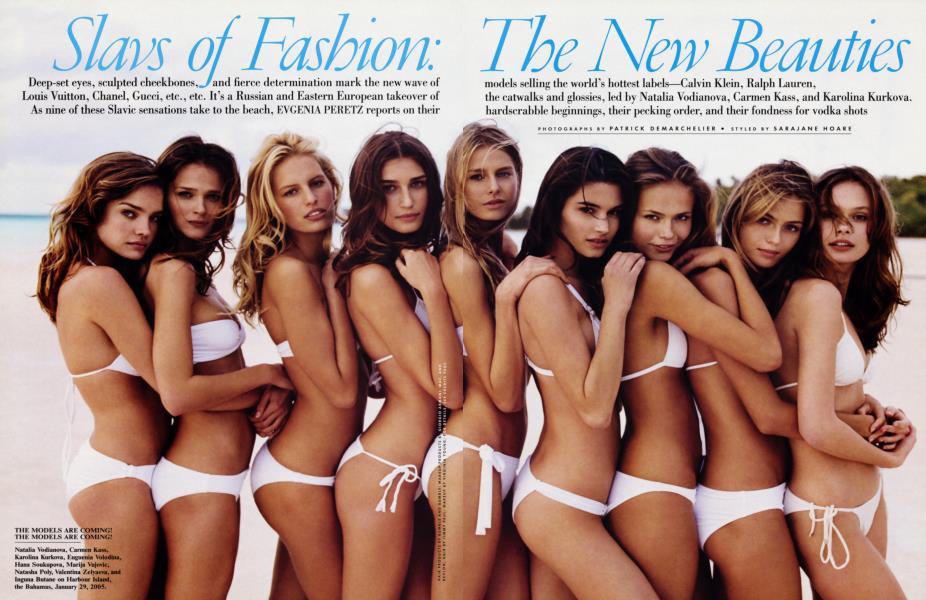
I once read a book by a Belarusian author who lamented that on the streets of Belarus, you can see the most beautiful flowers that later adorn the runways of the world, even though no one pays attention to them at home. There’s something to it, which is showed in the list of Slavic Fashion Icons and most well known models.
Widow
“Wdowa,” a word documented since the 14th century, is of common Slavic origin dating back to the Indo-European era and has always had the same meaning, “a woman whose husband has died.” It is derived from the root *ṷeḭd-, which carries the meaning of “detach, separate.” Originally, this word meant “a woman separated (from her husband).” Just as we do not have a separate word for parents who have lost their children (although we have a word for a child who has lost parents – “sierota”), there was initially no separate term for a man who lost his wife, although there was a word for a woman who lost her husband. Only over time and, presumably, with the increasing social role of women (their significance and place in a patriarchal world), the need arose to create the male counterpart of “widow,” and the word “wdowiec” was formed.
Fighting
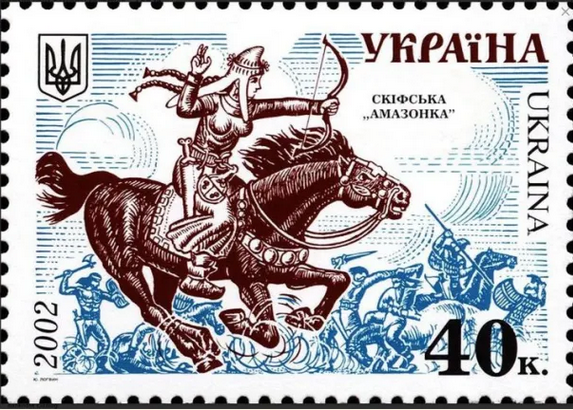
Russian historian Nikolai Karamzin wrote about our ancestors: “Sometimes Slavic women went to war, accompanying their husbands and fathers; they were not afraid of death. During the siege of Constantinople in 626, the Greeks found many women among the slain Slavs.”
Svetlana Alexievich, War Does Not Have Anything Feminine About It, trans. by B. Strug, Czarne, 2010