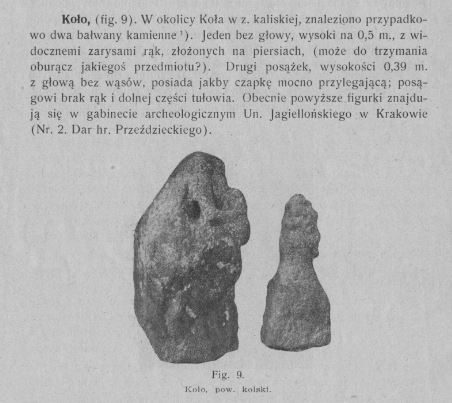
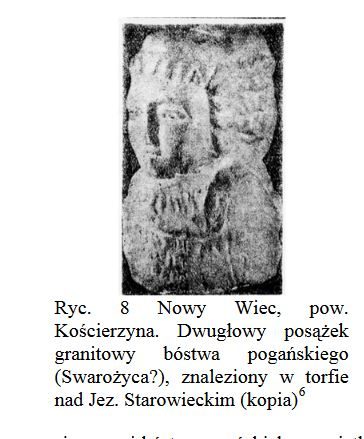
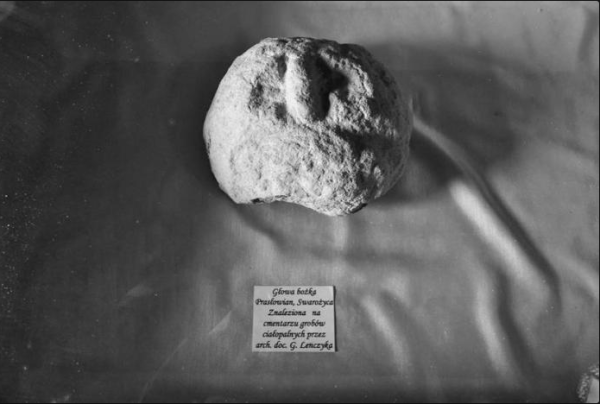
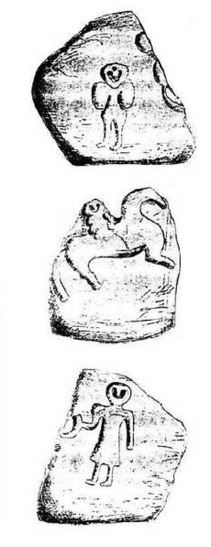
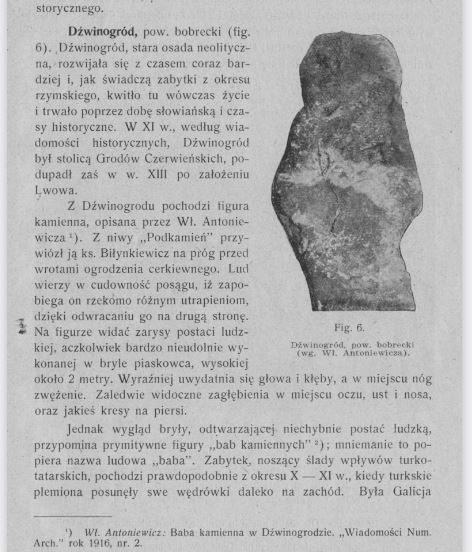
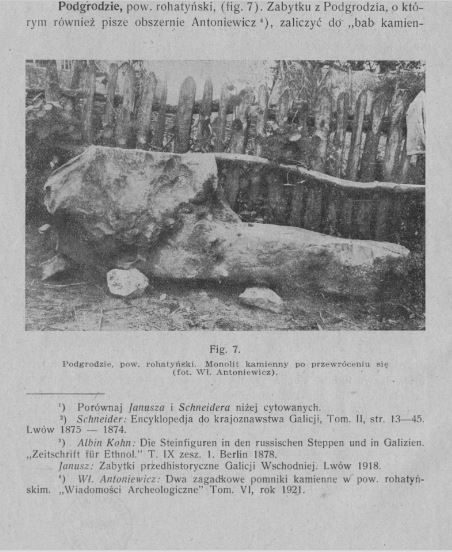
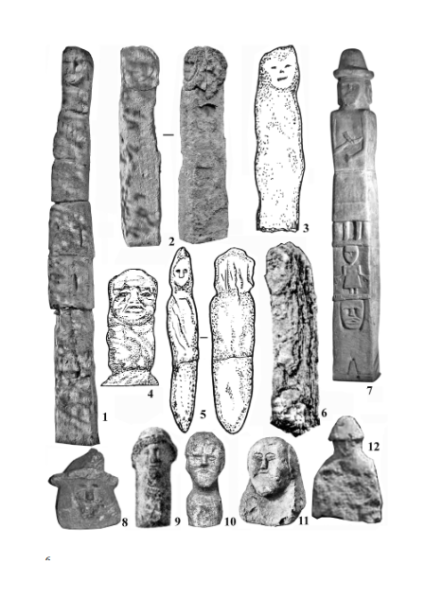
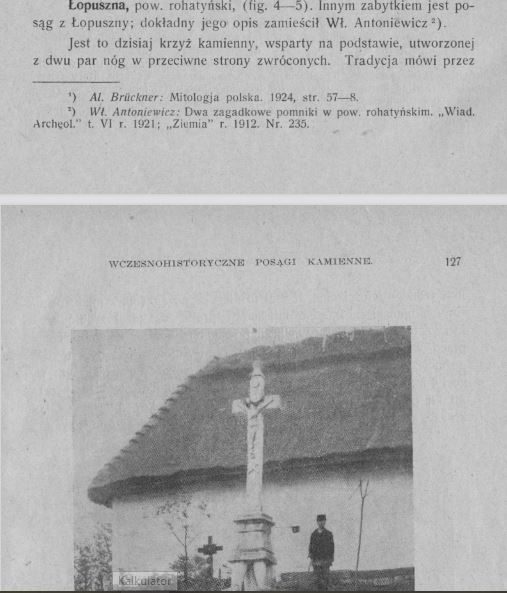
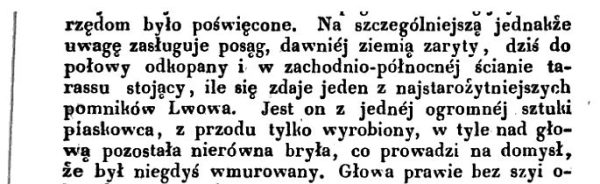
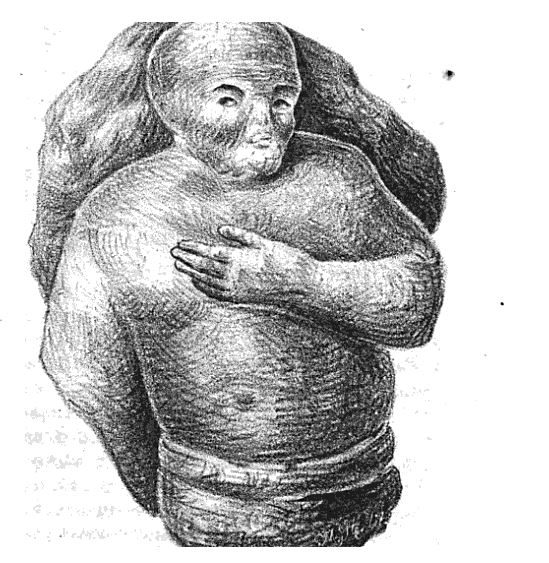
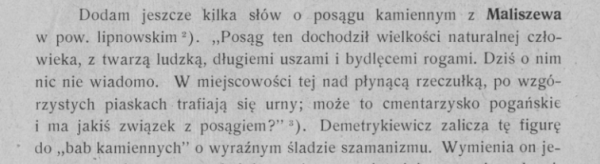
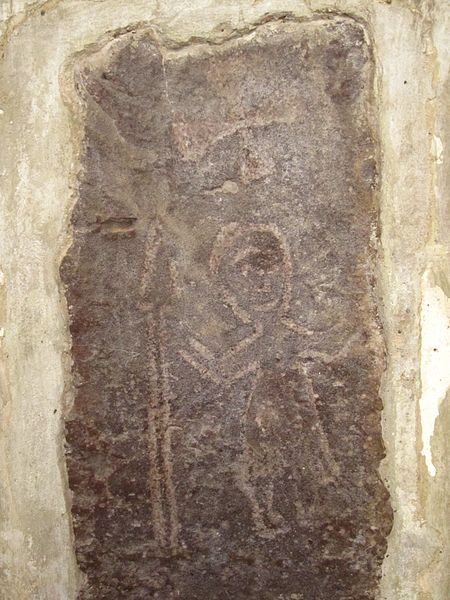
Interestingly when You Google it, You’ll find “complete lists” of 5 Slavic stone statues, yet I’ve personally came across 100+ and I didn’t even look in Czechia, Croatia, Lithuania or any other countries like that… Wherever I am I just look up the archves, folk stories, churches, and there is often something there. So will update this list until we are full and please send any of Your finds.
Slavic statues known from literature but lost
First mentions of Perun in literature are of Wladimir the Great prince, who, after his baptism in 980s, started to:
“roll over the idols, some he cut, some he destroyed with fire. He asked to tie the Perun statue to the horse’s tail and pull from Baryczew to Ruczaj with twelve men hitting him with sticks. (…) They dragged him from Ruczaj to Dniepr and common folks were crying. After that, he was thrown into Dniepr river. Wladimir told his men: if it will be carried by water towards the banks – push him away.” —— Powieść minionych lat; autor: Nestor; 41. “Chrzest Rusi[7]“; str. 117 – 119
This is just one of couple of this kind of stories both from Rus and from destroying of Rugia, Arkona etc. temples. The idols were either completely destroyed or never found.
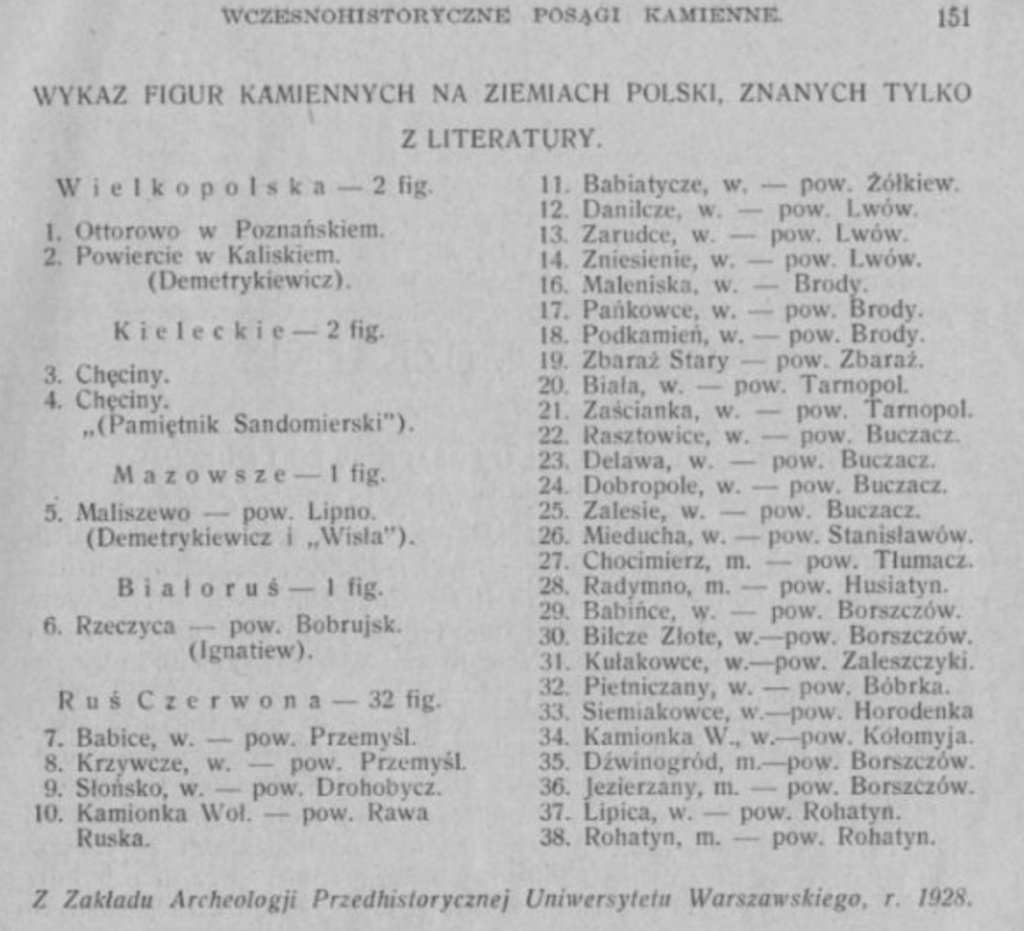
Then there is a short – and not complete! – list of statues mentioned in the literature but lost:
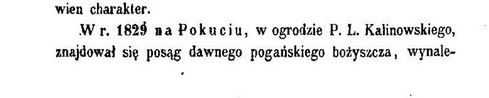
Slavic Statues mentioned in literature but lost. Janina Sokołowska, Wczesnohistoryczne posągi kamienne odkryte na ziemiach polskich, Światowit, 1924-1928.
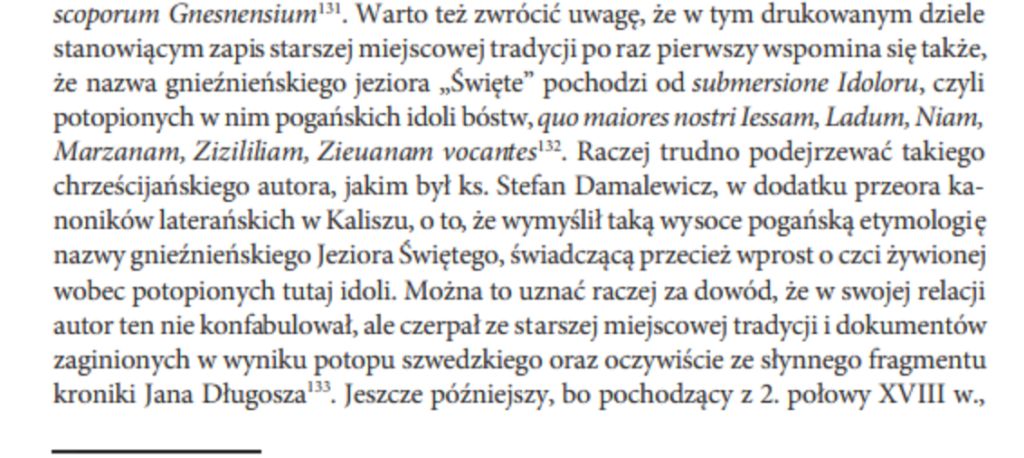
There are also local stories and legends, like the one of Polish Prince Mieszko, who in the 960s asked to throw idols in a nearby lake – hence the name Saint Lake present to this day (Jezioro Święte near Gniezno).
In a chronicle Versus Lubenses from 1380-1390s there is a mention of monks who came from Pforta to Lubiąż and drawn pagan idols in septic tanks.
Both quotes above are from: Kościoły chrześcijańskie w relacji do miejsc kultu i obrzędów pogańskich w późnoantycznej i wczesnośredniowiecznej Europie, Niemiec Dariusz, Architektura w początkach państw Europy Środkowej, 2018, Gniezno : Muzeum Początków Państwa Polskiego
Unknown statue
As reported by Franciszek Kotula in “Po Rzeszowskim Podgórzu”, while wandering in the 1950s or early 1960s in Golcowa, in Podgórze Dynowskie, workers extracting sandstone for road construction discovered a stone statue (not far from the cult hill called Michałek, named after the chapel of Archangel Michael). They considered it to be a pagan deity, Światowid, which they subsequently destroyed “to avoid trouble.”
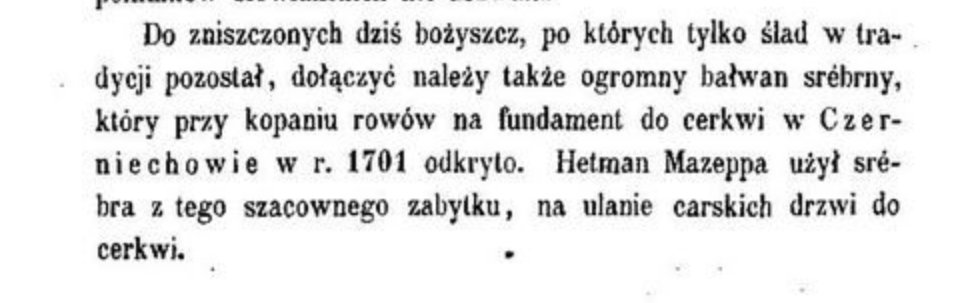
During excavation before building an Orthodox Church in Czernichów in 1701 ta big silver statue was found and Hetman Mazeppa used this silver to build door to the Church’s altars. — Józef Ignacy Kraszewski-Sztuka u Slowian, 1860
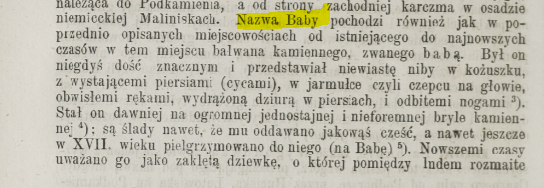
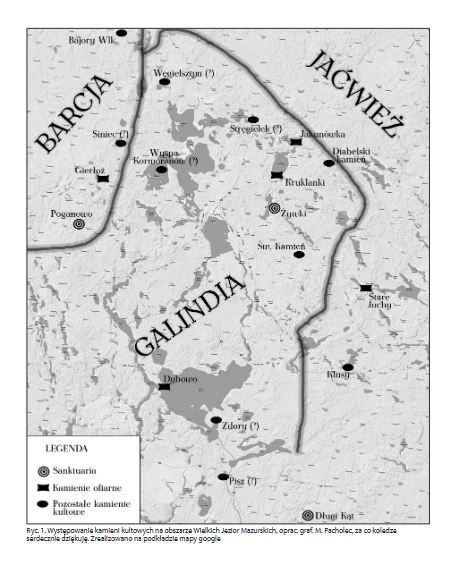
The oldest mention of a Prussian idol comes from 1706 in the chronicle of the city of Bartoszyce, where it is referred to as “Bartel.” Researchers have gathered information about 21 “babas,” of which 8 are considered works of modern sculptors.
Here is a map of Prussian idols. The author of the work “Kamienie kultowe na ziemiach pruskich” (Cult Stones in Prussian Lands) lists a total of 78 different cult and sacrificial stones in Prussia (with descriptions). These are not Slavic Pagan Statues, as Prus were a Baltic tribe, but this is still very interesting as the tribe is long gone and the Prussian baba’s are still standing in Northern Poland.
List of Prussian idols:
Four Prussian idols are in the Archaeological Museum in Gdańsk:
Baba from Gałdowo/Jędrychowo
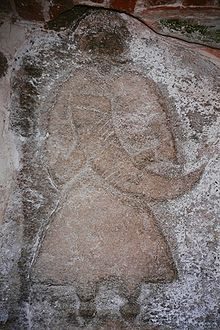
On the weathered surface of the statue, one can discern the outline of the left hand holding a staff, club, or mace, and below that, the upper part of a sword. A drinking horn is visible. In the 1920s, the eyes were still marked.
A stone resembling a human figure was mentioned in 1401 in Teutonic documents as the “Holy Stone” (heiligen Stein). It was regarded as a boundary marker between the villages of Gałdowo and Jędrychowo in the Iława County. In 1887, it was transported to Gdańsk.
Baba from Susz
The statue stood at the intersection of the borders of three localities: Susz, Rożnowo, and Bronowo in the Iława County. In 1887, it was transported to Gdańsk.
Baba from Susz/Nipkowo
The statue features clearly carved facial details – eyes, nose, mouth, mustache, and beard. In the right hand, a drinking horn is depicted, and a sword is “hung” by the left hand.
The statue stood by Lake Suskie, on the border of the two localities: Susz and Nipkowo in the Iława County. Shortly after 1889, it was transported to Gdańsk.
In local folklore, the sculpture was called the “Monk” , and near the place where it was placed, there was also a Monks’ Tavern.
Baba from Mózgowo/Laseczno
Among the so-called babas, it has the most elaborate surface carvings. In addition to facial and hand details, a drinking horn, necklace, spear with a characteristic tip, and a club, mace, or shaman’s staff can be seen. A circular shield may also be marked on the back. Additionally, on the sides, a sword is carved, as well as a figure with hands in a prayer gesture.
Baba from Prątnica
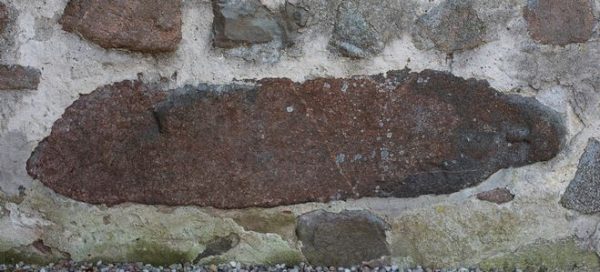
One of the babas was embedded in the wall of a church in Prątnica.
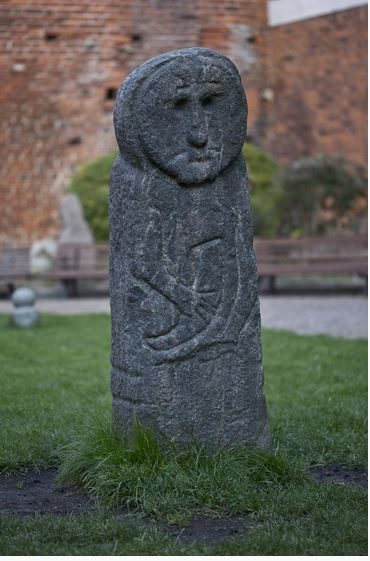
Some time ago, there was a lot of buzz about a Prussian idol that was lying as neither a bench nor a relic in the courtyard of the museum in Toruń. Apparently, it has already been put upright.
• Baba from Barciany
It is located in front of the Warmia and Masuria Museum in Olsztyn.
Gustebalda from Bartoszyce
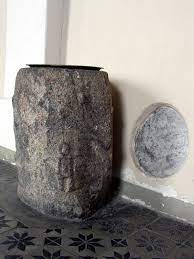
The statue, dating back to around 1714, stood in the Church of St. John the Baptist in Bartoszyce, where it was believed to represent a girl who was turned into stone as punishment for her foolishness and vanity, cursed by her own mother. Around 1836, it was most likely used as the base of a baptismal font. It stands with another, later baba and a sort of stone bowl that I suppose had to be a Prussian sacred fireplace. I gather this because we have a lot of accounts of sacred fireplaces like this and I suppose if it was a part of the church, it would be around church. Sources say nothing about this object.
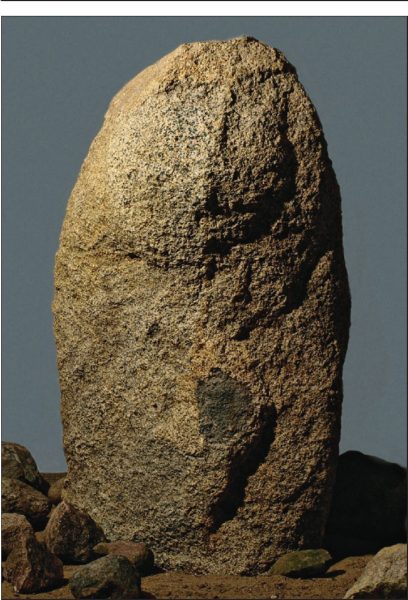
On the evening of August 23, 2007, in the village of Asuny, located about 30 km north of Kętrzyn, a ceremonial conclusion of an international sculpture plein-air took place. The theme of the event was Prussian stone “babas.” A few hours earlier, in the forest near the town of Poganowo, situated 15 km south of Kętrzyn, archaeologists conducting research on a Prussian settlement complex and participating students were the first to gaze into the eyes of the newly discovered twenty-second “baba”… — Mariusz Wyczółkowski, Stone “Baba” from Poganowo.
Wczesnośredniowieczne miejsce kultu Prusów, Seminarium Bałtyjskie, tom II: 605-633. Państwowe Muzeum Archeologiczne, Warszawa 2009, https://www.researchgate.net
God’s footprints
Everyone in Poland has been on a class trip at some point where they had the opportunity to admire stones with so-called “God’s Footprints,” imprints of devilish hooves, and horseshoes. There are so many of them that I can’t list it all, but it’s worth mentioning that similar footprints of great saints, and even Buddha himself, can be found in places like India or Nepal, and probably all over the world. In any case, these “God’s Footprints” were once considered sacred stones to someone, so let’s acknowledge that. As part of a scholarship from the Ministry of Culture, dozens of God’s Footprints and Devil’s Stones from Eastern Poland have been collected at this address.
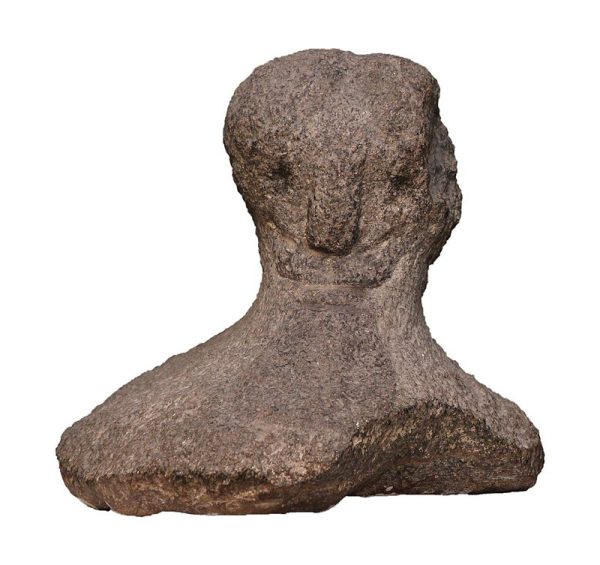
God from Małocino
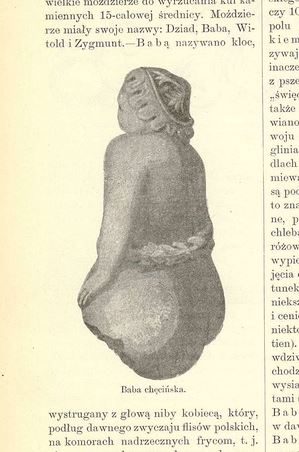
Baba chęcińska
Before the November Uprising, in the vestibule of the Staszic Palace, there stood a figure known as the “Chęciny Baba,” which was considered a pre-Christian relic. Staszic acquired it for the collections of the Society of Friends of Science. In 1817, during a tour of government mines and foundries in the Kielce region, Staszic spotted it in Chęciny and instructed the local mayor to have it transported to Wisła, from where it would be further transported to Warsaw. A report of this event can be found in a letter dated November 16, 1817, from Zorian Dołęga Chodakowski (Adam Czarnocki) to Ludwik Kropiński. The letter reads, among other things: “In Chęciny, I copied a huge marble statue, naked, adorned with an oak leaf and a leafy wreath on its head, which had stood under a house from time immemorial.”
“O Sławiańszczyźnie przed chrześcijaństwem”oraz inne pisma i listy, opracował J. Maślanka, Warszawa 1967, s. 181
And here is mentioned picture of baba:
Zygmunt Gloger, Encyklopedia Staropolska Ilustrowana, 1900
The people in Chęciny referred to a stone statue as the “Chęciny Baba,” presumably dating back to pagan times. Around 1828, it was brought from Chęciny to Warsaw and placed in the vestibule of the Society of Friends of Science. The Chęciny Baba had a type of headdress or wreath made of leaves on its head and was adorned with a leafy wreath around its hips, which strongly resembled the custom of girls wearing wreaths and belts made of mugwort during the Sandomierz Midsummer celebrations. In Chęciny, another statue, male in form, known as the “old man” by the locals, was reportedly found (supposedly in water). It was destroyed around 1827 by Sokołowski, a resident of Chęciny.
Zygmunt Gloger, Encyklopedia Staropolska Ilustrowana, 1900
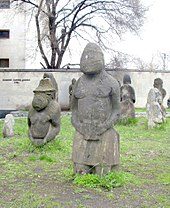
Baby in Dniepropietrowsk
Several dozen “babas” have been collected in front of the Dnieper Historical Museum. Here, I would like to add that while searching for information about “babas” in Ukraine, I came across dozens of them, all quite similar and supposedly left by nomadic tribes from the Asian steppes, resulting in a belt of these stone statues stretching all the way to deep Mongolia. Since this phenomenon is well-documented, it is not Slavic idols specifically and I cannot include all the “babas,” I will only mention a few examples of stone “babas” from Ukraine.
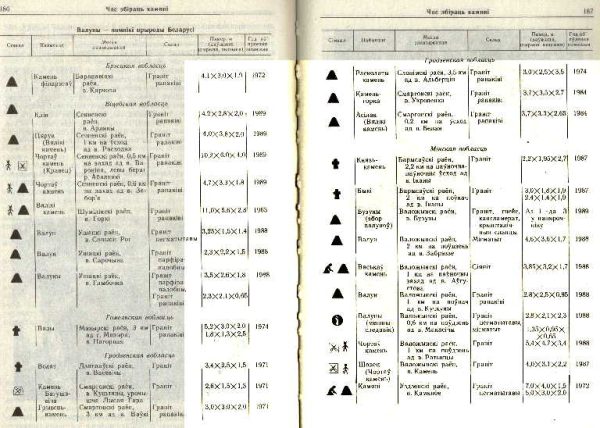
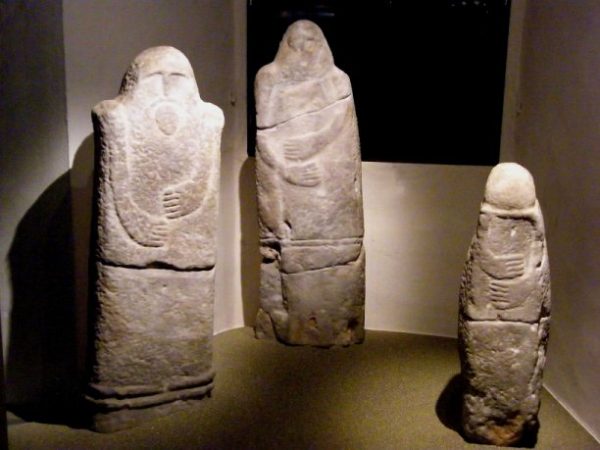
Baba’s and stones from Bielarus
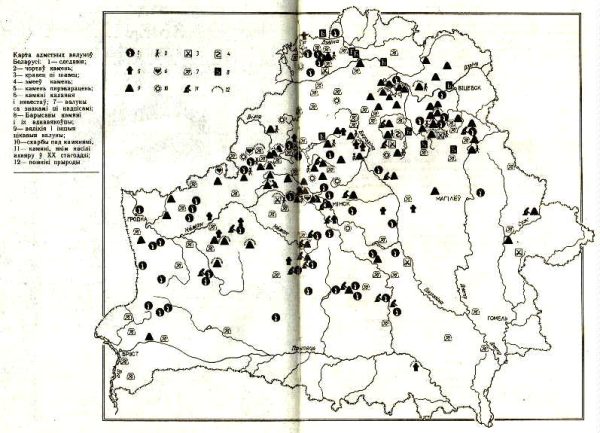
Here are pictures and here is a list of interesting stones and babas from Bielarus:
E. A. Liaukou, : “Mauklivyia Svedki Minuushchyny”, Minsk, publishing house “Navuka i tehnika”, 199 ISBN 5-33-00626-4
Here are a couple of other interesting stones from Belarus that I didn’t mention.
Bamberg Babas
They were found in Regnica river and now are in the museum.
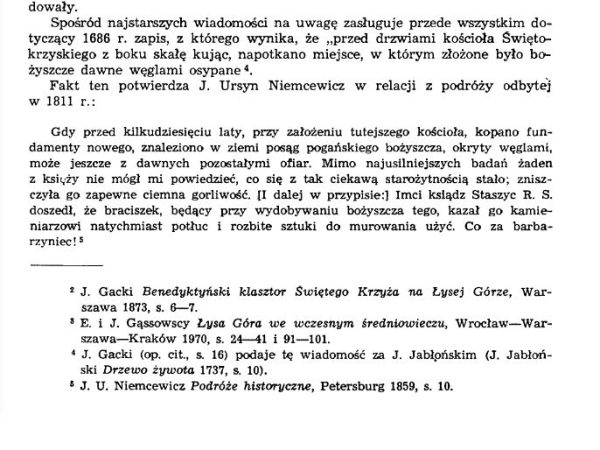
Łysa Góra Idol
“When they hammered rock near the church’s doors they’ve found old god’s statue.”
Eligia Gąssowska, Janusz Kuczyński”Starożytne” posągi kamienne na Łysej Górze, Rocznik Muzeum Świętokrzyskiego 9, 315-3251975
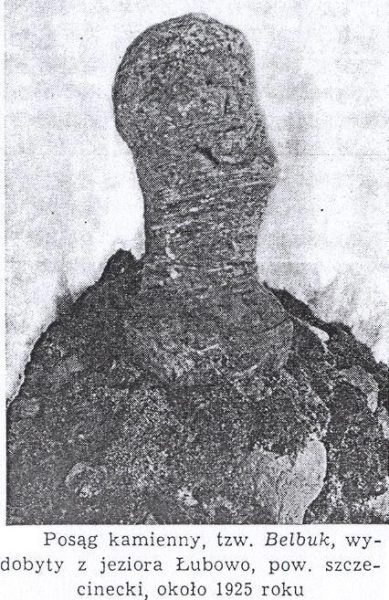
Belbuk
In 1925, fishermen discovered a stone statue of the Slavic deity Belbuk during their fishing activities. According to legend, in the past, the statue of Belbuk was located at the foot of an ancient oak tree on the top of Sosnowa Górka (Pine Hill). During the Christianization period, the object of worship for local residents was thrown into the lake. Currently, it is housed in the Regional Museum in Szczecinek.
Urząd Miejski Borne Sulinowo http://www.bornesulinowo.pl/?page_id=545
Hands from Unieradz
Here is a picture of stone with hands that can be found in the wall of a church.
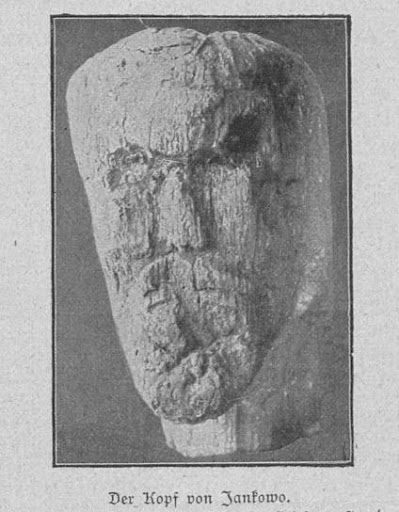
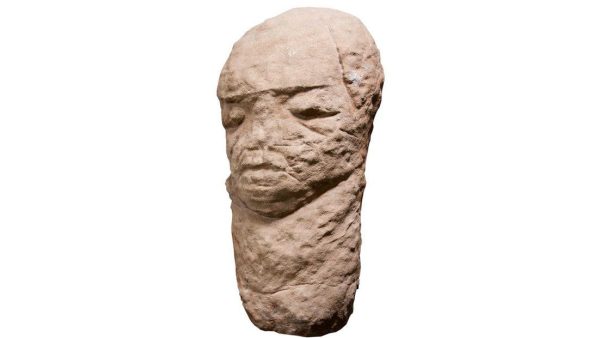
Head from Jankowo
It was found in 1887 during lake digging. Looks like Jesus to me but who knows?
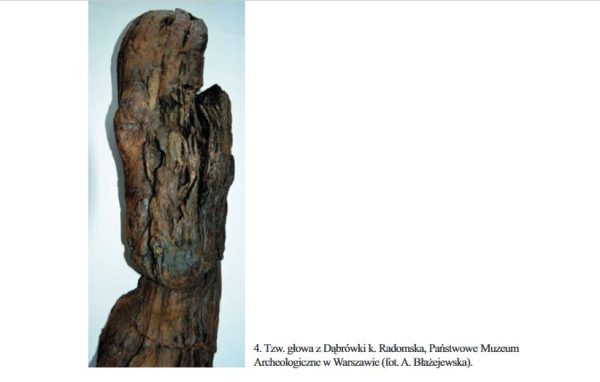
Head from Dąbrówka near Radomsko
Found in the 50., unfortunately it was badly preserved even then and then destroyed during repairs…
Anna BŁAŻEJEWSKA, SZTUKA „RODZIMA” NA ZIEMIACH POLSKICH W OKRESIE CHRYSTIANIZACJI, „Ethos” 29(2016) nr 3
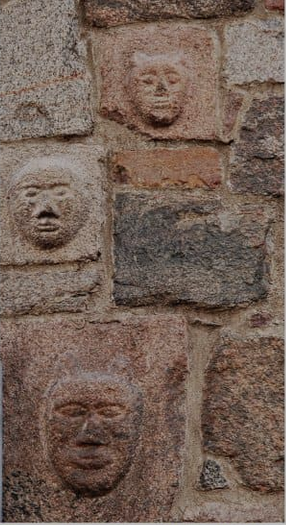
Heads from Inowrocław
Church was built in 1180 and it has these faces in the walls:
Władysław Goliński, Obrzędy w cieniu Rowokołu, Ustka, 2005, http://biblioteka.ustka.pl/images/stories/literatura/golinski/ART8.pdf
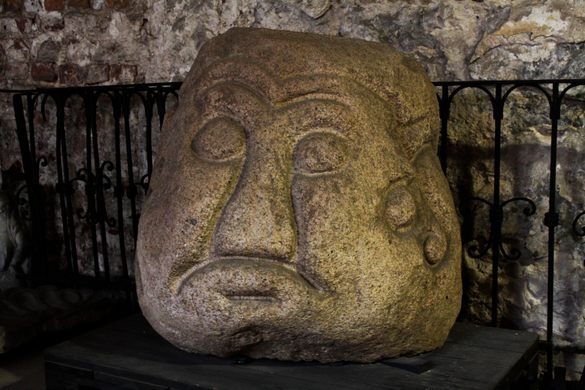
Latvian head
In the 19th century, a peasant unearthed the head of the statue while plowing the land. He handed it over to a stonemason, who eventually transferred it to the museum. The head resurfaced again in the year 2000 when it was excavated near the church, where it can be admired to this day.
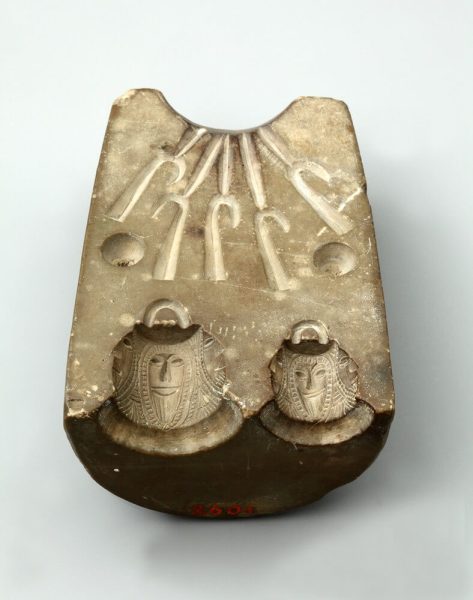
Casting mauld
“Forma odlewnicza z wyobrażeniami twarzy brodatych mężczyzn, wykonana z kamienia, Szczecin, wczesne średniowiecze, 7,1 x 4,2–5,2 x 3,4 cm, fot. G. Solecki/A. Piętak”, https://muzeum.szczecin.pl/zbiory/archeologia/sredniowiecze.html
Head from Dobczyce
Idol from Szkłow in Belarus
Found in 1963 roku. Stored in Museum of Belarussian History.
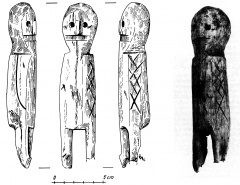
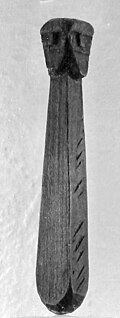
Idol from Szczecin
During the archaeological research conducted in 1995 within excavation site VI (Fig. 1), a wooden figurine – a statuette was found. It was excavated from layer XXXVIII, associated with a settlement level dating back to the 11th century.
EUGENIUSZ WILGOCKI DREWNIANY POSĄŻEK ZE SZCZECIŃSKIEGO PODZAMCZA, Przegląd Archeologiczny, 1995, http://rcin.org.pl/Content/61178/WA308_80329_PIII149_Drewniany-posazek-ze_I.pdf
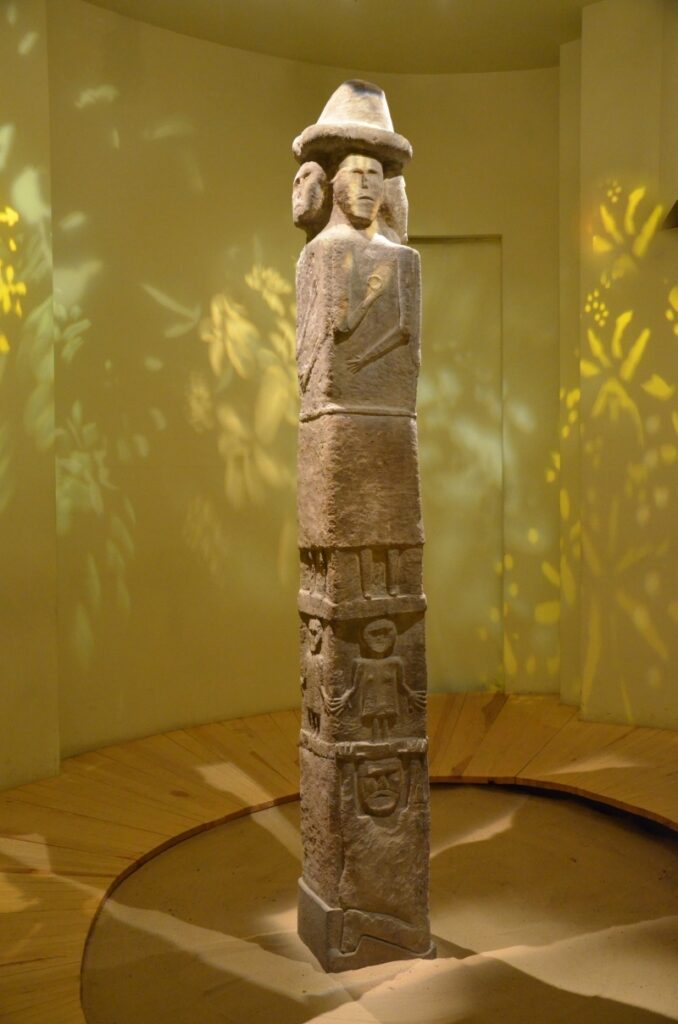
Idol from Zbruch
Most famous of Slavic Monuments was found in the river Zbrucz in modern day Ukraine in XIX century. Honestly it is hard to tell is it real stuff or an imitation made in XIX c., but let’s just acnowledge it and move on… It is stored in Archeological Museum in Krakow.
Masurian sacrificial stones
source: R. Klimek,Kamienie kultowe na ziemiach pruskich, http://grodziska.eu/books/kamienie_w_historii_kulturze_i_religii_62-109.pdf
Stones from church in Sierpc
Here and here You can find someone’s photos of stones that are incorporated into the wall in church in Sierpc.
A throne
Stone thrones, on the other hand, are quite widely attested in medieval Europe. (…) Only a paragon of knightly virtues could sit on such a throne. (…) These ceremonies had to take place in locations sanctified by mythical history. (…) In Polish lands, stone coronation thrones have been identified in the main centers of the Piast state: on Ostrów Lednicki, in Poznań, Kraków, and possibly in Gniezno.
Religia Pomorzan we wczesnym średniowieczu, K. Kajkowski, A. Kuczkowski, 2010
Leźno Stones
They are in Archeological Museum in Gdansk.
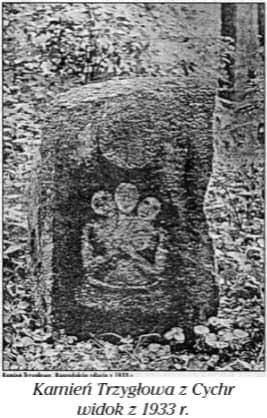
Cychry Stone
I read on Facebook that in the 70s You could still see some traces of paint on it. The stone is still there, but with no painting.
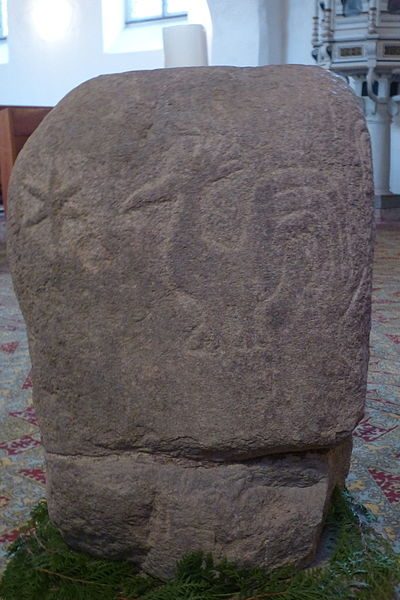
Yesterday, the mysterious stone with drawings of two figures from thousands of years ago was transferred from the forest in Kontrewers to Mniów.
The operation to move the boulder, on which mysterious drawings were carved thousands of years ago, lasted several hours yesterday. The sandstone, discovered 15 years ago, did not previously attract much attention. It was only in recent months, thanks to Gerard Gierliński, a paleontologist from the State Geological Institute in Warsaw, that it gained publicity. The researcher deemed it a discovery of great scientific sensation, as there is no other specimen of its kind in Poland. [Source: Echo Dnia, 2006]
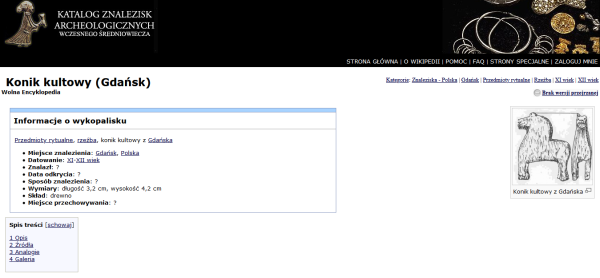
Li’l horse from Gdansk
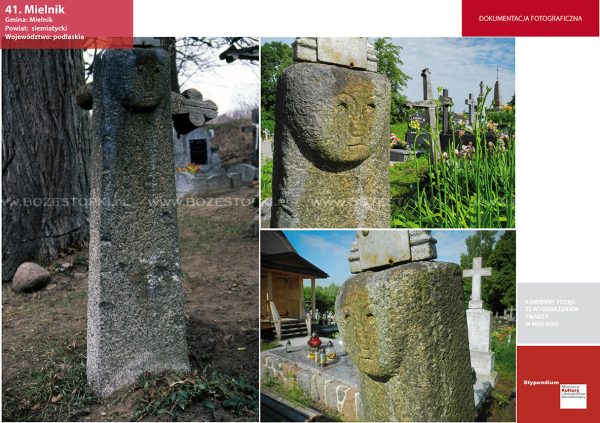
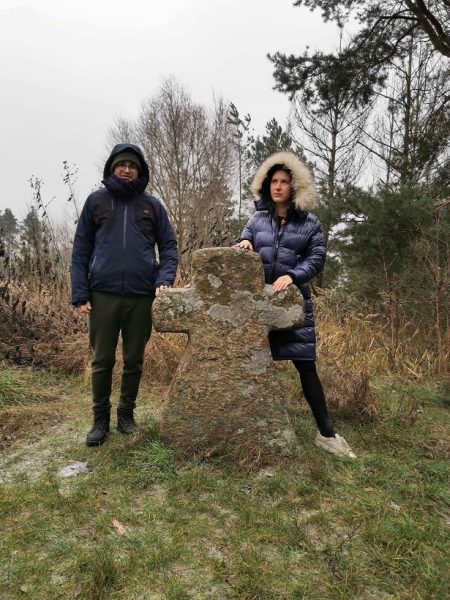
Neple “Cross”
Here is me and my friend in Neple:
There are at least four more baba’s like this nearby in Woskrzenice Małe, in the graveyard, in Knyszewice and Kuźnica.
*There are several hundred penitential crosses in Lower Silesia that look almost identical to “babas,” but they are not. The list can be found here. I’m not sure if there is an answer on the internet to the question of what constitutes a penitential cross and what constitutes a “baba,” or if it is only assessed based on intuition or local legends and records…?
In the not-so-distantly baptized Lithuania, in Prussia and Livonia, there are still traces of uncovered, unbuilt primitive temples, places of sacrifice, and stones resembling Druidic altars, dolmens, on which animals were slaughtered and fires were kindled. It may be that above these simple and ancient sanctuaries, there were coverings, roofs on wooden poles, shrines that time destroyed and people forgot.
In Lithuania, in Zavilys near Daugieliszki in Dudy, there is still a pagan sacrificial stone, elongated and quite large, to which people still pay some reverence. (Tyszkiewicz, Rzut oka, 43). It is undoubtedly a monument from the earliest and most ancient era of this inhabited land, which fortunately escaped destruction in the 14th century.
Another stone of this kind, located under Dziewałtów, is called Mak (perhaps from the word Moku, I understand, I count, I learn, I count – a place of learning, a place of numbers). This stone has a hollowed-out hole in the middle; its height is four feet, and it has a circumference of twenty feet.
Another one, under Rogów (the name of the place echoes with the word Rogas, altar in Lithuanian), is called Żaltis and has three snakes carved on it, from which its name derives. It was supposed to be moved to Kiejdany.
Near Oniksztami, on the road from Wiłkomierz, there is a large granite boulder, forty feet in circumference and ten feet high, which was also an altar of sacrifice. There is a folk tale that a certain boyar was punished here for sacrilege and met his death, and since then the stone has been called by the name of the culprit: Pantukie.
The searches for sacrificial sites by Dr. Kruse in Livonia and Courland yielded few similar discoveries. At Salis in Livonia, a sacrificial cave was found; at Ermes, a large stone altar in the forest.
Dr. Kruse also indicates other sites: Aa, near Libava, in Kazdangen and Kapscht, the stone of Perkunas, in Dondangen and under Anzen in Courland.
Sacrificial stones among the Slavs were placed on highlands, mountains, and forests in Lithuania, mostly under sacred trees, as can be seen on the so-called Żaltis under Rogów. They sometimes had irregular carvings and could be adorned, but the more precise ones were destroyed, and what remains cannot give us a complete picture of what has been ruined.
(Art among the Slavs: particularly in pre-Christian Poland and Lithuania, Józef Ignacy Kraszewski. A.H. Kirkor, 1860)
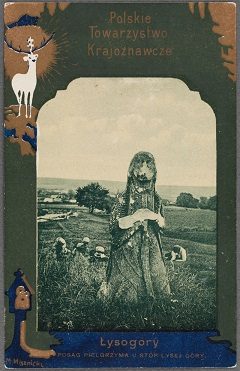
‘A Pilgrim’ from Słupia
Surrounded by legends, a mysterious figure standing by the road from Nowa Słupia to Święty Krzyż probably dates back to the 13th century. Father Józef Gacki, a historian of the Radom region and the history of the Church, writes: Therefore, this monument had to be erected before the Tatar massacre [in 1260], in which all the local inhabitants and those from the surrounding areas perished, and as a result, its meaning among the influx of foreign populations was lost.
National Museum of Kielce, https://mnki.pl/pl/obiekt_tygodnia/2016/pokaz/133,pielgrzym_swietokrzyski_u_stop_lysej_gory,6
Some other Slavic stelas similar to Zbruch one
Oleksij Komar, Natalia ChamajkoIdol ze Zbrucza:zabytek z epoki romantyzmu?, Rzeszów, 2013, http://www.archeologia.ur.edu.pl/wp-content/uploads/2015/06/MiSROA_34_Idol_ze_Zbrucza_suplement.pdf
Józef Ignacy Kraszewski-Sztuka u Slowian, 1860Józef Ignacy Kraszewski-Sztuka u Slowian, 1860
“I myself saw three such babas in my childhood, partially broken, lying near the perimeter of the Holy Trinity Church in Krakow, long since removed.”
Maciej Miechowita, 1521,w: Leszek Kolankiewicz: Dziady. Teatr święta zmarłych.. Gdańsk: DiG, 1999, s. 426-427
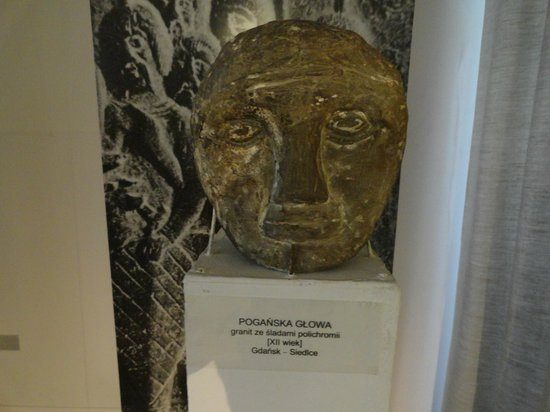
“Pagan head”
Found in Gdansk-Siedlce and said to be from XIIth century. From Archeiological Museum of Gdansk.
“Magic” stones of Lithuania
On the map of magical places by the Lithuanian Chamber of Tourism, under numbers 6, 7, 12, 21, 28, and 53, we have various stones, including the mountain of the goddess Ladai, a stone with signs from Vilnius, and the Mythological Park.
Biggest stone in Poland
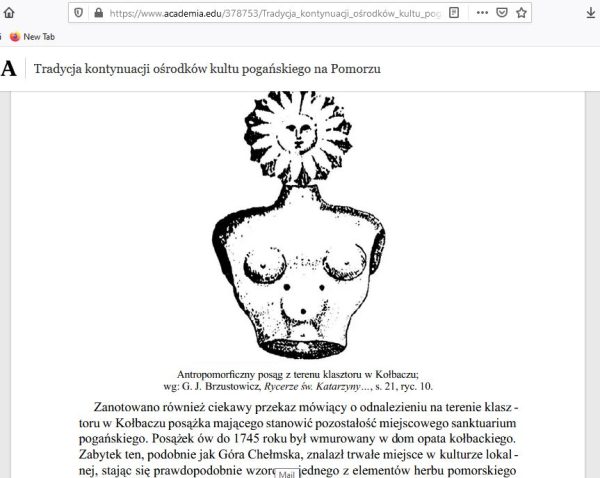
Is named Triglav and is located on the christian cementary with religious ceremonies happening ON it to this day. Was there another sacred place before that? More: Andrzej Kuczkowski,Tradycja kontynuacji ośrodków kultu pogańskiego na Pomorzu, Muzeum Zachodnio-Kaszubskie, 2010, https://www.academia.edu/378753/Tradycja_kontynuacji_o%C5%9Brodk%C3%B3w_kultu_poga%C5%84skiego_na_Pomorzu
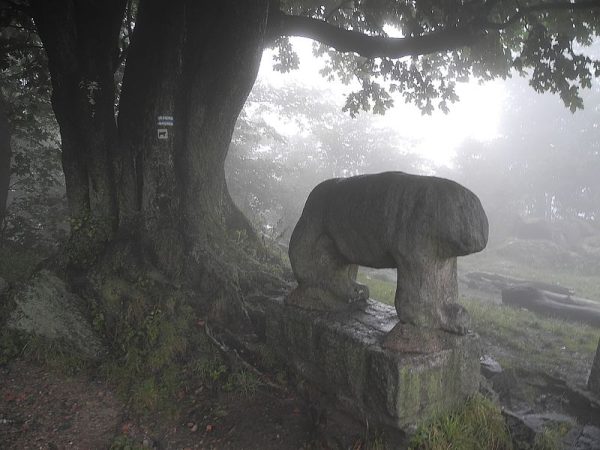
A bear, a lady and the fish, a Monk
The structure was likely built during the La Tène period[1], in the time range from 200 BCE to approximately 400 BCE.
Zenon Woźniak writes about them in his work “The Problem of the Existence of the Celtic Nemeton on Ślęża” published in “Przegląd Archeologiczny” (Archaeological Review), 52, 2004.
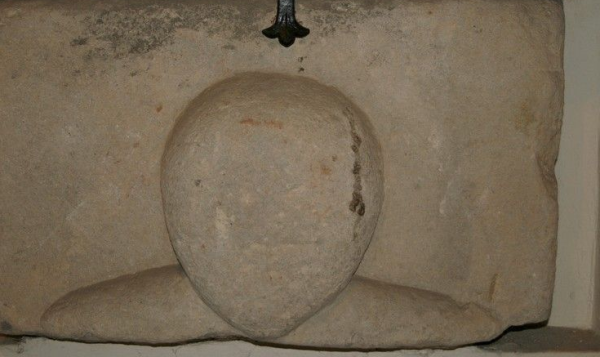
Nobody in particular, Trzebnica
Kościoły chrześcijańskie w relacji do miejsc kultu i obrzędów pogańskich w późnoantycznej i wczesnośredniowiecznej Europie, Niemiec Dariusz, Architektura w początkach państw Europy Środkowej, 2018, Gniezno : Muzeum Początków Państwa Polskiego
Just a side-note: this are examples of stones from the walls of some rural churches in Poland. Think of how many of these I don’t know about and multiply that by Russia, Belarus, Ukraine…
According to Nestor’s Chronicle, the statue of Kiev’s Perun was made of wood, with a silver head and golden mustaches. It must have had a temple, as it was mentioned to be in Novgorod. The Kiev Paterik reports the destruction of temples in the Rostov region. In the Kiev Sinopsis, there is a legend about the adventures of the statue of Perun. “Wise people claim that when the statue of Perun, dragged by the newly baptized, was being taken from the mountains to the Dnieper, it groaned and moaned like a woman in labor. Therefore, this mountain was called the Devil’s Burden. When it flowed through the Dnieper, the idolaters shouted, “Wydybisia!” (come out of the depth, free yourself from the deep). Thus, it stopped at the shore in a place now called Wydybiczy. However, the Christians tied a stone to its neck and drowned it.” Wiara Słowian z obrzędów, klechd, pieśni ludu, guseł, kronik i mowy słowiańskiej wskrzeszona , 1880 na pdst. Latopisu Nestora, ok. 1113 r.
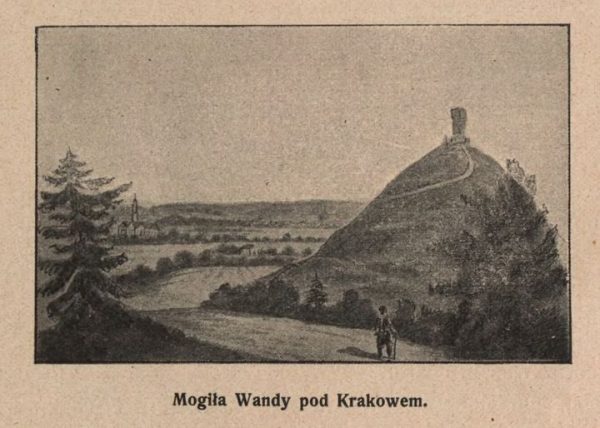
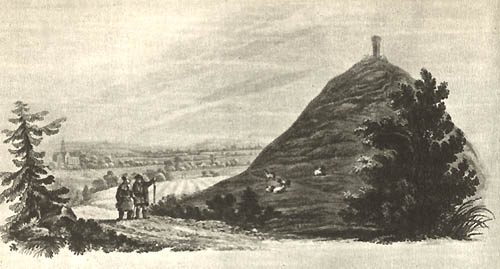
So there is Krak’s mountain in Krakow and 100 or so years ago it was widely known that it is Krak’s burial mound, and there was another one of mythical queen Wendy – with a statue on top.
Kopiec Wandy we wsi Mogiła, w dali Kraków (ryc. F. Dietrich, z Monumenta regnum Poloniae Cracoviensa, Kraków 1827.)
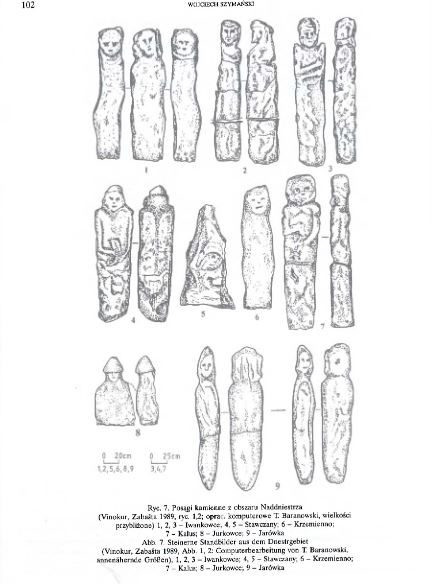
Pagan statues from Iwankowce, Stawczany and others fro Ukraine
A relief from Arkona
A relief from Rugia
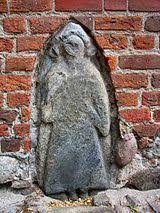
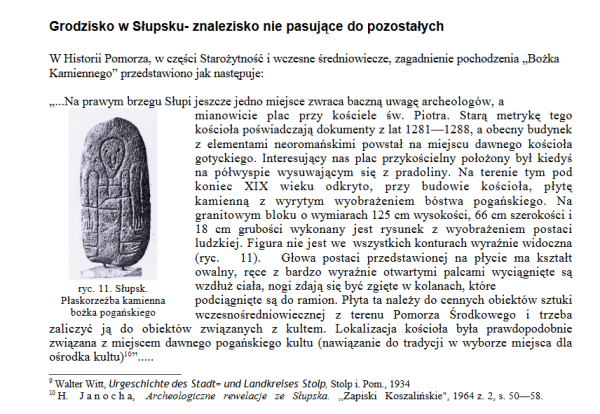
A relief from Słupsk
PRADZIEJE SŁUPSKA, USTKI I POWIATU SŁUPSKIEGOczęść 2/3- str. 34- 56, Władysław GolińskiUstka, wrzesień-październik 2008
Światowid’s Pole
The Church in Lipnica Murowana from the late 15th century is one of the oldest and most valuable wooden churches in Lesser Poland. It was inscribed on the UNESCO World Heritage List in 2003. According to tradition, it was built in 1141 on the site of a pagan shrine, from which the so-called “pillar of Svantovit” supposedly originated, supporting the back of the altar of St. Leonard.
Europejskie Dni Dziedzictwa, https://edd.nid.pl/wydarzenia/czy-wiesz-gdzie-znajduje-sie-slup-swiatowida/
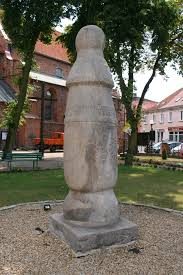
Konin’s traffic cone
In the city stands the so-called “Konińskie Pillar,” the origin of which is a matter of dispute: whether it is the oldest (outside of Rome) road sign in Europe or a statue of a pagan god. Although the inscription on it, indicating that it marks the halfway point between Kalisz and Kruszwica (52 km), dates back to 1151, its striking resemblance to the Ślęża Bowl suggests that the statue is older. It is possible that before it became a road sign, it was a pagan statue where rituals were performed.
Relikty przedchrześcijańskich kultów, wierzeń i obyczajów religijnych na terenie Wielkopolski. Propozycja szlaku turystyczno-kulturowego, Justyna Kuchta, Akademia Wychowania Fizycznego w Poznaniu,Turystyka Kulturowa, Nr 7/2012
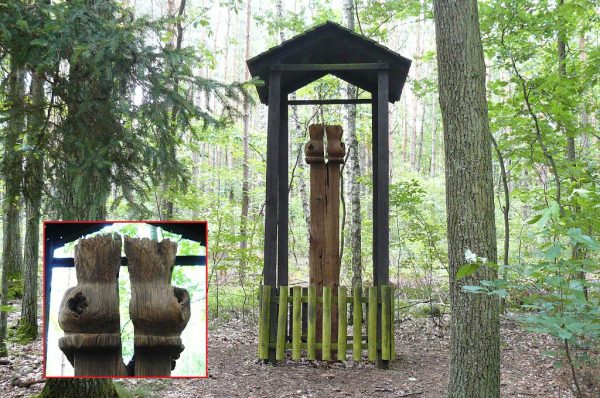
A pole in Puszcza Zielona
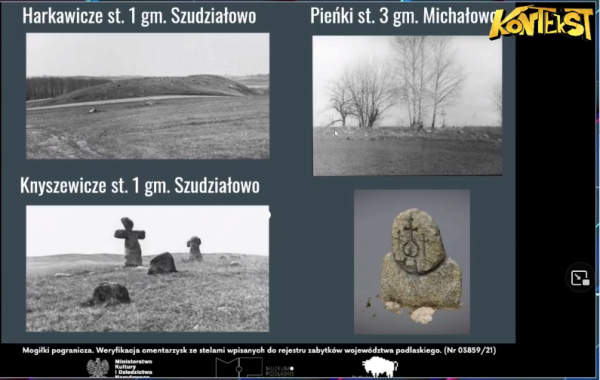
Stellaes from Podlasie
slajd pochodzi z prezentacji pt. Mogiłki pogranicza. Cmentarzyska ze stelami na Podlasiu – KONTEKST, Archeologia Żywa, Facebook
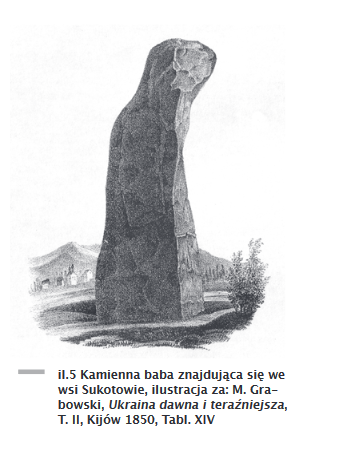
Stone from Sukotovo in Ukraine
Wolin’s Światowid
It’s actually a very small, four-faced amulet from around 9th-10th century.
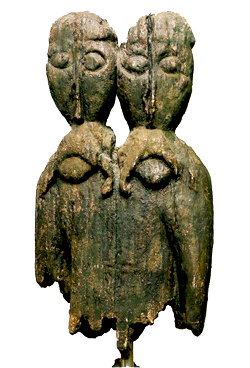
Statues from Fischenrinsel
Among the discoveries of Slavic sculptures, the findings from Fischerinsel (Fishermen’s Island) carry great importance – a Slavic settlement on Lake Tollensee near Neubrandenburg. Two wooden sculptures dating from the 11th to 12th century were discovered.
Pismo Folkowe, https://pismofolkowe.pl/artykul/miejsca-poganskiego-kultu-slowian-2982
A Happy dancer
It is in the wall of church in Walgast (Germany), once a Slavic land.
Krajna Snitch
“In a church in Krajna, there is a base from sacred fire from pagan times near the entrance. Now used as a sprinkler.” — SANKTUARIUM MARYJNE W GÓRCE KLASZTORNEJ – PRZEWODNIK, https://gorkaklasztorna.com/przewodnik-po-sanktuarium
Interestingly, on Górka Klasztorna (Monastic Hill), there is the oldest sanctuary in Poland because, in 1079, the Virgin Mary was said to have appeared there on an oak tree. There is also a stone circle on that mountain.