Got paper? Straw? Eggs? The beauty of ancient Slavic crafts is in the fact that anyone can do it from the economical point of view. The technical side is more advanced, but there are easier ways to do traditional Slavic crafts.
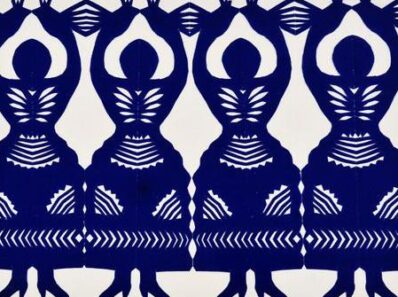
Wycinanki paper cut-outs

Wycinanki, or traditional cut-outs, are actually not that old – they date back as far as colorful paper in Poland, so to the 19th century. There were many schools with distinctive styles; most notably from the Mazovia region: Opoczno, Łowicz, and Kurpie.
Did you know… in one 1960s book I’ve read that there was a Podlassian paper-cut-out art form from Siemiatycze, but it got lost even then, and nowadays nobody knows about it. But there is a very distinctive and relatively unknown form of cut-outs from Belarus.
In olden days, people would also make curtains with paper, but the art is lost now (although I saw a workshop near Siemiatycze in 2025, so maybe it is getting revived after all).
Pająki ludowe
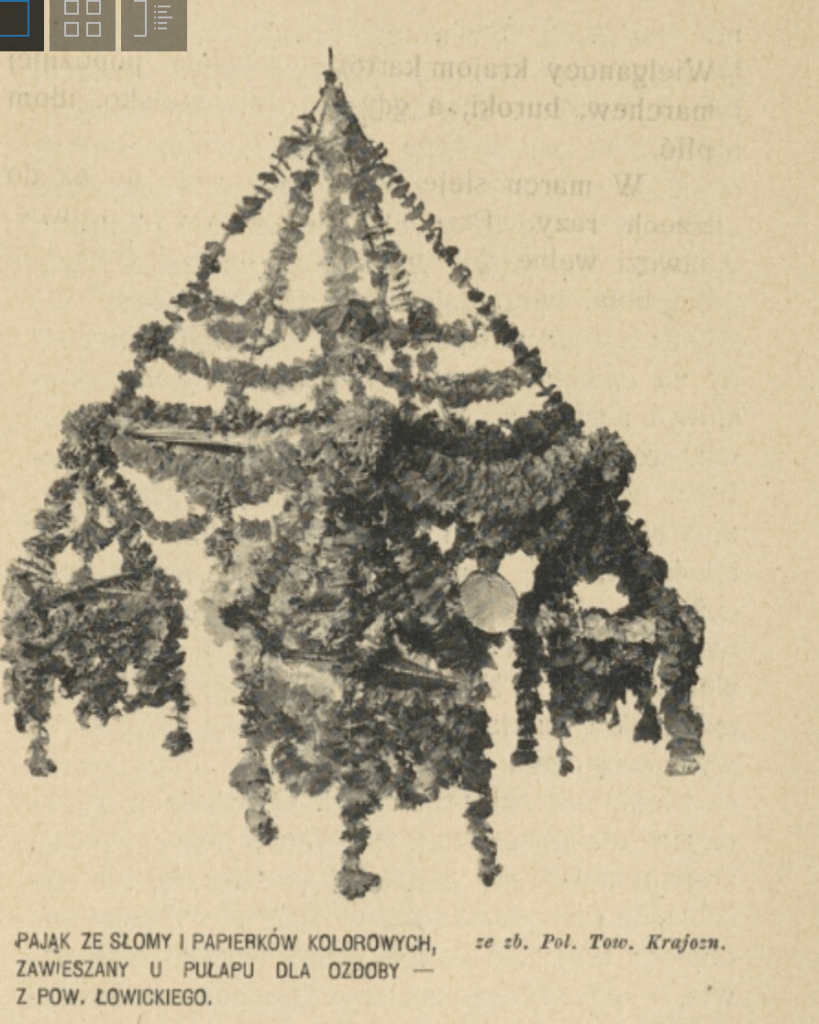
The ancient history of pająki ludowe, or straw mobiles, might be longer than we expect, with roots in Slavic cosmology – according to some Russian sources. The techniques vary, but you can learn the basics from YouTube. The only thing you need is string and some straw, and modern-day straw drinking straws are widely available and cheap to use. Of course, you can also just collect straw in the fields – your pająki will be more delicate, as this straw is usually quite thin.
Got no straw? The other form of pająki is made of thin colorful paper – krepina or bibuła, we call it in Poland.
Pisanki

One of the best things about Slavic crafts is that the things you need are free or cheap – like in the case of pisankis. Now, there are many regional variations and different techniques.
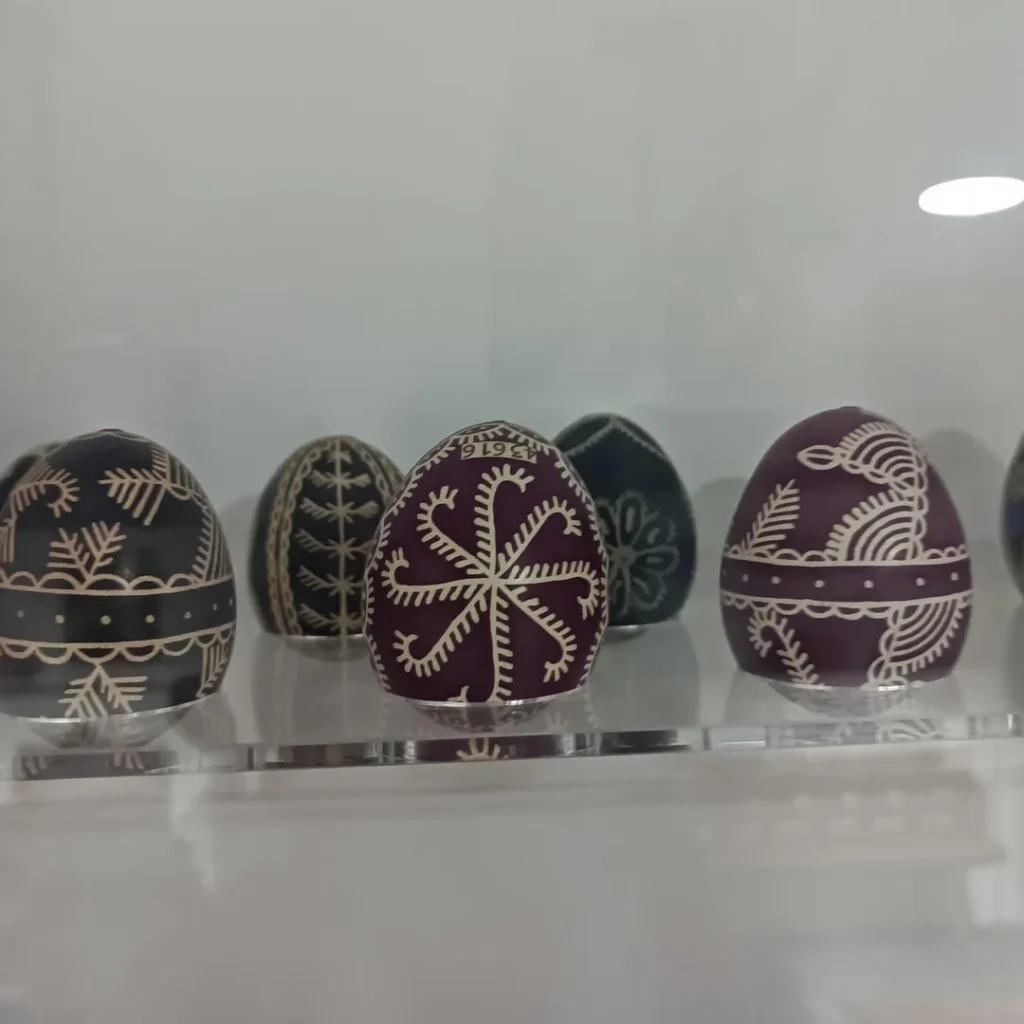
If you just want to spend time with kids, you can dye your eggs with ready-made dye (or make one from onion skins, spirulina, turmeric, etc.) and draw, paint, or put stickers on. Now, if you want to get more retro with your authentic Slavic crafts, try these:
- Wax pouring – I bought a cheap tool (Google pisak do wosku) and even used it once. You melt wax (for example, from a candle) and put it in the little container on the pen; then it gets poured on the egg and hardens there. You can also dye your egg afterwards and then remove the wax – you will get an intricate, crochet-like pattern.
- Egg carving – With a very thin knife or a needle, you can make traditional kraszanki that are so delicate they look like true works of art.
- Ancient Slavic symbols – The oldest pisankis from the Ethno Museum in Warsaw, Poland, are adorned with solar, water, and fire symbols – and these you can paint with any technique, or just with a marker.
Palemki
Traditional Eastern palemki are only 100–200 years old – as old as the mass use of colorful paper in Poland. Before that, “palemki” were small straw decorations or just branches from the willow tree that you could bless and then plant. Nowadays, the art of making real palemki is getting lost because people use ready-made decorations or palemki from… China.
Motanky Dolls
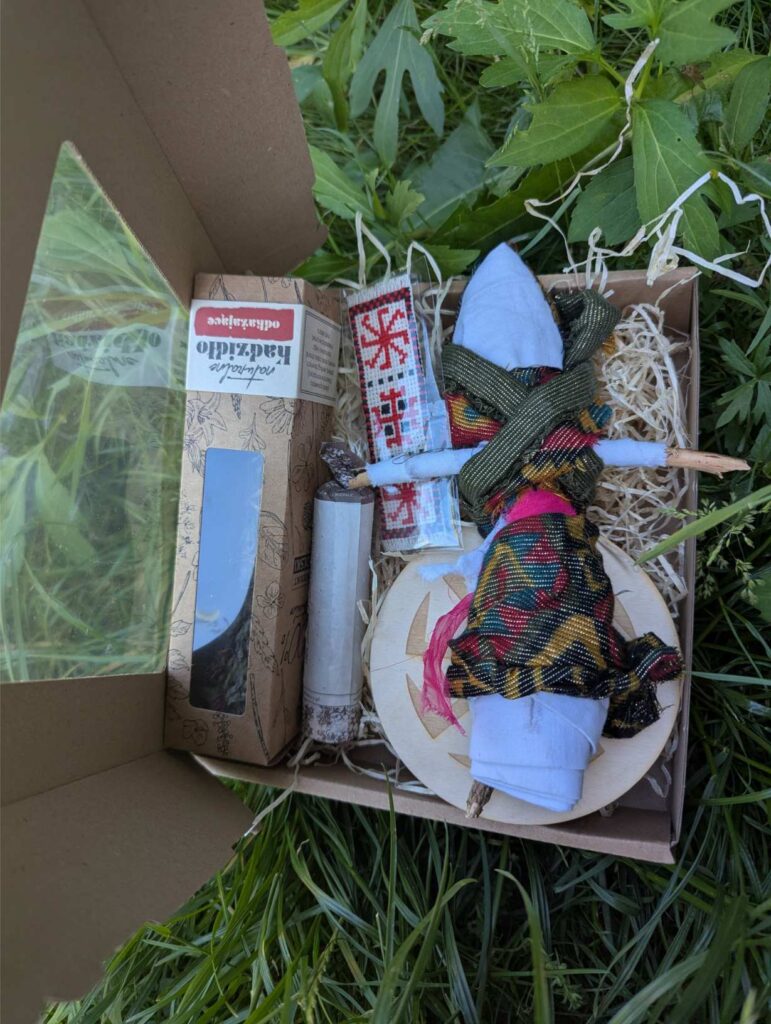
The technique is not that hard: anyone can put together a simple doll made of old clothing and string. What is more important in this old Ukrainian-Belarussian art form is intention. With that, a motanka doll becomes a therapeutic, maybe even magical device.
There are many kinds of motanki. Some got lost in memory, or their meaning is unknown today. You can think of it as a positive voodoo doll that heals rather than harms. The basics are simple:
- Don’t cut anything – tear material and threads
- Don’t stitch anything, don’t use pins or needles – just a simple knot
- Don’t use motanka dolls of other people’s, don’t collect them or bring them home – just make your own.
Traditional Embroidery
Listen, it’s hard to make elaborate ones, but any lady from a Slavic land had the basics of traditional embroidery. This, too, you can treat as a mere art form or go much, much deeper.
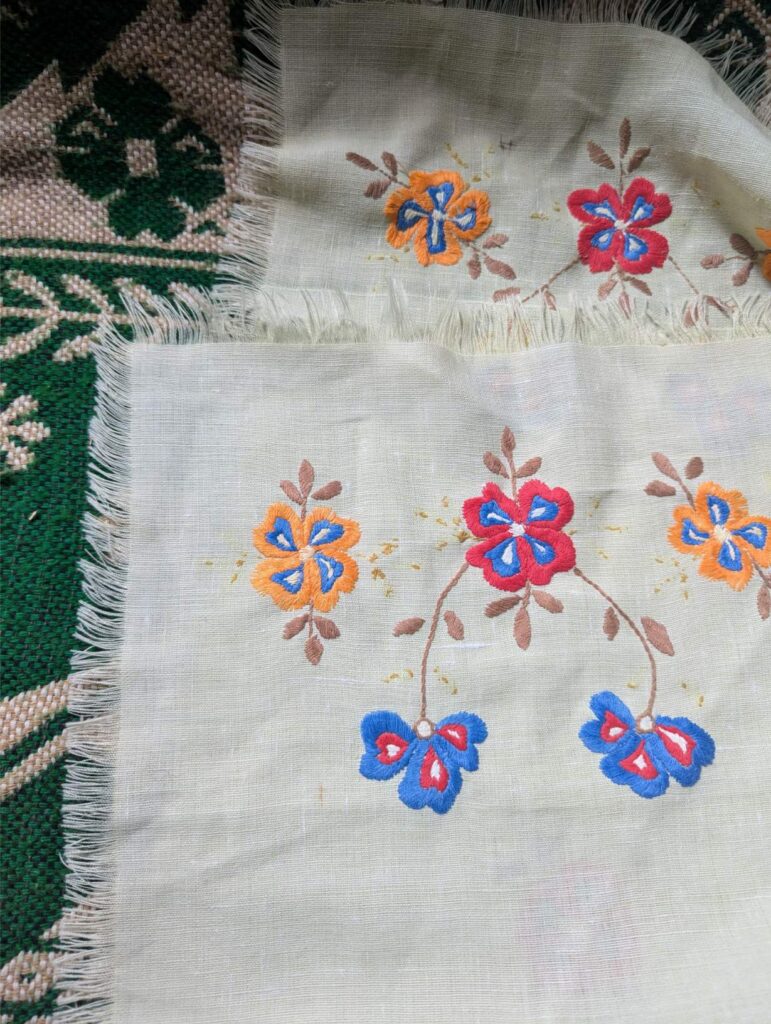
Symbols, colours, patterns… Even the maker’s psychological state and intention were important, and some would fast, pray, and sing during their work. Numbers are also very important, with 40 different stages of embroidering a traditional sorochka and 9 fibers in traditional thread…

I could go on, and on, and on about this, but the best thing to do is to just start: pick a symbol and try to embroider it in red on a cloth with some meaning to you. Like singing, like writing, or anything really – this work shows its true meaning when you do it, so you’d have to just try.