What does it actually mean to be a Slavic witch?
Are there any left—and can you become one?
“All of our ancestors were witches,”
say girls on Instagram.
Or were they?
There is a famous skeleton of a female shaman from 9,000 years ago
uncovered in Bad Dürrenberg in modern-day Germany.
Adorned with animal skulls and bones,
she was surely a sorcerer. But a Slavic witch? Maybe. Probably not.
Much later, witch trials swept across Europe—
rarely in Poland, Belarus, or Russia,
but very common in the German states that today include parts of western Poland.
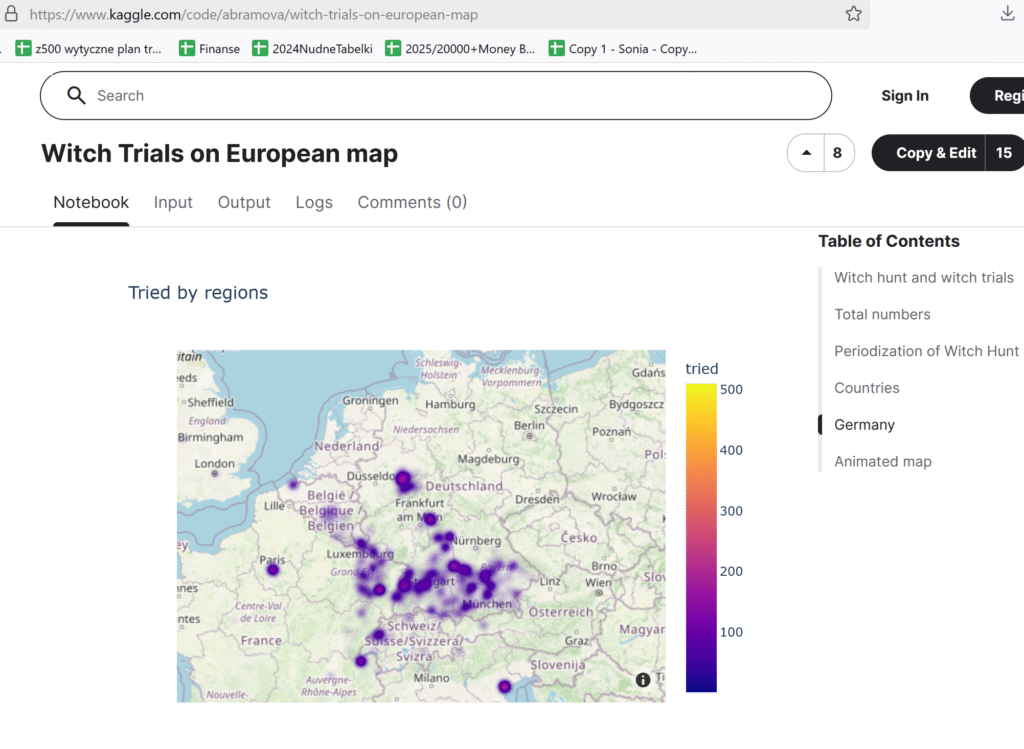
Were the women involved Slavic witches?
Some certainly were.
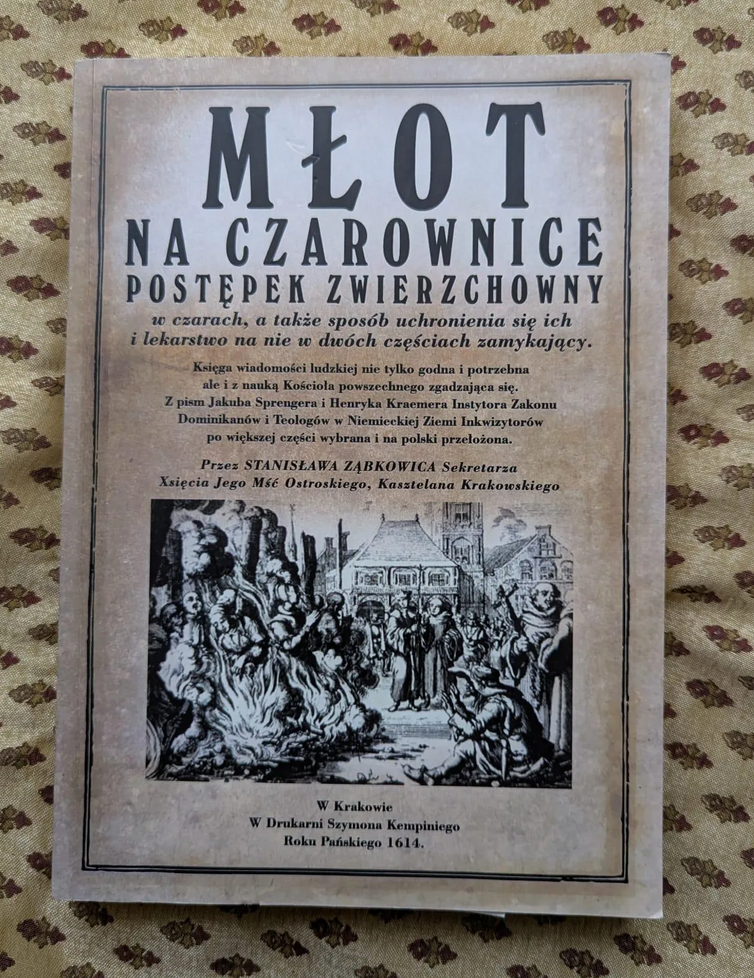
We know from accounts of their so-called “sins”: casting spells on animals and humans, or using special formulas.
„In 1782, Anna Göldi, a servant of the town physician (who was also a judge), was sentenced to death. She was accused of causing her employer’s daughter to fall into convulsions, spitting out needles and nails—considered unmistakable signs of diabolical influence. The tribunal declared it witchcraft. Yet, since the judges were educated and “enlightened,” they sentenced her for poisoning instead.”
—M. Komar, Prośba o dobrą śmierć (1993)
Witch gatherings in Poland
“The most prominent of witches is the Midnight Hag (…)
Rocky Łysa Góra is our motherland
—I feel at home there.”
—J. W. von Goethe, Faust
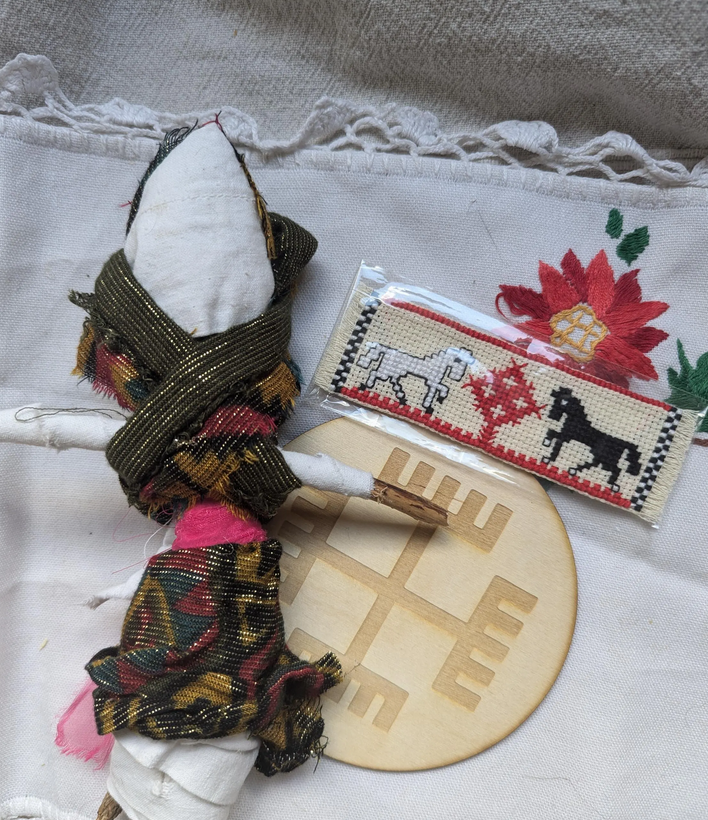
To this day, we joke about Slavic witches gathering in forests or on mountaintops, with Łysa Góra and Babia Góra being the most famous sites in Poland.
Read more: What to give to a Slavic Witch? Gift Guide for those who want to Know
For centuries, sermons denounced women who gathered—or were accused of gathering—to practice magic. As early as the 1500s, priests demanded:
“Did you pray to the Rodzanice, Rod, and the wilas? Did you make offerings to Mokosh, Perun, and Chors?”
—according to St. Sawa Sierozhevski
In truth, there are not many Slavic witches left.
Counting what remains of Polish szeptuchy, we have only a few today.
“My grandma was a szeptucha from Podlasie,” boasts a young Ayurveda practitioner from Warsaw.
Does that mean anything?
Perhaps.
Just as carpentry or acting skill can pass from father to son, being the daughter or granddaughter of a szeptucha may mean something too.
Or not.
Read more: On Internet Witches
So. Were Your Slavic ancestors witches?
If your ancestors were noblewomen, they may have abandoned such practices centuries ago.
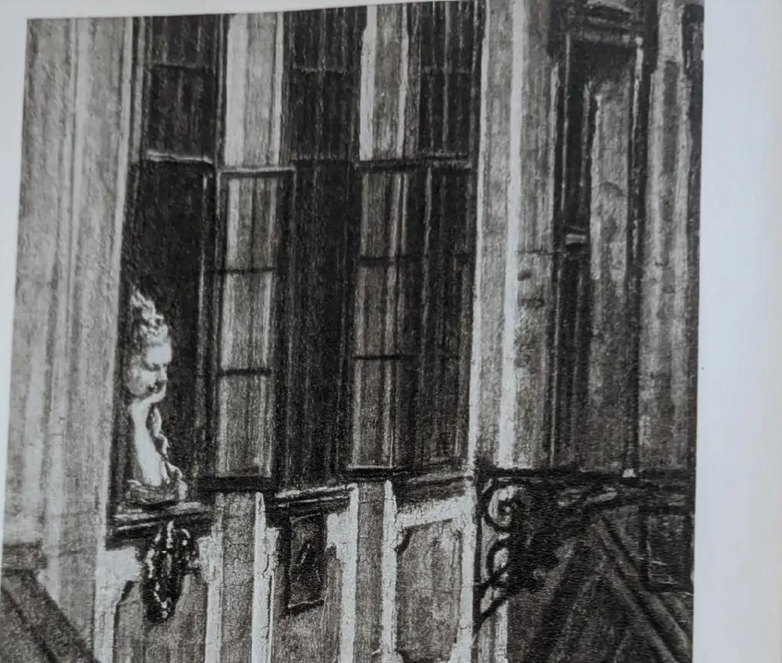
They traveled to Paris for fashion, had English doctors even in the 1700s, and their diaries mention little of traditional Slavic rites.
And if Your ancestor was a city-dweller?
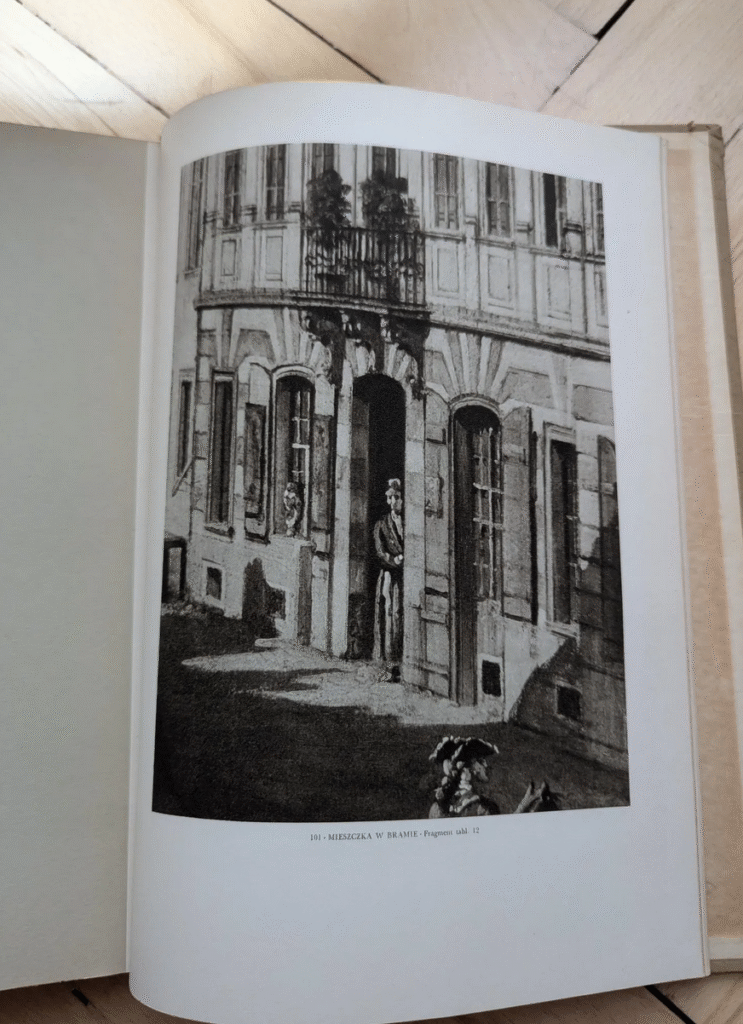
If you can imagine Victorian London, you can see that 19th-century Łódź was hardly “au naturelle.” Women worked in factories, and many forgot their family ways.
The harsh reality of the communist era is that millions of people were displaced, either within Poland or to the Soviet Union.
Families lost touch with ancestral land, recipes, rites—let alone the secrets of Slavic witchcraft. I’ve read Svetlana Alexievich’s grim book War’s Unwomanly Face to find any traces of old customs of Belarus and I found practically nothing, because during and after war people were already displaced and demoralized.
Ironically, some of the most “backward” rural communities were modernized the fastest, losing connection to nature. You can have a taste of that era and reality in “Chernobyl” series among many others.
An example:
“How can you walk barefoot?! I can’t imagine—it hurts me so much! I always need shoes!” an older woman in a Warsaw park told me just weeks ago.
You can imagine someone from the village who after millenias with no shoes after 40 years in the city can’t walk barefoot probably also can’t heal with herbs, chant traditional songs etc…
But on the other hand…
Listen. My grandma is no Slavic witch. But she does know a way to cure a tummy ache. I use it on my child, and it works. Back then, doctors were rare, and most women at least aspired to treat common ailments in their family or neighborhood. Some were more skilled than others, gaining fame—but also risk, as with the witch trials. Over time, people kept such knowledge to themselves. So the most authentic things you can find are the ones that your grandma barely ever mentioned, the ones she dismisses and thinks nothing of. Unless someone is a daughter of szeptucha, which for 99,99 % she is not, there is no spell book and ancestral magic involved.
How much Slavic blood makes you a Slavic witch?
Today, debates rage online:
- Can I practice Slavic native faith if I’m not Slavic?
- Is it offensive to call myself a Slavic witch if I’m of another ethnicity?
- If I only have vague traces of Slavic ancestry, does it count?
Some insist you must have it “in your blood.”
But must you?
Did the wives of early settlers in America, whether from Spain or elsewhere, not know how to use herbs when no doctor was around?
Do Mexican, Indian, or Armenian women not know ways to protect their homes from evil with some basic magic?
Of course they do.
The truth is this:
the wisdom to uncover is within ourselves, not outside. If you know any “magical” women, she knows this. Many of us—perhaps all—carry an inner system of healing and ritual that fits our own needs.
The practice is not to mimic someone on the internet, sign up for another course, or adopt a new religion. It is to uncover what is already within you, and in doing so, to become a wiedźma—literally, “the one who knows.”