There are many Slavic symbols online — one could say that every week there’s a new one coming! So what’s up with all that: are they real? Which ancient Slavic symbols are actually… ancient and Slavic, and which: not so much?
Svarzyca/kolovrat?

We see it on a church in Ethiopia, in Native American art, and in Hindu temples. I don’t believe it is strictly a Slavic symbol, but rather something that is shared almost universally among cultures — yes, Slavic cultures too.
It was found on a bowl from Biała, and some form of it is visible on the wall of Kruszwica church.

Yeah: some form of it. Ancient swastikas, through Neolithic solar symbols and modern-day Svarzyca, are not that similar to each other, so it’s hard to call it an “ancient Slavic symbol,” and especially hard to give it any solid meaning — like a certain god, for example.
Ręce Boga?
On the Biała bowl there is also another interesting symbol: Hands of the God.

I read once a very deep scholarly paper on how these are some sacred broom depictions of something… And “Hands of God” is a name that speaks for itself… But we saw it one time. It can be a sacred Slavic symbol… or a coincidence. What we know for sure is that it was indeed found on a 1700-year-old bowl from Biała near Łódź, Poland — and that it was since stolen by Nazis, because they liked the symbols too.
Perunica?
Another one of the Slavic symbols like that is the so-called Perunica. You can find it all over Europe — on churches, in Leonardo da Vinci’s notebooks, and yes — in Carpathian houses.
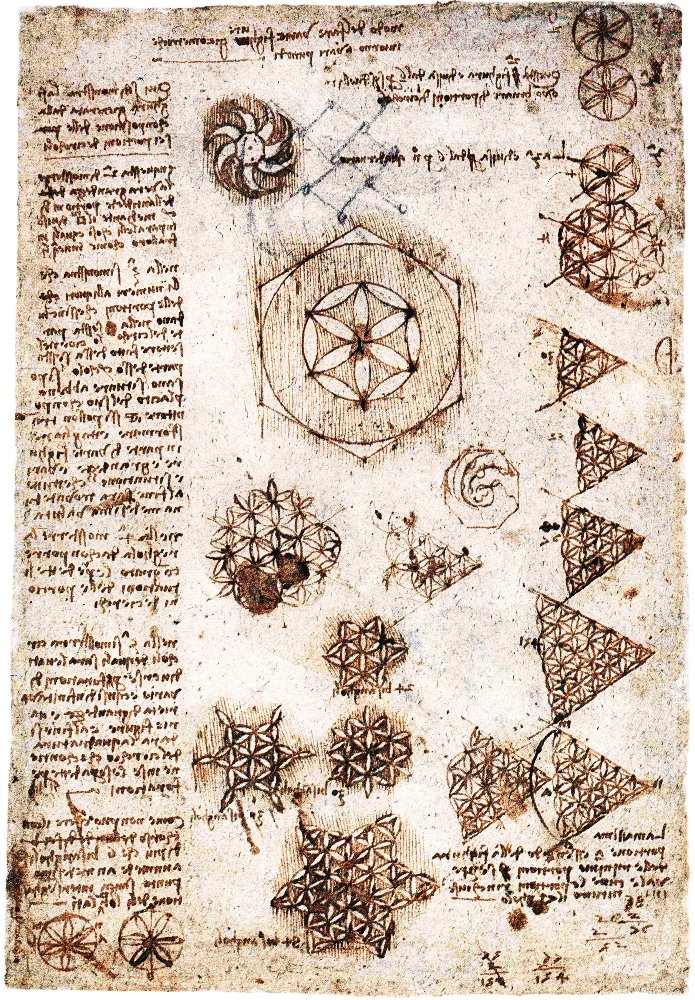
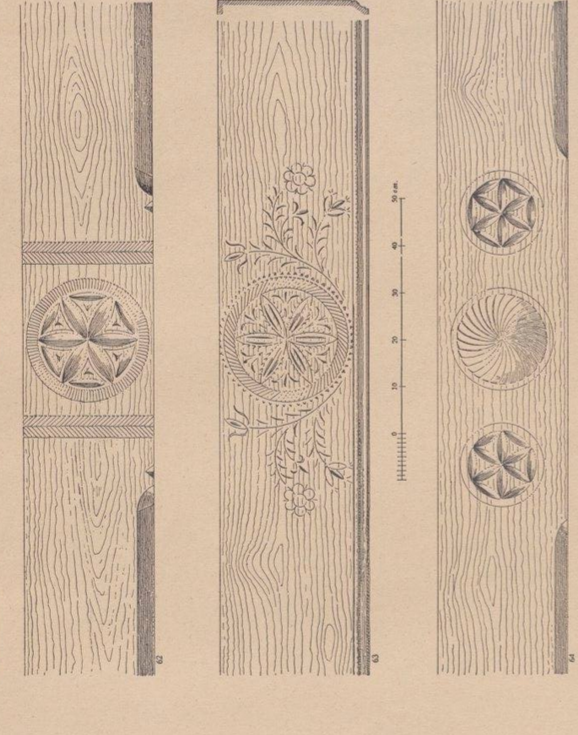
It is a well-known motif in esoteric circles that like sacred geometry, the Flower of Life, frequencies, and such topics.
Is it possible that it just evolved in Carpathy naturally?
Sure.
Is it an ancient Slavic symbol of Perun?
While indeed Górale have put it above the doors of their homes to protect from lightning, so there might be something to it — in Russian and other Eastern Slavic culture it was actually not that common, so I’d be cautious with conclusions. Again — maybe like with Svarzyca, it is just a potent ancient symbol known to almost all mankind?
Veles
Suddenly you see Weles tattoos and jewellery everywhere.
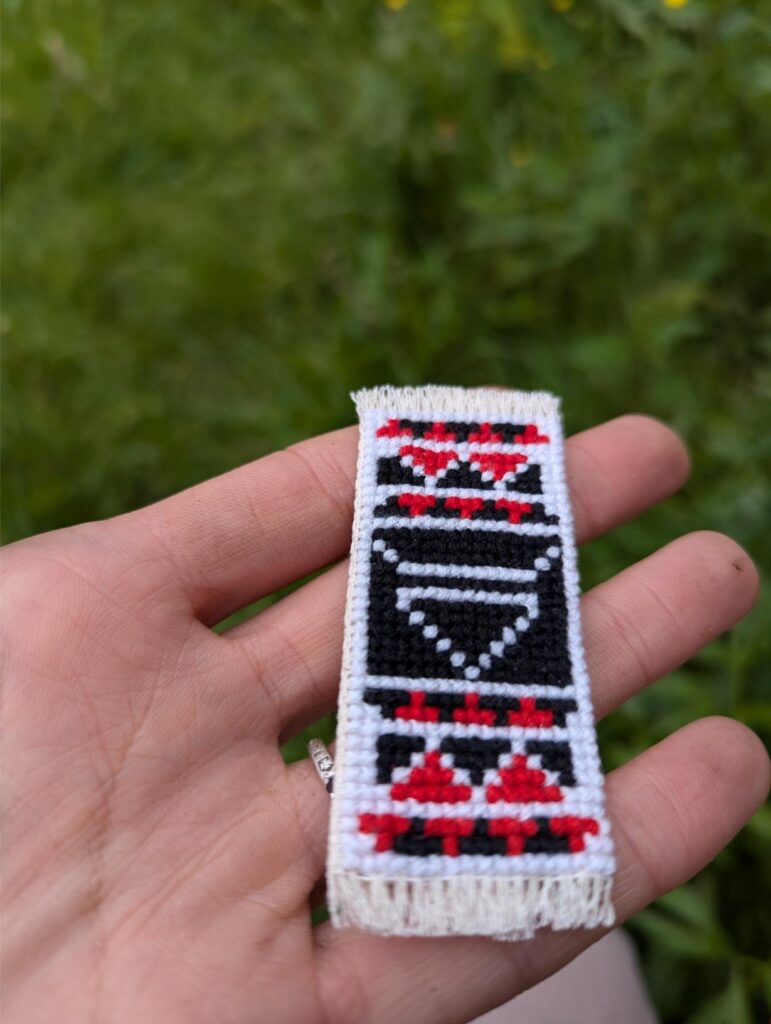
Where did it come from? Well… I’d never heard of it pre-2015. As far as I know, there is no source of that. It just popped up, supposedly depicting horns, and Weles is a god of cows. It also points downwards, and Weles is a god of the underworld… This Slavic symbol is nice enough, but ancient? I wouldn’t say so.
Symbols from Belarussian embroidery?
Listen. I love those Pinterest charts with Belarussian symbols.
While I did Gimnastyka słowiańska w tradycji białoruskiej (or so called Slavic Yoga), each exercise had its symbols and it seemed so romantic… so meaningful…
Unfortunately, according to research by scholars like M. Kachayeva, traditional Belarusian embroidery was about ornament — not single symbols.
Sometimes the magic lies in the repetition of a certain motif, or in an ornament itself (think: endless knots of prosperity from Tibetan or Celtic culture).
When you check out the really older, Paleolithic paintings, pottery, or BC fabrics, you’ll notice there is often some sort of net as decoration.
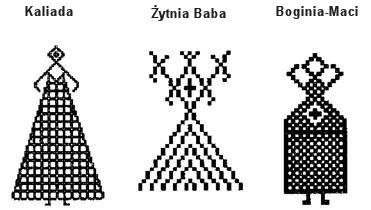
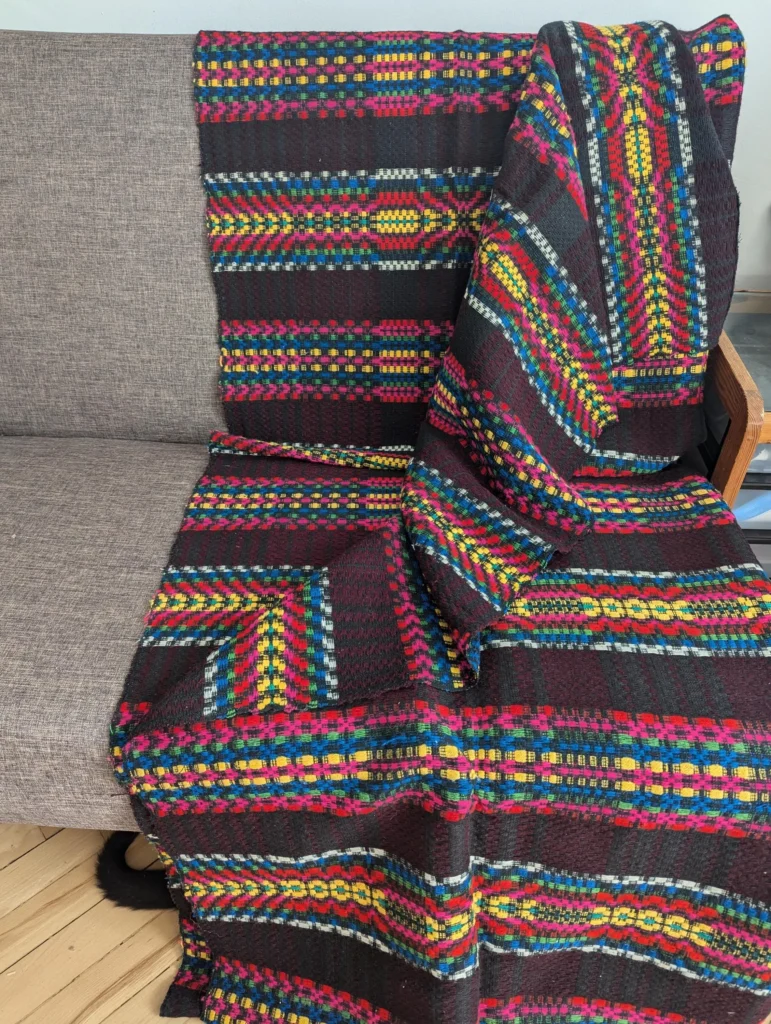
Similarly, on older Belarussian clothes or bedcovers, there is rarely a single Slavic symbol — rather a set of symbols or an ornament. Modern interpretations found on Pinterest are mostly simplifications of the ornament’s implied meaning.
20th century textile with groups of symbols…
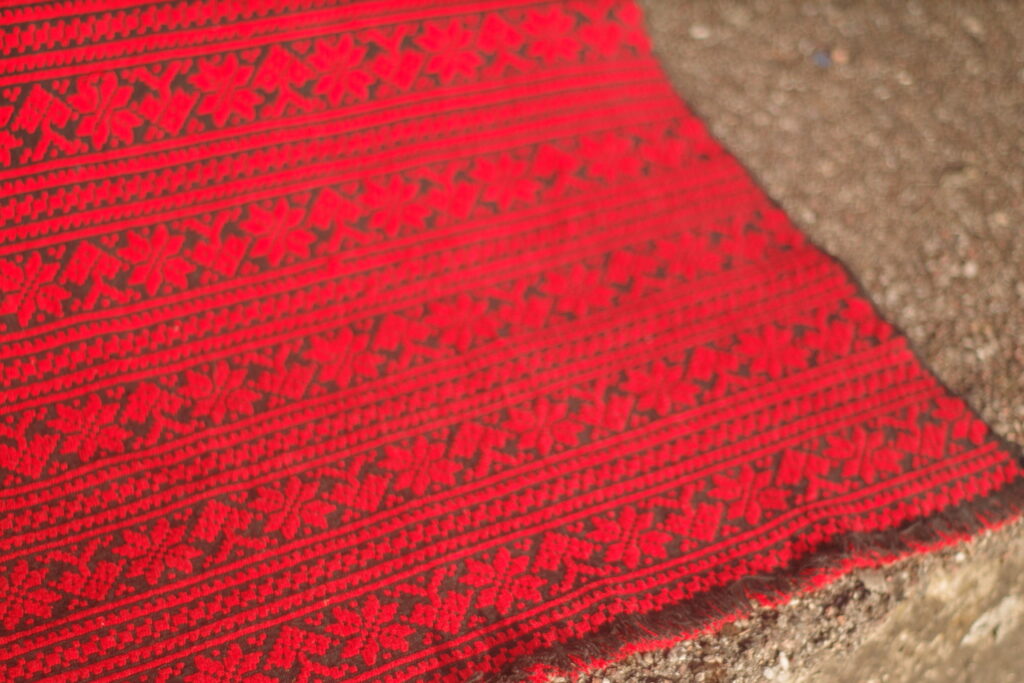
… and older patterns:
You probably want to ask now:
Sonia, ok. So are there any really old Slavic sacred symbols out there?
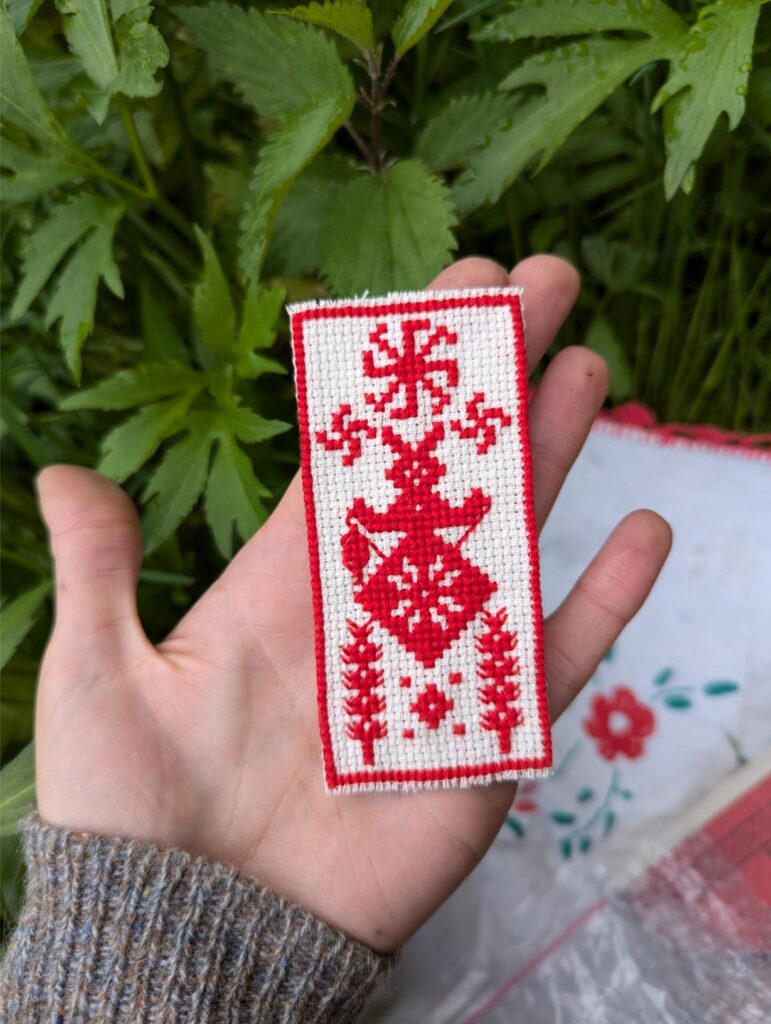
Personally, I would look closely at the so-called Dazhbog symbol and old Mokosh embroideries (like this one).
Look now at the Cretan “snake goddess,” the Polish woman with roosters from old cut-outs, the Scythian horse-goddess…
More on that: Is There Any Meaning Behind Traditional Polish Folk Patterns?
Again — maybe not necessarily Slavic (Dazhbog symbol is from Baltic, Latvian culture, after all), but an ancient goddess symbol? I would argue that it absolutely is.
Are there any more Slavic symbols that I didn’t cover? What would you like to read about? Let me know.
xo,
Sonia