The sauna itself may not be associated with physical activity, but running into the snow or jumping into a cold water pool and whipping the body with birch twigs after certainly is. It has been a tradition among Eastern Slavs for centuries and is still popular in Russia, Estonia, Lithuania, and Latvia.
Slavic Gymnastics
Gimnastyka Słowiańska w tradycji białoruskiej to be precise, or so called in the West Slavic Yoga, but before You get offended be mindful that I didn’t came up with this name nor do I use it in my life – it is just a simplified term for people from US who can’t say Gimnastyka słowiańska w tradycji białoruskiej. You are welcome to come up with Your own term. ( and tell me please:)
The mystery of Slavic gymnastics lies in the fact that it becomes increasingly mysterious over time. Supposedly it is an ancient female healing practise rediscovered in the 90s in Belarus…
There are also various branches that emerged later, such as Ładunica.
Here someone has put together an entire playlist of videos on Slavic gymnastics just for a general idea.
And here is my article where I share my view after years of practice and courses and a course to become an instructor in the school of the most famous Belarussian teacher:
In the Lviv region, the beaver game was famous near a large pond near Grodek, and the rural population in that area still plays the game today. A group of boys select one person to be the beaver, another to be the shooter, while the others pretend to be hunting dogs. The beaver hides, and everyone searches for him while singing:
Oh, my dear beaver,
Hide well from Sunday to Sunday,
So that the hounds do not catch you.
When my hounds fly out,
They will pull your guts out.
– writes Zygmunt Gloger in his Encyklopedja Staropolska published in 1900
Grounding
I had never heard of grounding before, but after moving to the countryside and walking barefoot, I learned about it from many different sources. In short, one must ground themselves.
At the most basic level, it massages the feet and the points on the feet responsible for various organs. When you walk in shoes, your feet do not work, which can lead to flat feet and posture problems. On a deeper level, it’s about connecting with Mother Earth or “shedding” the electromagnetic field we are constantly exposed to (internet, phones, etc.).
Worth knowing, that for many of us our ancestors like 100 years ago literally didn’t own shoes or had one pair to go to the chorch or work, but on a daily basics they didn’t use it. Wild, right?
There is an excellent movie on this, not Slavic at all, but still, called The Earthing Movie.
Ice Skating
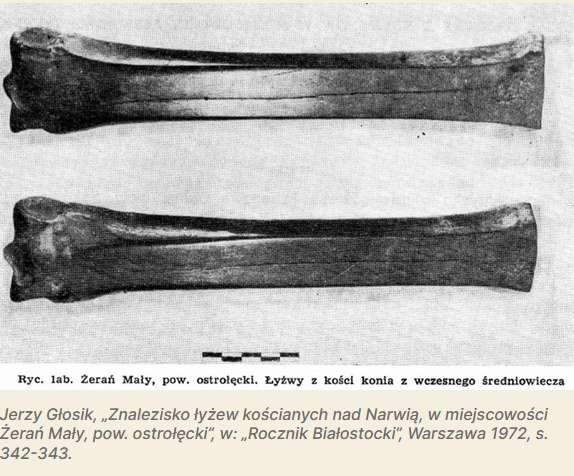
Did our ancestors skate? Ice skates made of bone found in the Narew River in the 1970s suggest they did! They date back to the 9th century.
Lying Crosswise
Here is a video that briefly explains (in Russian) what it is all about.
In general, when many of us have had enough, we lie on the floor and stay there to gain some energy. Anyone who has lain crosswise for 10 minutes in a crisis will confirm that it helps.
I’ve been to some workshop held by belarussian lets say shaman, and she taught us a version of lying crosswise that reminded me of rainbow light visualisation in Buddhism. Supposedly this is how it was done.
Supposedly Christianity got inspired by lying crosswise, hence when we think “lying crosswise” now we imagine someone lying like this in a church, but honestly it can also be a coincidence…
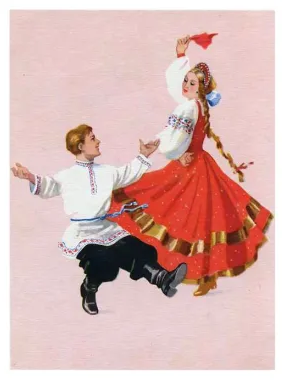
Kolomyjka is a dance and song of Carpathian highlanders in Ruś that takes its name from the town of Kolomyia. It consists of two parts of four beats and is less lively than Kozak’s dance. (…) Formerly, under the name Kałamaika, this dance was popular even in Germany.
– writes Zygmunt Gloger in his Encyklopedja Staropolska published in 1900
*and possibly because of that kołomyja in Polish means a pretty chaotic situation.
Kopak
A spectacular Ukrainian men’s dance. That’s all I know, but it’s certainly worth mentioning here 🙂 I think Kozaczok and Hajduk belong to the same category. It requires some serious leg strenght!
Korowod
Looking for information on interesting folk dances, I came across information on the English Wikipedia that:
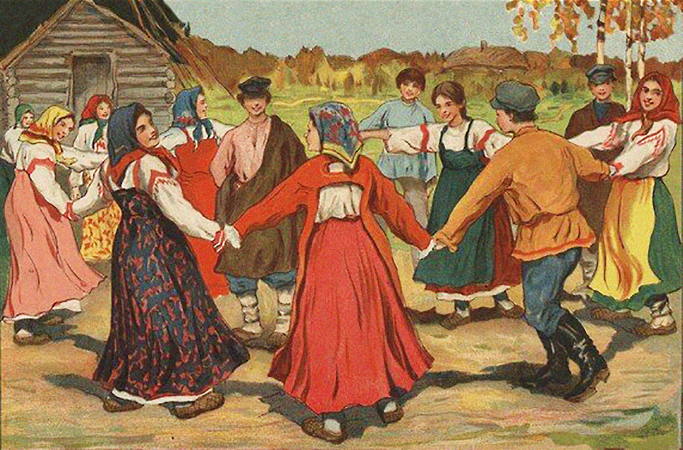
“Horovod or Korowod is an Eastern Slavic and Slavic dance art and one of the oldest types of dances in Russia, with a history of over 1000 years. It is a combination of circle dancing and singing, similar to a chorus in ancient Greece. The dance is also known in Russia as “karagod,” “tanok,” and “krug.”
In Poland, “korowod” colloquially refers to a group of people following one another. There are also folk rituals called “korowody,” such as the “korowód kolędników” and “korowody wołoczebne.” In Podlasie, a folklore group performs a ritual called the “weselny korowód,” which includes other Polish dances in a circle.
This is what old Poles has to say about “korowody” in Belarus, as was written down by Janusz Rieger in 2014 research paper “Słownictwo polszczyzny gwarowej na Brasławszczyźnie”, which deals with Polish dialects in rural Belarus:
The term “karah’od” refers to Belarusian folk dances performed in a circle.
Za mojich czasów, już ja młoda chodziła na te tańce, to te starobrzendowe dziewczynki – karachody eci my jim dawali: prosze bardzo i patancujut tam r’aznyje swaje karahody.
Slavic squat
In short it’s a position where a person sits on their heels. Initially I did not pay much attention to this position until I moved to the countryside, where I actually spend a lot of time like this in a garden, making fire etc. I learned later that the Slavic squat is healthy and helps to make the joints more flexible.
This is not really exclusively Slavic, because in India or the Middle East every other person sits like that. In my opinion, the most important thing is to squat on the whole feet, which is good for Your pelvic floor muscles. And legs. And feet.
Kulig
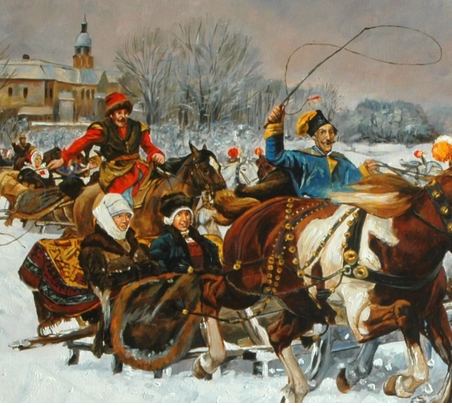
A winter sleigh ride that originated from the Rusyns in the 17th century. It was a festive and rural (noble) carnival celebration, where people rode around neighboring manors with music and singing, stopping at each one to feast.
There is something in Kulig that makes me hear the laughter and jingling bells, see the steaming horse’s back even when we talk about it or look at picture above. I-ha-ha!
Carrying sheep on Your back
The tradition of carrying sheep, lambs, and rams on the backs of shepherds. This is because these animals are too heavy to carry in one’s arms or under one’s armpit, and they are not carried on a stick like other game.
Narodowe Centrum Kultury, Ojczysty – dodaj do ulubionych
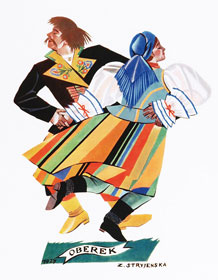
Oberek
The name of the Polish folk dance OBEREK is a native word derived from the old verb OBERTAĆ (SIĘ) ‘to turn (around)’, preserved only in dialects. (…) Depending on the region, different versions of the same lively dance with turns and spinning were called OBER(T)I, OBERTASy, OBERTANY, OBYRTANYM (…).
Our ancestors, who cleared the ancient forests and hunted deer in the woods, did not DANCE, but rather they “PLĄSALI.” The word TANIEC is an old borrowing from German, which entered Polish from Middle High German: TANIEC < Tanz. Similarly, the Polish verb TAŃCOWAĆ is a Polonization of the German verb tanzen, which was later shortened to TAŃCZYĆ. The original Proto-Slavic verb was, however, PLĄSAĆ, formerly PLĘSAĆ, in Proto-Slavic *plęsati ‘to have fun, jump, dance, shout with joy’, from which the noun PLĄS derives.
In yoga, there is an ancient Sun Salutation, and supposedly in Slavic region there is an ancient practice of Welcoming Jaryło.
It’s something like tai chi, I don’t really like it that much as starting the morning with boring, slow gymnastics is not for me, but it’s a thing.
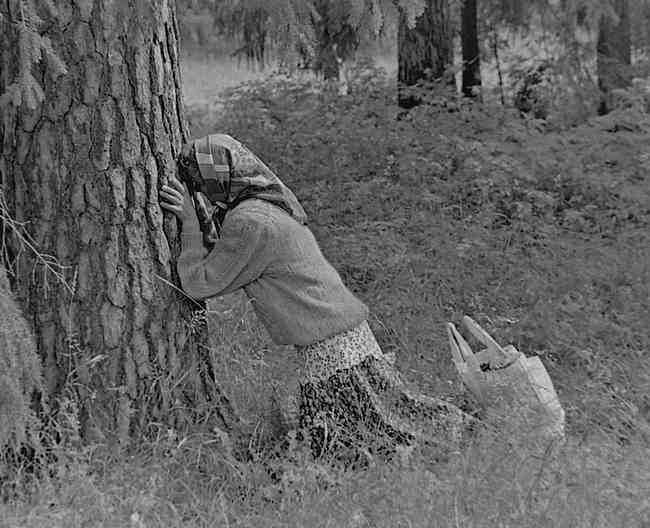
Hugging trees
This is a custom that is maybe not just Slavic, but since they lived in the forests and had sacred trees, it is difficult for me to believe that they did not come up with it too.
Here is just one of the pictues from Czesław Białczyński blog post about it (and BTW his blog has tons of interesting materials on Slavs, even if sometimes it goes waaay to far in its reasoning :).
In Iceland, it is recommended as a remedy, Japanese forest bathing has recently become trendy too.
Also, Buddha experienced enlightenment under a tree, Hippocrates taught under a tree, an apple fell on Edison’s head… I don’t want to sound like Waldemar Borowski about mushrooms (check him out, he is awesome!!!), but maybe trees help us achieve wisdom? Hm? (and mushrooms are connected to trees, so……..)
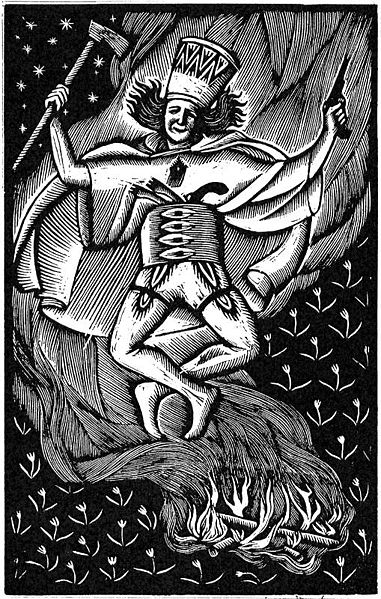
Jumping through fire
Supposedly, people used to jump through fire on the Night of Kupała, and many still do.
Slavic martial arts for Men
As Ania Wrzesińska, who popularized Slavic excercises in Poland, once said, “These martial arts exist, but gentlemen have to take care of discovering them themselves.” So I don’t know much apart from the fact, that something similar exists in…Russia? From time to time, I hear about the Dance of the Eagle, which is apparently for men.
On the Historycy.org forum, one can also find an article called “On the spirituality of warriors in the pre-feudal era,” which may interest gentlemen.
“The ritual of these games, or rather some remnants of it, exist among the Poles to this day, despite their being Christians for 500 years. It is repeated every year on Green Holidays and reminds us of the ancient pagan superstitions associated with the annual games, called “Stado” in Polish, which translates to “grex” in Latin. During these games, the people gather into herds and divide themselves into groups or flocks, excited and agitated in their minds, and engage in games prone to debauchery, laziness, and drinking.”
Traditional Polish Dances
On Polish official website of Traditional Dance there is surprisingly little information on traditional dance, but You can find there some general info about the most popular Polish folk dances of the past. There is more information on Wikipedia, including dozens of dances, such as Zbójnicki, so I will not repeat everything here.
Dance with Swords
Since I don’t know anything else about it at the moment, I won’t comment, but I am noting the term because something like this exists.