Origin: Kurpie, Poland
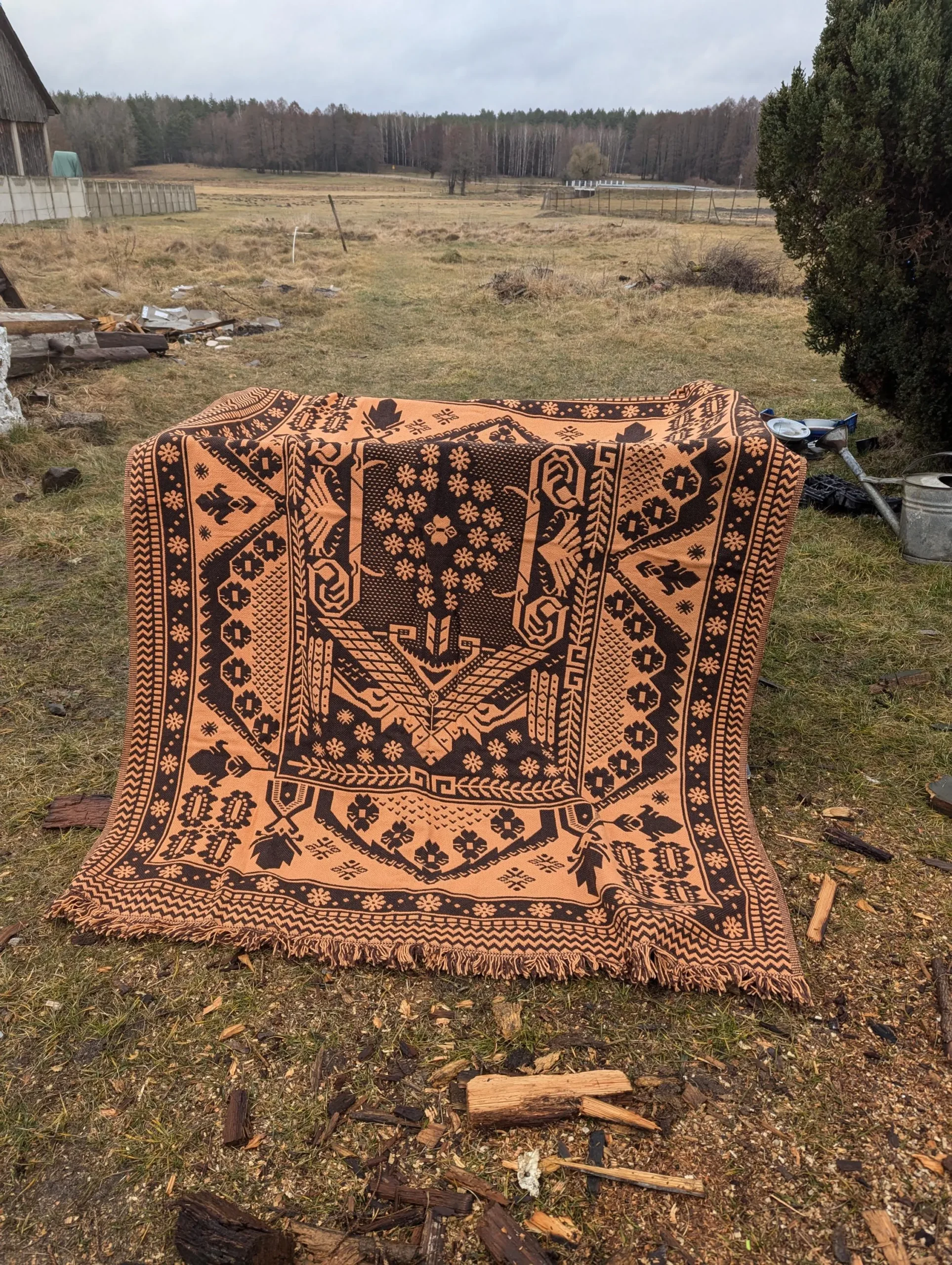
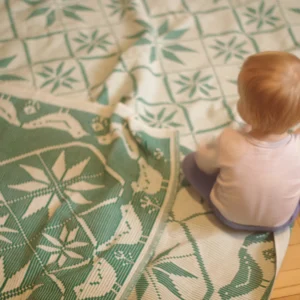
Size: 210 cm x 180 cm
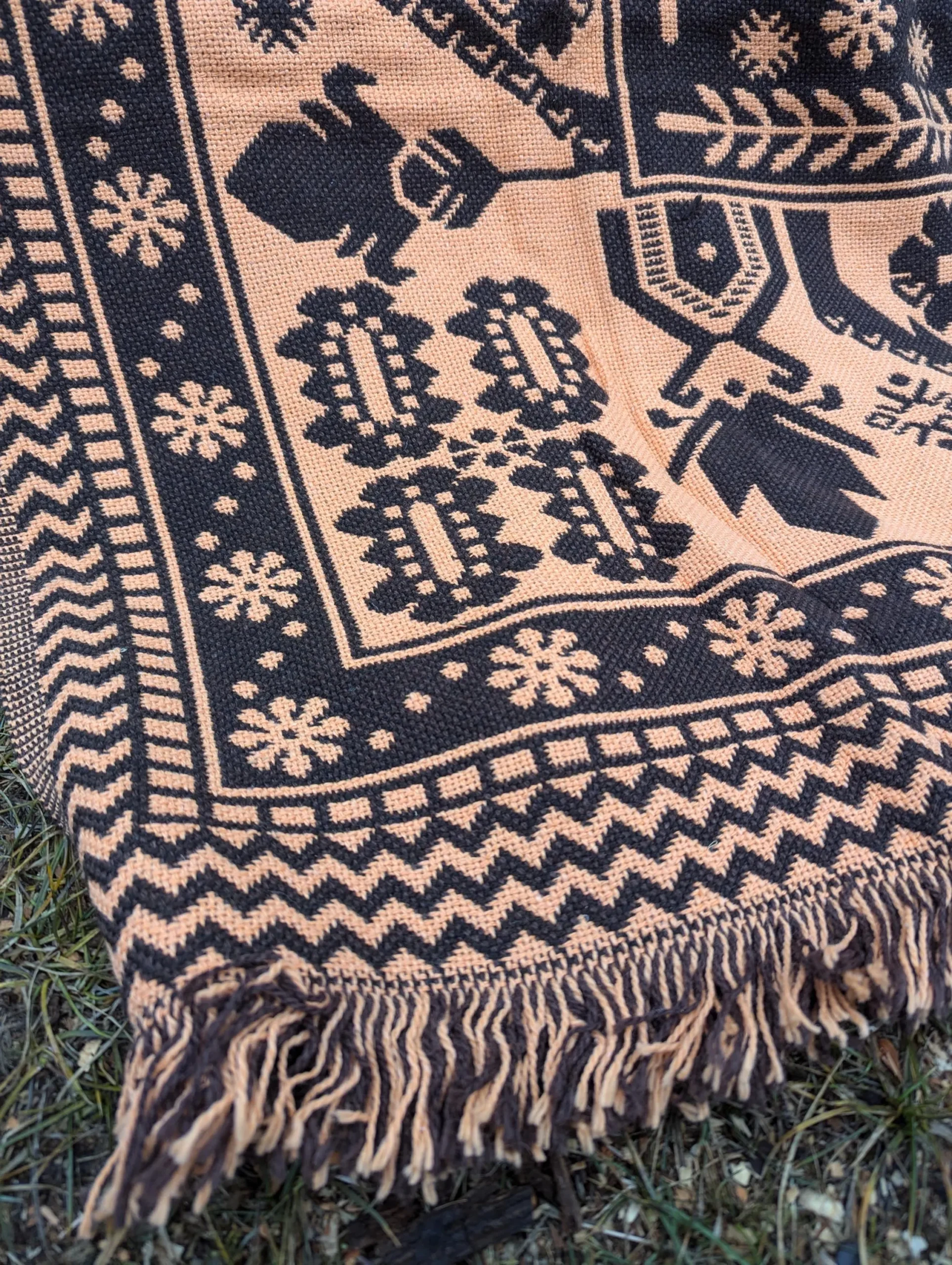
Condition: Very good. no imperfections
Almost identical pieces are in Museum of Kurpie in Wach, Poland. Here You can see machines on which it is made:
http://www.muzeum.kurpie.com.pl/tkactwo/
Time: 70s XX c
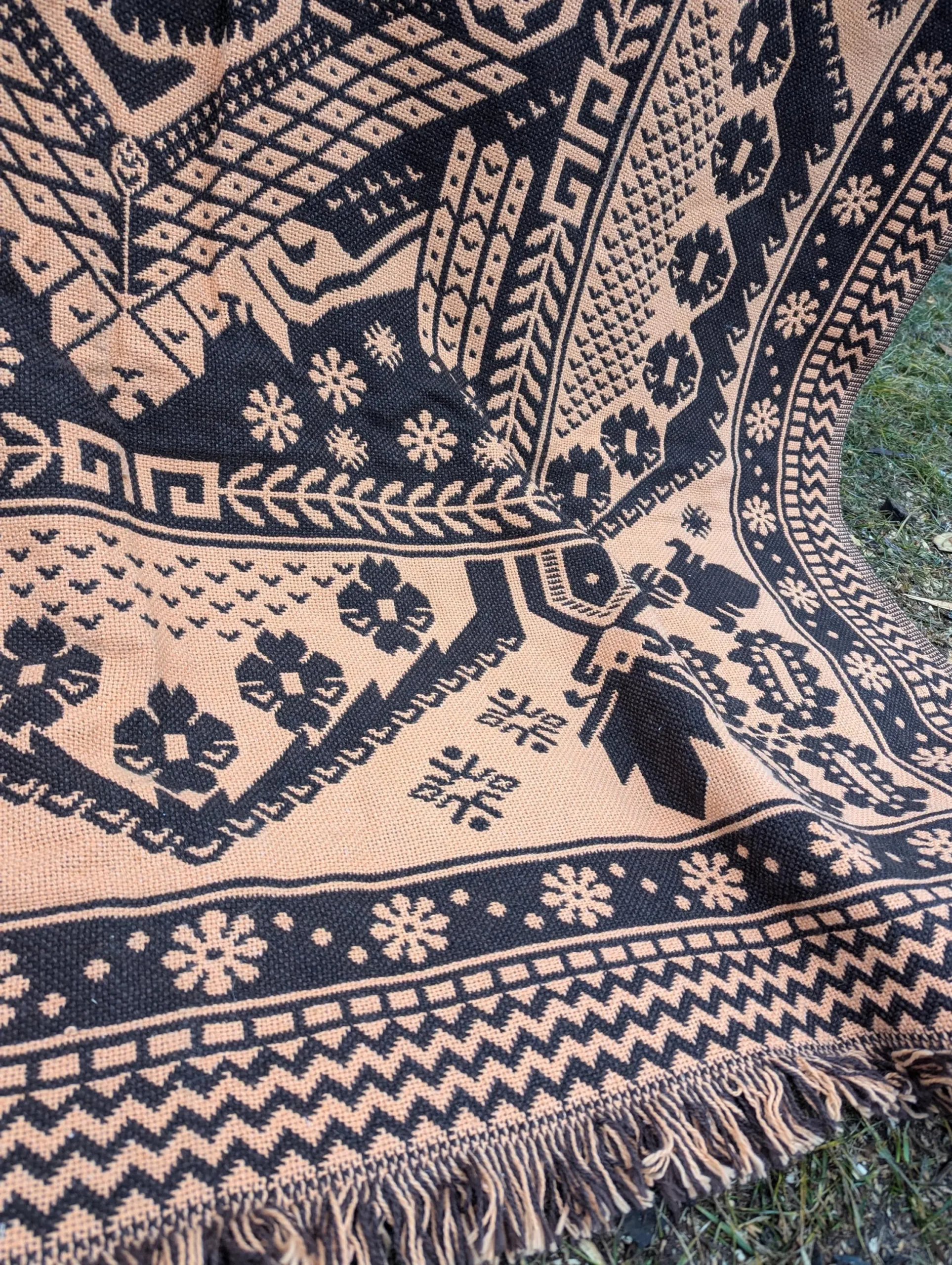
Thickness: Thick
Feel: quite soft
Softness: soft
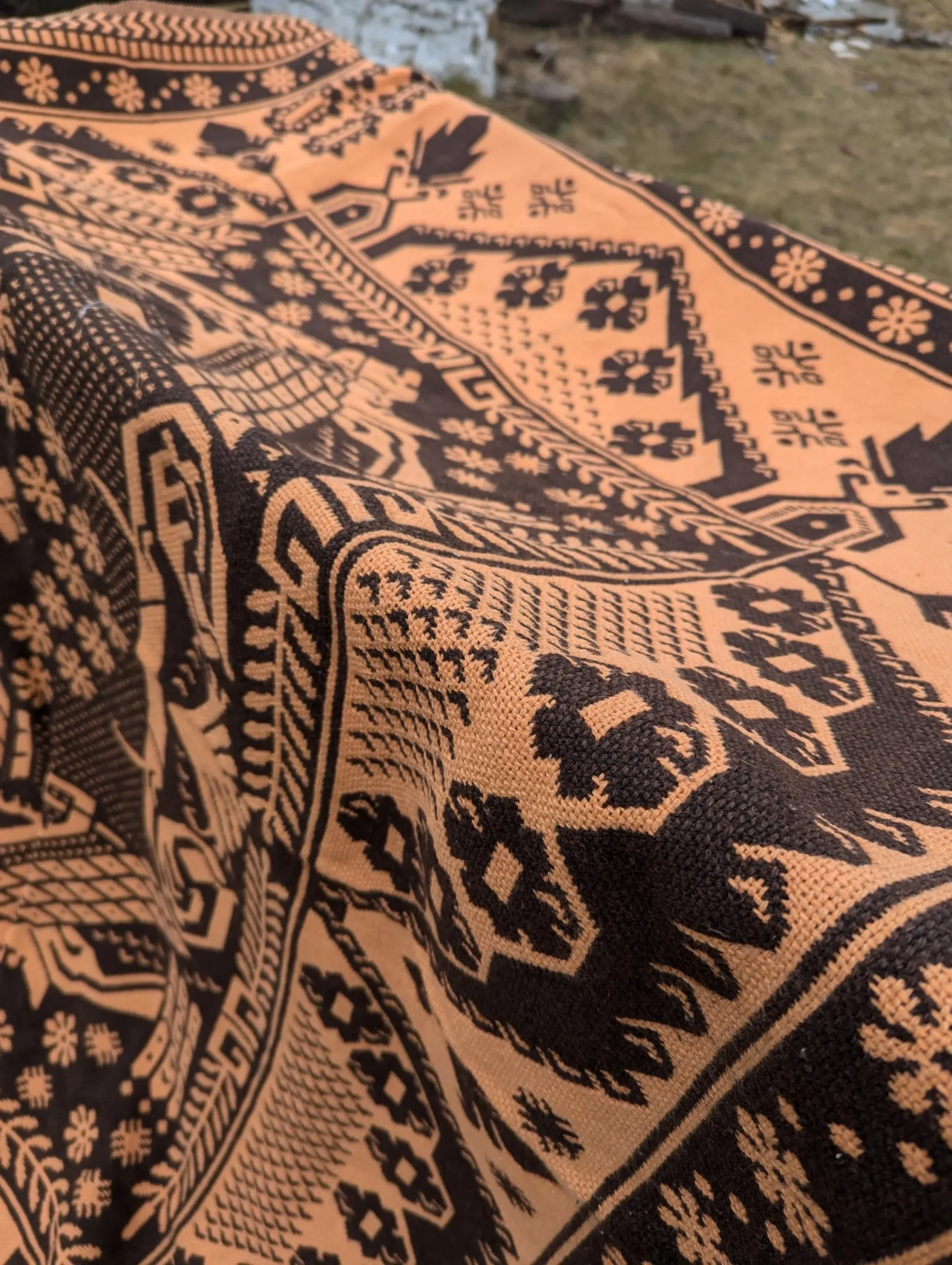
Doublesided
Handmade on Warping reel in Kurpie, Poland
PLEASE NOTE: THESE ARE VINTAGE, HANDMADE PIECES. NO TWO CAN BE IDENTICAL AND THERE CAN BE SLIGHT INPERFECTIONS OF COLOUR OR THREAD
Technique: Double warping loom – Warping reel – Krosno dwuosnowowe – it takes at least 100 hours to finish a piece like this.
A process looks like this: https://www.youtube.com/watch?v=82-jh7nnNEo
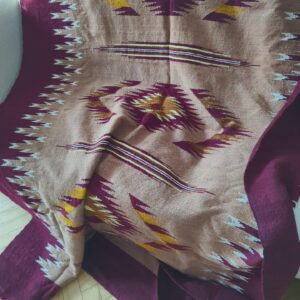
Woolen Polish Slavic Handmade Blanket Quilt Bedcover. Created using an age-old tradition of weaving on a warping reel, this luxurious piece is a true testament to artistry and quality.
ABOUT RUGS FROM KURPIE
The Kurpie population, living due to geographical and natural conditions in considerable distance from major industrial and commercial centers, had to provide for themselves all the necessary items for life from the very beginning of settlement. Among these items, clothing was, of course, included. Therefore, weaving developed in these areas from very ancient times. Looms and spinning wheels were essential equipment in every household. By the end of the 19th century, weaving played such a significant role in Kurpie that the income derived from it formed the basis for taxes. The most important product was linen cloth, renowned for its delicacy and beautiful weaves. Unfortunately, in our times, this skill is fading away, and it’s a pity!
By the end of the 19th century, weaving in Kurpie played such a significant role that the income derived from it was the basis for taxes. The most important product was linen cloth, known for its delicacy and beautiful weaves. Besides linen fabrics, Kurpie also produced extremely delicate and durable wool materials. Weaving looms and spinning wheels were essential equipment in every household. The raw material for fabric production (both linen and wool) underwent numerous softening processes before spinning. You can learn about the production process of delicate Kurpie linen and wool fabrics by visiting the Kurpie Open-Air Museum in Nowogród. Believe me, it’s very interesting! They were able to produce fabrics with primitive methods that an English prince wouldn’t be ashamed to wear!
The development of ornamentation in clothing and the introduction of factory cotton, called ‘gur,’ intensified both clothing and decorative weaving in Kurpie. In the past, only natural dyes were used for dyeing fabrics. In the 20th century, they were replaced by synthetic dyes. Besides canvas, they produced serge, woolen fabrics for skirts, carpets, and rag rugs. Kurpie women wove these rugs by tearing old materials into narrow strips and weaving new fabrics from these ‘threads’ obtained. They began to be in such demand that by the end of the 19th century, entire Kurpie villages were producing them excessively. However, the production of beautiful linens and checked woolen fabrics was discontinued.
Today, you can only see these beautiful materials in museums. In Kurpie, they completely stopped weaving truly beautiful fabrics in favor of almost factory, mass-produced ones…


Reviews
There are no reviews yet.