Hardly anyone remembers their own folk costume anymore. Somewhere deep in the internet and in the back rooms of museums, we catch glimpses of dusty traditional clothing. We barely know the names of some elements of these old outfits, let alone understand their deeper symbolism.
So let’s dive in—very deep.
Let me warn you in advance: if the concept of protecting Your energy from anything is completely foreign to you, this article will likely seem alien and incomprehensible too.
And yet—let’s begin.
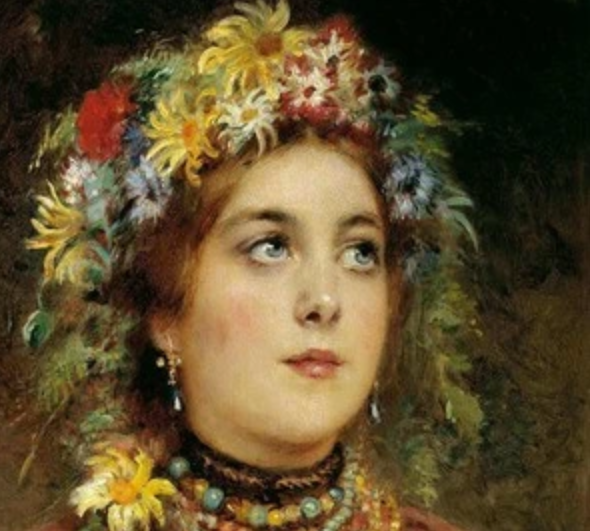
When I celebrated Kupala Night for the first time with a crazy Belarussian lady, she told us to make wreaths. But not the usual kind, she said—wreaths “with horns.”
She explained that these horns served a protective purpose (and my male friend added jokingly that these were “offensive-defensive wreaths”).
That’s why Ukrainian or traditional Slavic wreaths were often “horned,” unlike the flat, compact ones commonly made today or seen in movies.
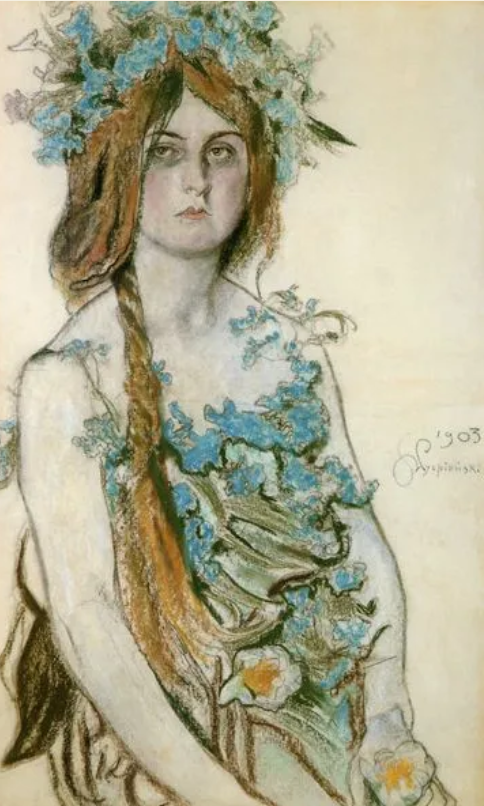
I thought this was quite interesting, but not particularly important.
Six months later, I came across “Folk Culture of the Slavs” by Kazimierz Moszyński, published in 1925. The first volume wasn’t centered around beliefs or culture, so I didn’t expect much as I flipped through photos of tools and haystacks. But at the end of the book, there’s a section on headwear, and it contained a very apt observation:
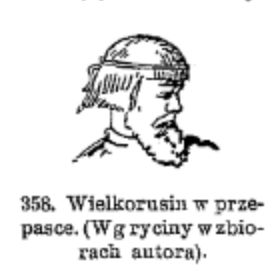
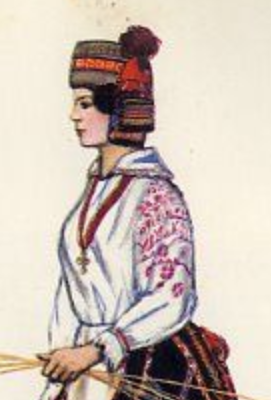
“Already Pallas, traveling in 1768 from St. Petersburg, noted (…) that the local peasant women wore a peculiar kind of head covering unlike anything he’d seen elsewhere, (…) a stiff, flat cap on the head, the brim of which (…) formed two angles resembling blunt horns. (…) It is very likely that these two horns weren’t just an aesthetic choice, but carried a deeper meaning. When exploring the origins of this two-horned headgear, one must also consider various three-, four-, and six-horned caps worn by men (…) among Northern Slavs, Finns, etc., especially since women’s headscarves in places like Bukovina also sometimes form a square-like shape.”
Moszyński adds that horns were sometimes present but hidden beneath a scarf or other decoration.
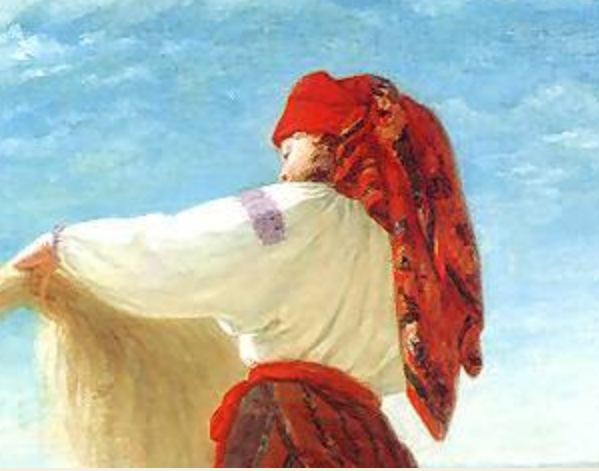
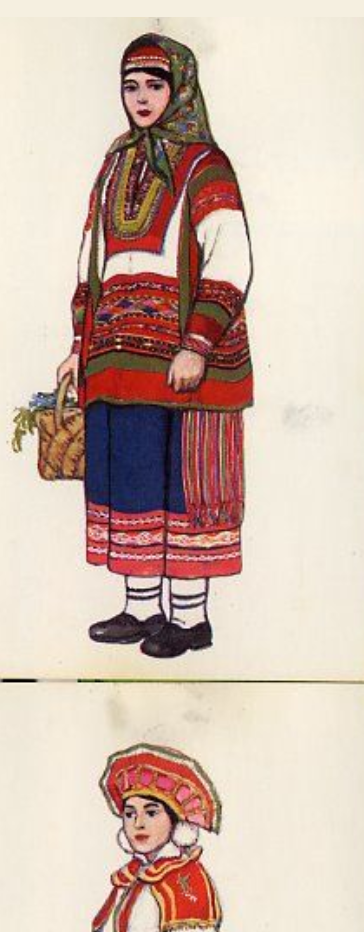
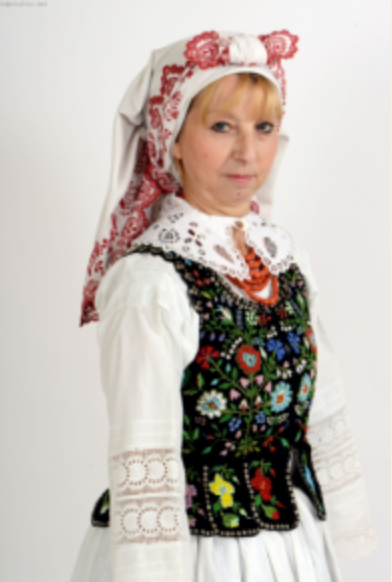
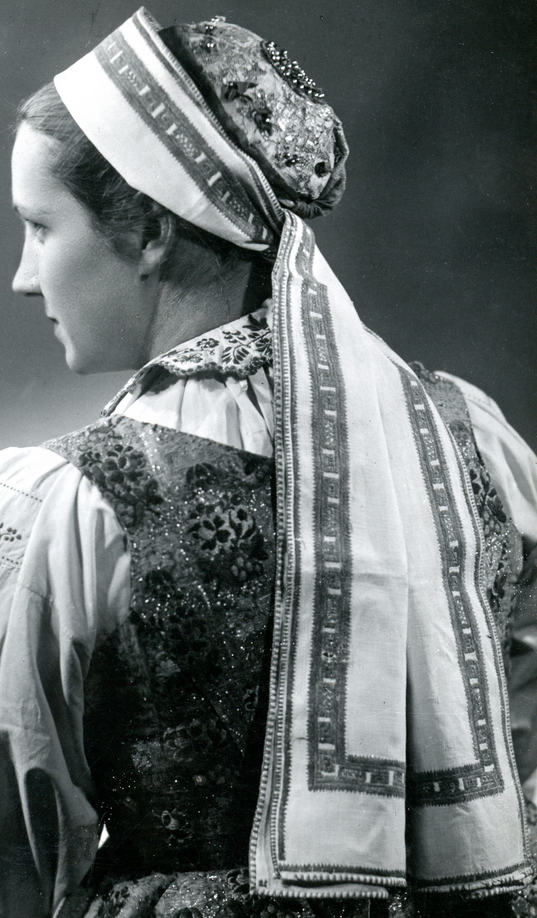
One of the picture above shows clearly how an unmarried woman at her own house didn’t need horns; he only started to wear them after moving to a foreign place with her husband’s family… Do we protect ourselves in a similar way when going out? Or the contrary: if we cover head it’s at home when it’s cold or we put on a conditioner, but we always wear bare head outside?
To have horns, but wrapped in a floral scarf—that’s the best life strategy.
As my dad aptly pointed out, “protective horns” also decorate the roofs of Chinese and Japanese temples—so it’s neither a uniquely Slavic nor a new concept.
By the way, just look at the trendy bachelorette party headgear…
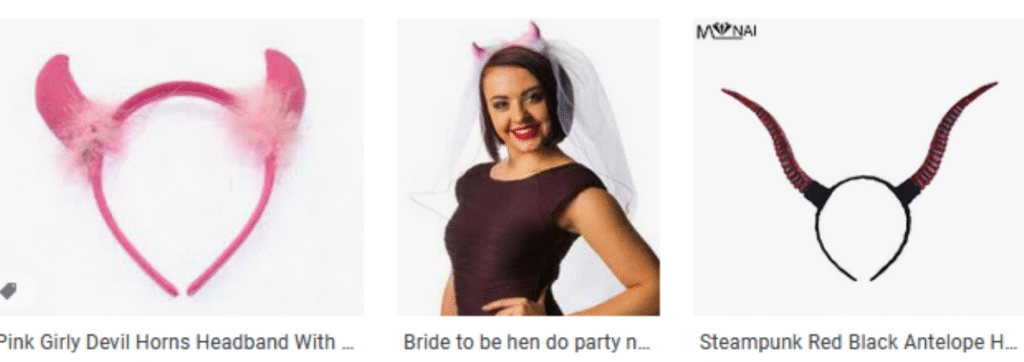
Not all head coverings were horned, but they shared one key trait: they existed. It’s interesting to look at photos of Sophia Loren or Catherine Denevue from as late as the 1960s: from the beginning of times up until then women even in the West would usually cover their head!

Old women’s headwear often covered the hair of married women. Young girls were allowed to wear their hair loose. We still see echoes of this today: before the war, a respectable woman wouldn’t be seen without a hat; we cover our heads with scarves when entering Orthodox churches; and in the Middle East, married women typically don’t leave their hair uncovered.
Here, a practical note: young girls were “at home”—seen by family, cousins, neighbors, etc. Once married, they often went to live “among strangers”—their husband’s relatives, unfamiliar neighbors—so that kind of protection may have been more necessary. Even today, we walk around the house with our hair down and no makeup, but for a stressful public event, we put on makeup, sharp heels, and jewelry. (I’m simplifying.)
Until recently, men wouldn’t leave home without a hat either.
From first Slavs to modern folk dance costumes: very common motif is red trimming around the forehead area—red caps, top hats, hats, red ribbons or bands around the forehead, and red scarves. Moszyński even timidly suggests taking a closer look at the men’s “rogatywka” cap: with horns and a red top.
(Compare: red thread tied around the wrist or above a cradle—used by Hutsuls or Kabbalists, among others.)
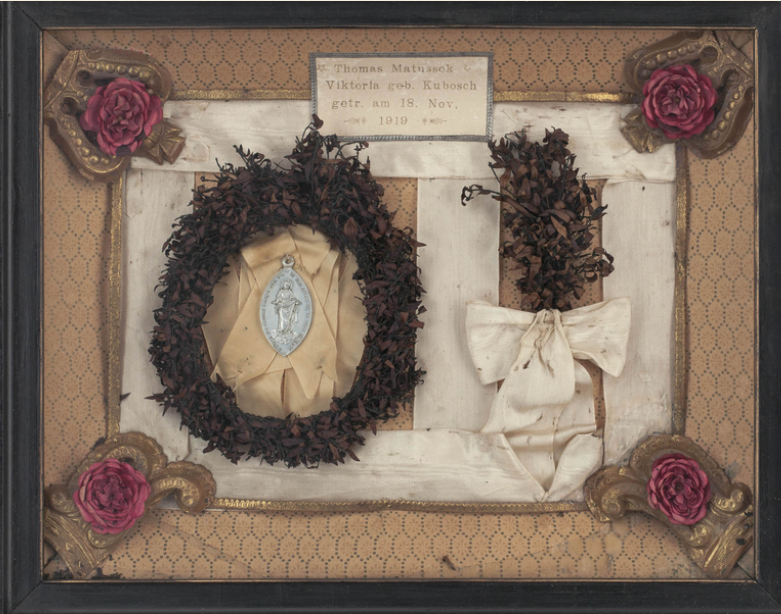
Also: See how some of headgears above share both color red and some form of horns or spikes.
And why haven’t I, or You, heard about horned Slavic wreaths and hats before? In Polish school perhaps? In etnographic museum? In news?